







Article contents
Key points
- A crack almost always means the latch needs fixing, not that your skin is too delicate.
- A few drops of breast milk after the feed: the care recommended everywhere.
- Lanolin and creams divide opinion: they may soothe, but never fix the cause.
- Do not stop abruptly: breastfeed or express your milk to avoid engorgement.
- Fever, a wound that will not heal or burning pain: get it checked.
On day five, you grit your teeth as the feed begins. The tip of the breast is red, split, and has even bled a little. Having cracked nipples is among the most common problems at the start of breastfeeding. It is not inevitable, though: once the first few days have passed, breastfeeding should not hurt.
The cause is almost always identifiable, and that is what to treat first. Here is how to care for a damaged nipple, what really helps, what makes it worse, and the signs that mean you should get help.
Crack, chapping, irritation: what are we talking about?
A crack is a split in the skin of the nipple, sometimes a small wound that bleeds. It often comes with redness and chapping, and makes every feed painful.
It is different from simple tenderness. Mild discomfort at the start of feeds in the first days is common. Pain that lasts through the whole feed, comes back every time or gets worse is not normal: after the first days, as Quebec's INSPQ reminds us, breastfeeding should not hurt. And according to the NHS, nipples that hurt at every feed are a reason to ask for help as soon as possible.
The number one cause: a latch to review
When baby mostly sucks on the tip of the breast, without taking enough of the areola, the nipple rubs against the hard palate with every suck. That is what pinches it, irritates it and then splits it. The NHS sums it up: a sore nipple most often comes from a baby who is poorly positioned or poorly attached to the breast.
The classic causes of a shallow latch:
- the breast is leaned towards baby's mouth instead of bringing baby to the breast;
- the mouth is not open wide enough when baby is put to the breast;
- the head is turned, the body is not lined up;
- baby is pulled off the breast without breaking the suction.
Other causes exist: a tongue-tie, which restricts tongue movement, a skin reaction to a product, or more rarely an infection. But you always start by checking the position. Our article on breastfeeding positions explains each set-up step by step.
The care that really helps
- Have your latch checked. A midwife or lactation consultant who watches a whole feed often spots the small detail that changes everything.
- Start on the less sore breast, then switch to the other.
- Vary the positions from one feed to the next, and always break the suction with a finger in the corner of baby's mouth before taking baby off.
- Dab a few drops of milk on the nipple after the feed, then pat dry gently. This is the care everyone agrees on, from UNICEF to the NHS.
- Keep the skin dry. Change the breast pads at every feed, preferably washable cotton ones without a plastic film, which traps moisture. In summer, with the heat, this matters even more.
- Wear a well-fitted, wire-free bra that does not compress the breast.
- Wash your breasts with lukewarm water in the shower, without soap.
- If the pain is strong, some painkillers are compatible with breastfeeding: ask your pharmacist or doctor which one to take and how much.
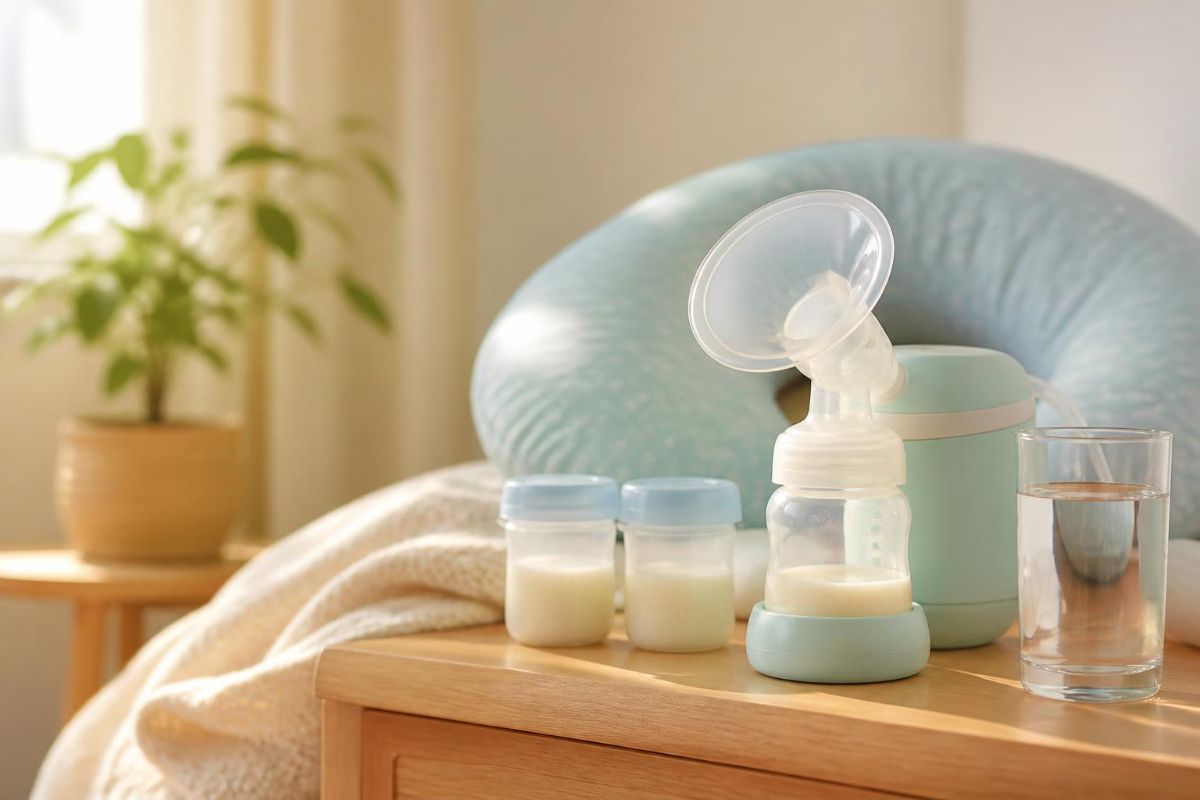
And if putting baby to the breast is truly impossible, do not let your breasts fill up: express your milk by hand or with a pump, at the same rhythm as the feeds. Our guide to expressing your milk explains how. Stopping all at once exposes you to engorgement, even mastitis.
Lanolin, balms, creams: opinions differ
This is the question every mother asks in the shop aisle. And the guidelines do not say the same thing:
- In the United States, the American Academy of Pediatrics mentions medical-grade purified lanolin, alongside colostrum or breast milk, to soothe the nipple. It adds that other creams and lotions generally do not help and may make the problem worse.
- In Quebec, Naître et grandir now advises against lanolin and coconut oil, and points to balms with a short ingredient list and no allergens. INSPQ notes that ointments and creams can bring a little relief but do not fix the problem, and should be stopped if there is a reaction.
- In the United Kingdom, the NHS does not mention creams: it suggests breast milk after feeds, or silver cups between feeds.
What to take from this: a balm can make feeds more bearable, but it never replaces correcting the latch. Choose a simple, unscented formula, apply a thin layer, and stop if the skin reddens, itches or burns more. You will find balms in our nipple care section.
Shells, cups, nipple shields: useful or not?
These accessories circulate a lot among mothers, but none is a first-line treatment.
- Silver cups (and "breastfeeding shells" placed over the nipple between feeds): the NHS mentions silver cups as an option. None of our sources presents them as essential.
- Breast shells, the plastic domes slipped into the bra: the NHS advises avoiding them where possible. The American Academy of Pediatrics, which discusses them for inverted nipples, recommends taking them off after 30 minutes so moisture does not build up.
- Silicone nipple shields: the NHS generally advises against them, as they can change the way baby takes the breast. They sometimes help in specific cases, such as a tongue-tie awaiting assessment, but only on a professional's advice.
What makes cracked nipples worse
- Pulling baby off the breast without breaking the suction.
- Keeping damp breast pads, or pads lined with plastic.
- Soap, alcohol, antiseptics or scented products on the nipple.
- Remedies applied "to help it heal": essential oils, home-made mixtures, honey. What you put on the nipple ends up in baby's mouth.
- Suddenly spacing out feeds or stopping at once: the breasts fill up, become tense, and baby has even more trouble latching well.
From the shop
To get through the healing phase more comfortably
The first treatment for cracked nipples cannot be bought: it is a better latch. Alongside it, a simple balm, a wire-free bra, a way to express and store your milk if pain forces a pause, and a cushion to settle baby more comfortably can help.
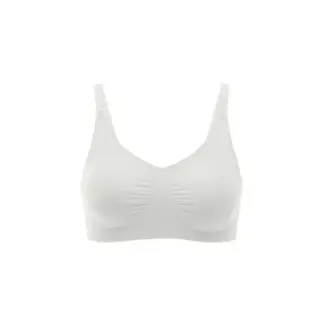 −48 %MedelaMaternity and nursing bra, size S – Medela208 DH
instead of 400 DHView product −35 %DoomooSofty nursing pillow, Flower Yellow – Doomoo403 DH
instead of 620 DHView product- The whole aisle · Nipple care and nursing pads1 products online, delivered anywhere in Morocco.Open the aisle
Products sold by La Maison du Bébé, publisher of this magazine. Prices as of 12 October 2026; please check the product page.
Thrush, vasospasm, dermatitis: when the pain has another cause
If the latch has been corrected and the pain persists, other causes are possible:
- Dermatitis: dry, red skin that itches or burns, often after a new product or because of moisture. Stop every product on the breasts.
- Vasospasm: the nipple turns white, then blue and red, with a burning or pinching feeling, often in the cold. Keep your breasts warm and apply dry heat after the feed.
- A small blister or white spot on the nipple, sometimes very painful at the start of a feed: do not touch it and do not pierce it.
- Thrush (candida): pain in the nipple or the breast, a red or cracked nipple, sometimes nothing visible. In baby, white patches in the mouth that do not come off when rubbed, sometimes a red bottom. The diagnosis must be confirmed by a professional, who will decide on treatment for you and for baby. INSPQ also notes that many pains once blamed on thrush are actually vasospasm or a blister. Our article on thrush in babies describes the signs in infants.
Frequently asked questions
Can I keep breastfeeding with bleeding cracked nipples?
Usually yes, and the NHS stresses not stopping abruptly. If the pain is too much, express your milk by hand or with a pump for a few feeds to give the nipple a rest, without skipping sessions. A bleeding nipple does deserve prompt help to review the latch, as UNICEF recommends.
My nipple looks flattened or white after a feed. Is that serious?
A flattened, wedge-shaped or white nipple right after a feed most often means baby is sucking on the tip of the breast: the latch needs correcting. If the nipple turns white, then blue or red with a burning feeling, often in the cold, it may be vasospasm. Keep your breasts warm and talk to a professional if it persists.
Can I put olive or argan oil on cracked nipples?
None of the guidelines we consulted mention them. Naître et grandir even advises against some fats, such as coconut oil, in favour of balms with a short ingredient list and no allergens. If you use a product, choose it pure and unscented, apply a thin layer, and stop at the first sign of redness or itching.
Should I disinfect a cracked nipple?
No, not normally. The American Academy of Pediatrics advises washing the breasts with lukewarm water in the shower, without soap, and patting the nipple dry. Alcohol, antiseptics and scented products irritate skin that is already damaged. However, spreading redness, increasing pain or a fever mean you should see someone.
Sources
- Sore or cracked nipples when breastfeedingNHS · United Kingdom
- Common breastfeeding problemsNHS · United Kingdom
- Treating Breast PainAmerican Academy of Pediatrics (HealthyChildren.org) · United States
- Allaitement : 6 problèmes courantsNaître et grandir · Canada (Quebec)
- Difficultés courantes de l'allaitementMieux vivre avec notre enfant, INSPQ · Canada (Quebec)
- Cinq problèmes fréquemment rencontrés lors de l'allaitementUNICEF Parentalité · International
- L'allaitement maternel (livret pour les futurs parents, mars 2026)Centre hospitalier régional Sambre et Meuse (CHRSM), maternity unit · Belgium