







Article contents
Key points
- Labour Code, art. 161: a paid nursing hour per day for 12 months after you return.
- Start expressing three to four weeks before, once lactation is well established.
- A stash of a few days is enough: milk expressed at the office is used the next day.
- At work: express roughly at the rhythm of the feeds, in a private place, never in the toilets.
- Mornings, evenings, nights and weekends at the breast keep your supply going.
The end of maternity leave: fourteen weeks is short. Baby is often under three months old when you get back to your desk, and you would like to keep breastfeeding. It is entirely possible. Breastfeeding after going back to work mostly takes forward planning: knowing your rights, preparing a small stash, and finding your rhythm for expressing milk.
Moroccan law gives you real leverage, and a few weeks of preparation are often enough to get everything in place, at the office and at home.
What Moroccan law says: the nursing hour
In the private sector, article 161 of the Labour Code grants an employed mother one hour a day to breastfeed, paid as working time, for 12 months from her return. This hour can be taken as two 30-minute breaks. You can use it to express your milk, or to go and breastfeed baby if baby is looked after nearby. For another arrangement, such as arriving later or leaving earlier, agree it in writing with your employer.
The Labour Code also provides that a company employing at least 50 women sets up a special nursing room. In 2015, TelQuel relayed UNICEF: these provisions were then little applied in practice. In 2026, Femmes du Maroc describes rushed returns to work, sometimes shortly after a caesarean, and informal-sector workers with no protection at all. Knowing the text helps you negotiate.
Other options exist after leave: suspending your contract for up to 90 days without pay, or taking a year of unpaid leave to raise your child, with the employer's agreement. A bill tabled in June 2026 proposes to extend maternity leave; check where it stands. All the details are in our article on maternity leave in Morocco. In the civil service, ask your administration.
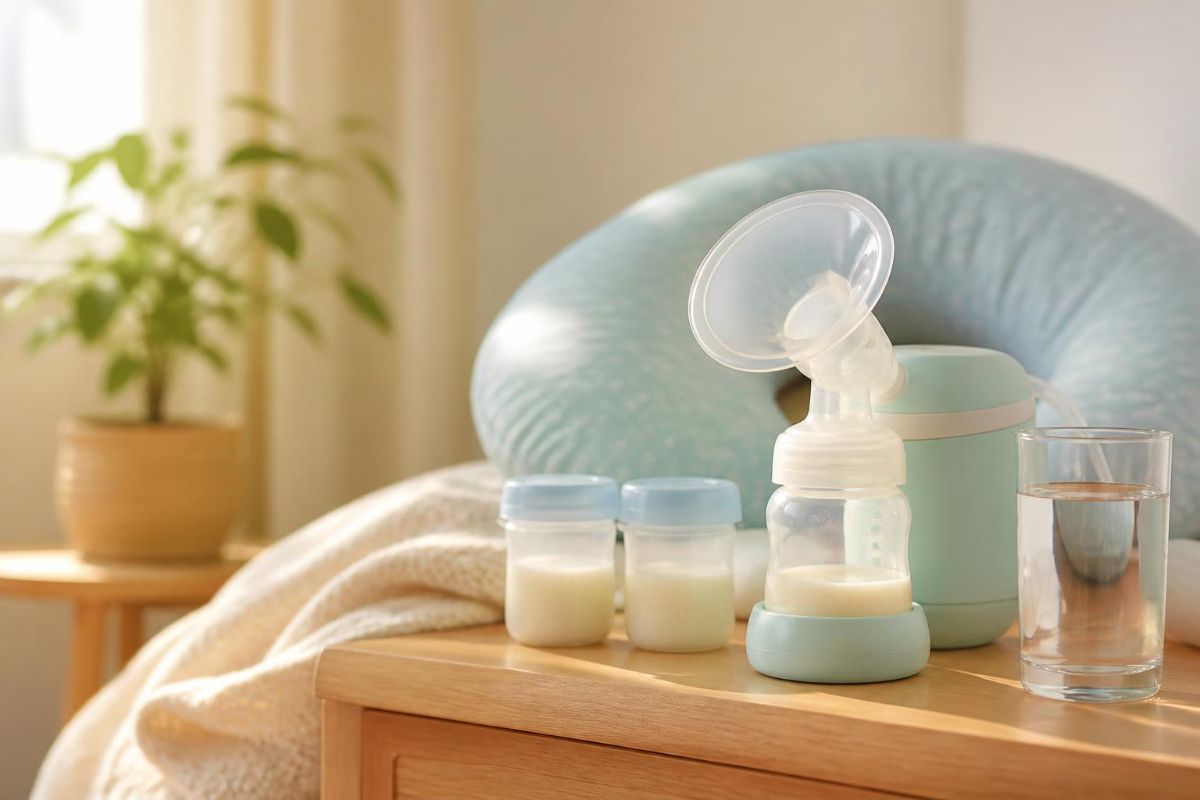
Talking to your employer: when and how?
As early as possible: before you go on leave if you can, and at the latest before your first day back. The NHS advises confirming in writing that you are still breastfeeding. The CDC lists the points to raise:
- a private place to express your milk that is not the toilets;
- a fridge, or failing that the possibility of keeping a cool box;
- a water point to wash the equipment;
- the times of day that suit your sessions best.
Possible adjustments are also worth asking for: part-time at first, remote work on some days, staggered hours. For the overall organisation of your return, with the guilt and tiredness that come with it, see our article on going back to work after leave.
The three-week plan before you go back
The CDC and mpedia advise starting to express a few weeks before going back, once lactation is well established, around one month according to mpedia.
| When | What to do |
|---|---|
| During leave | Talk to your employer, choose the childcare, find the place where you will express |
| 3 to 4 weeks before | Express after a morning feed, freeze small dated portions |
| 2 weeks before | Have someone else give baby your milk other than at the breast |
| 1 week before | Do one or two rehearsals: baby at the nanny's or grandmother's, you expressing at set times |
| Day one | If possible, go back mid-week, for a first trial of two or three days |
The NHS recommends these "rehearsals" of the new routine, and the American Academy of Pediatrics suggests going back mid-week. For the technique, our tips on expressing by hand or with a pump detail each step.
How much stock do you need?
Less than you might imagine. Between 1 and 6 months, a breastfed baby drinks on average 60 to 90 ml per feed, according to the US Office on Women's Health, and this amount changes little afterwards. If baby has three feeds while you are away, plan on about 180 to 270 ml a day.
The stash is only for getting started: the milk you express at work one day is given the next, explains the NHS. The CDC simply advises freezing a little extra for the first days of childcare. A few days' lead is therefore enough, no need to fill the freezer. For times and containers, see our guide to storing breast milk.
Expressing at work: rhythm and organisation
At the start, the NHS advises expressing at least every 3 hours of absence. The Office on Women's Health speaks of two to three sessions per working day, of 10 to 15 minutes each once you have the hang of it. For daily expression, an electric breast pump is faster; our guide to choosing a breast pump compares models.
In your bag, the American Academy of Pediatrics suggests packing:
- the breast pump and its clean parts;
- storage bags or containers, and a pen to date them;
- a cool bag with its ice packs;
- breast pads and a spare top, in case of leaks;
- something to drink and snack on.
At the office, put the milk at the back of the fridge, labelled with your name and dated, or keep it in the cool bag with its ice packs, for up to 24 hours. Bring it home every evening. Wash the pump parts after every session, advises the CDC.
From the shop
The kit for expressing and carrying your milk
For going back to work, the essentials are few: a breast pump suited to the rhythm of your sessions, storage bags, a cool bag for the journey, and perhaps a pumping cover to express more discreetly.
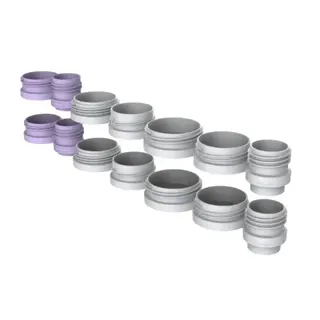 −54 %BabymoovDirect-Pump breast pump adapter – Babymoov69 DH
instead of 150 DHView product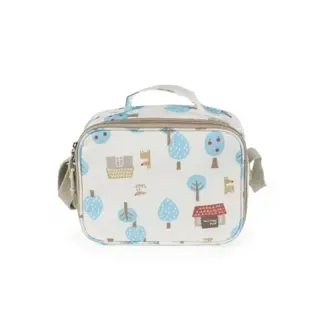 −48 %Walking MumPreschool insulated children’s lunch bag, Forest – Walking Mum146 DH
instead of 280 DHView product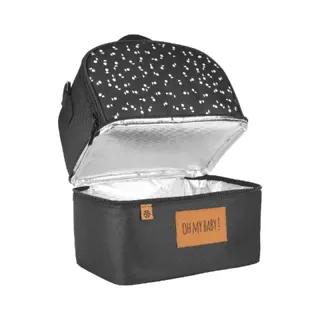 −9 %BadabullePick & Go insulated meal bag – Badabulle355 DH
instead of 390 DHView product DoomooMom’N Play nursing apron – Doomoo350 DHView product
 - The whole aisle · Breast pumps2 products online, delivered anywhere in Morocco.Open the aisle
Products sold by La Maison du Bébé, publisher of this magazine. Prices as of 12 October 2026; please check the product page.
Keeping up your supply at home
This is often where everything is decided. What helps:
- a feed before leaving, and another as soon as you are reunited: the Office on Women's Health suggests breastfeeding as soon as you get baby back;
- frequent feeds at home, at least every 2 to 3 hours when you are together, according to the American Academy of Pediatrics;
- at weekends, breastfeeding alone, on demand;
- an extra session if production dips, of at least 10 minutes even when the milk flows less.
Some babies drink little in the daytime and make up for it at the breast at night. This reversed rhythm is well known, and it may even reduce the amount you need to express at work.
If you skip sessions in the first days, your breasts may become tight. A hard, red or painful breast should alert you: our article on engorgement and mastitis explains how to react.
Nanny, grandmother, nursery: passing on the right instructions
In Morocco, it is often the grandmother or a nanny who takes over. Explain to them how to thaw the milk, how to give it calmly and in small amounts, and when to throw away what is left. Baby can drink your milk from a cup, a spoon or a bottle: the advantages of each method and how to give it without getting in the way of breastfeeding are set out in our article on mixed breastfeeding.
For a nursery, the CDC advises asking before enrolling how breast milk is labelled, stored and prepared. A nursery close to work also lets you use the nursing hour to go and breastfeed baby.
Frequently asked questions
Is the nursing hour paid in Morocco?
Yes. In the private sector, the Labour Code grants an employed mother one hour a day to breastfeed, paid as working time, for 12 months from her return. It can be taken as two 30-minute breaks. In the civil service, ask your administration about the rules that apply to your status.
My company has no nursing room: what can I do?
The law requires a nursing room from 50 female employees. Below that, ask for a private place that closes: a free office, a meeting room, the sick bay. The NHS and the CDC both rule out toilets, unsuitable for collecting food. Bring a cool bag with ice packs if no fridge is available: the milk keeps there for 24 hours.
What if baby drinks very little while I am away?
It is common in the first days. Some babies drink less in the daytime and catch up at the breast in the evening and at night, explains the US Office on Women's Health. Ask whoever looks after baby to offer the milk calmly, in small amounts, possibly with a cup or spoon. If baby wets clearly fewer nappies or seems listless, see the paediatrician.
Can I keep breastfeeding without expressing at work?
Yes, it is partial breastfeeding: you breastfeed in the morning, evening, night and weekends, and baby receives something else during the day. Before 6 months, this choice is made with the paediatrician. To avoid engorgement, gradually space out the daytime feeds before you go back rather than stopping all at once, and watch your breasts in the first days.
Sources
- Le congé maternité au Maroc (mis à jour mars 2026)Clicpaie · Morocco
- Maternité et travail : quels sont vraiment les droits des mères salariées ?Femmes du Maroc (Rania Laabid, 9 octobre 2026) · Morocco
- Au Maroc, allaiter au travail est encore difficileTelQuel · Morocco
- Breastfeeding and returning to work (Best Start in Life)NHS · United Kingdom
- 5 Tips for Returning to Work and BreastfeedingCenters for Disease Control and Prevention (CDC) · United States
- Breastfeeding and going back to workOffice on Women's Health (womenshealth.gov) · United States
- Expressing Breast Milk at Work: Tips for Nursing ParentsAmerican Academy of Pediatrics (HealthyChildren.org) · United States
- Techniques pour tirer et conserver son laitmpedia.fr, Association française de pédiatrie ambulatoire (AFPA) · France