





Article contents
Key points
- Islam exempts pregnant or breastfeeding women who fear for their health or their baby’s from fasting.
- Studies show no clear effect on birth weight, but the data remain incomplete.
- Diabetes, high blood pressure, twins or a complicated pregnancy: fasting is generally not advised.
- Baby under 6 months fed only breast milk: better not to fast.
- Dizziness, contractions, baby moving less: break your fast and see a doctor.
Every year, with the new crescent moon, the same question comes up in families: should you fast when you are expecting a baby, or breastfeeding? On Moroccan forums, the worries are similar: the fear of “losing your milk”, of being at fault if you do not fast, and also the wish to share the holy month with your loved ones. Ramadan during pregnancy and breastfeeding deserves a calm answer that takes account of both religious rules and medicine.
The good news: the two point in the same direction. Religion provides an exemption, and doctors mainly ask for one thing: that the decision is made with them, not under pressure.
What the religious rule says: an exemption, not a fault
The general rule is well known: Islam exempts pregnant or breastfeeding women who fear for their own health or their baby’s from fasting, Bladi.net reminded readers again in 2024. Johns Hopkins Aramco Healthcare, a Saudi healthcare provider affiliated with Johns Hopkins University, adds that breaking the fast for health reasons is not only permitted, but encouraged.
Missed days can be made up later or compensated for, in ways that are for religious scholars to explain, not this magazine. For those questions, turn to a trusted person knowledgeable in religion. For everything to do with your body and your baby, your doctor or midwife is your guide.

Fasting while pregnant: what do the studies show?
The data are fairly reassuring, but incomplete. The reference review, published in 2018 by a team at the University of Manchester, brought together 22 studies and more than 31,000 pregnancies, nearly 19,000 of them with fasting. Fasting did not change birth weight, the risk of premature birth or the risk of low birth weight.
The same researchers point out their limits: too little data on stillbirth, gestational diabetes or high blood pressure, and none on children’s development after birth. A review article published in 2025 by Federation University in Australia goes the same way, while citing studies that suggest possible long-term effects on the child (being overweight, growth delay), without solid proof.
The British Islamic Medical Association (BIMA) draws a simple position from this, reported by that article: a woman whose pregnancy is uncomplicated, and whose existing conditions, if any, are well controlled, may fast if she wishes and can tolerate it. Otherwise, she should not fast.
In Morocco, doctors interviewed by the press point out what fasting can cause in a mother-to-be: tiredness, low blood sugar, dehydration, changes in blood pressure. They all insist on seeing a doctor beforehand.
Who should not fast during pregnancy?
Fasting is generally not advised, or at the very least needs specific medical advice, in the following situations:
- diabetes, whether gestational diabetes or diabetes known before the pregnancy;
- high blood pressure that appeared during pregnancy;
- a twin pregnancy, or one achieved through assisted reproduction;
- a complicated pregnancy, or any condition that requires a particular treatment or diet;
- vomiting, fainting spells or intense tiredness;
- deficiencies, such as anaemia.
In the first trimester, nausea often complicates things: fasting while vomiting exposes you to dehydration. Our tips on pregnancy sickness will help you discuss it with your doctor.
If you fast: planning ftour, shour and your days
If your doctor agrees, a few rules, drawn from advice published in Morocco, help you get through the month without wearing yourself out. In Morocco, the meal that breaks the fast at sunset is called ftour (iftar), and the pre-dawn meal shour (suhoor).
At the table, two or three light, balanced meals between ftour and shour rather than one big meal:
- at shour, slow-release starches (wholemeal bread, rice, pasta), dairy products, fruit;
- at ftour, a few dates and water, then harira or a vegetable soup, fish or well-cooked white meat, vegetables;
- to limit: fried foods, which are heavy to digest, and fast sugars (chebakia, sellou, sugary drinks), which cause energy slumps and make you thirsty. For a sweet craving, dried fruit is a better choice.
For drinks, sip water regularly between ftour and shour, rather than gulping it all at once. Herbal teas and vegetable broths count too. As for tea, keep in mind our pointers on eating well during pregnancy: tea reduces iron absorption.
Day to day, get enough sleep, nap if you can, and ease off on effort, cooking and shopping in the heat. If Ramadan falls in summer or on a day of chergui, the hot desert wind, be doubly careful.
Breastfeeding and fasting: protecting your milk supply
Breast milk is about 87% water, Johns Hopkins Aramco Healthcare points out. According to this provider, recent studies find that the protein, fat and carbohydrates in milk remain fairly stable during fasting, but some minerals such as zinc, potassium or magnesium may fall. Above all, dehydration and lack of calories can reduce the amount of milk.
The same provider advises against fasting if:
- your baby is under 6 months and fed only on your milk;
- you have diabetes, are recovering from a caesarean, or have had low milk supply before;
- you are underweight, or feel weak persistently.
It also recommends medical advice for a premature or sick baby, and for breastfeeding twins. Fasting becomes more feasible when the child is over a year old, eats regularly and breastfeeds mainly for comfort or to fall asleep.
If you fast while breastfeeding, aim for at least 2 to 3 litres of water between ftour and shour, keep breastfeeding on demand and watch your baby: fewer than six well-soaked nappies a day in a young baby, weight loss, or a floppy baby or one who is constantly asking to feed means breaking your fast. Our advice on nutrition for breastfeeding mothers completes these pointers, and a nursing pillow makes night feeds more comfortable.
From the shop
For drinking and resting during the holy month
An insulated bottle keeps water cool by your bed between ftour and shour, and a good cushion helps you rest on your side or breastfeed comfortably at night. Nothing else is essential.
 −42 %Pasito a PasitoFleur insulated bottle, Gifts for Mums, 500 ml – Pasito a Pasito222 DH
instead of 380 DHView product −35 %DoomooSofty nursing pillow, Flower Yellow – Doomoo403 DH
instead of 620 DHView product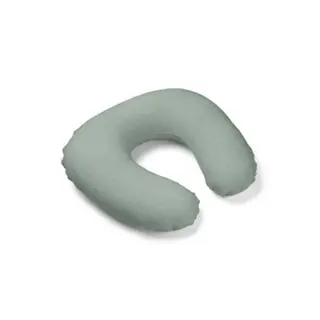 −9 %DoomooSofty maternity and nursing pillow, Corduroy Green – Doomoo564 DH
instead of 620 DHView product −9 %BabymoovB.Love XXL pillow, Wind Blue – Babymoov683 DH
instead of 750 DHView product −9 %DoomooBuddy nursing and pregnancy pillow, Tetra Jersey Green – Doomoo810 DH
instead of 890 DHView product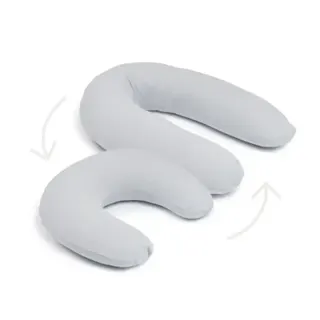 −9 %DoomooTwisty 2-in-1 pregnancy pillow, Pearl Grey, pearl grey cover – Doomoo901 DH
instead of 990 DHView product- The whole aisle · Pregnancy and nursing pillows20 products online, delivered anywhere in Morocco.Open the aisle
Products sold by La Maison du Bébé, publisher of this magazine. Prices as of 12 October 2026; please check the product page.
Frequently asked questions
Can fasting reduce breast milk supply?
It can, mainly through dehydration and lack of calories, according to Johns Hopkins Aramco Healthcare. The recent studies it cites find that the protein, fat and carbohydrates in milk stay fairly stable, while some minerals may decrease. Keep an eye on your baby’s wet nappies, weight and alertness: at the slightest doubt, break your fast and see a doctor.
Can a pregnant woman with diabetes fast?
Generally, no. Moroccan doctors interviewed by the press advise against fasting with diabetes, whether it appeared during pregnancy or existed before, because keeping blood sugar balanced becomes very difficult without regular meals. If you still want to fast, the decision must be made only with the doctor who manages your diabetes, well before the month begins.
How much water should you drink between ftour and shour when breastfeeding?
Johns Hopkins Aramco Healthcare advises breastfeeding mothers to aim for at least 2 to 3 litres between ftour and shour, spread throughout the evening, including several glasses just before dawn. Keep a bottle within reach during feeds. Dark or scanty urine, dizziness or headaches signal that you are not drinking enough.
Is fasting dangerous for the unborn baby?
A large review of 22 studies found no effect on birth weight or on premature birth. But data are lacking on other points, and a few studies suggest possible long-term effects on the child, without solid proof. In other words, no danger has been shown for a normal pregnancy, but safety has not been proven either: the decision is made case by case, with your doctor.
Sources
- The effect of Ramadan fasting during pregnancy on perinatal outcomes: a systematic review and meta-analysis (Glazier et al., BMC Pregnancy and Childbirth, 2018)BMC Pregnancy and Childbirth, University of Manchester · United Kingdom
- Does fasting during Ramadan impact pregnancy and birth outcomes?Federation University Australia (Prof. Muhammad Aziz Rahman) · Australia
- Can You Fast While Breastfeeding in Ramadan?Johns Hopkins Aramco Healthcare · Saudi Arabia
- Jeûne vs grossesse et allaitement : comment s'en sortir ?Le Matin · Morocco
- Femmes enceintes : quels risques durant le Ramadan ?Aujourd'hui le Maroc (with Prof. Redouane Mesbahi, Ibn Sina University Hospital, Rabat) · Morocco
- Ramadan et grossesse : jeûner ou pas, la question se poseBladi.net · Morocco