









Article contents
Key points
- The principle comes from Emmi Pikler, a Budapest paediatrician: the child masters each position alone.
- The French HAS bases flat head prevention on the infant's free, spontaneous movement.
- In practice: on the back, on a firm mat on the floor, with a few toys around.
- Bouncer, car seat, rocker: as little as possible, and never more than an hour at a time, says the WHO.
- Free movement does not mean no cuddles: the HAS also recommends carrying baby.
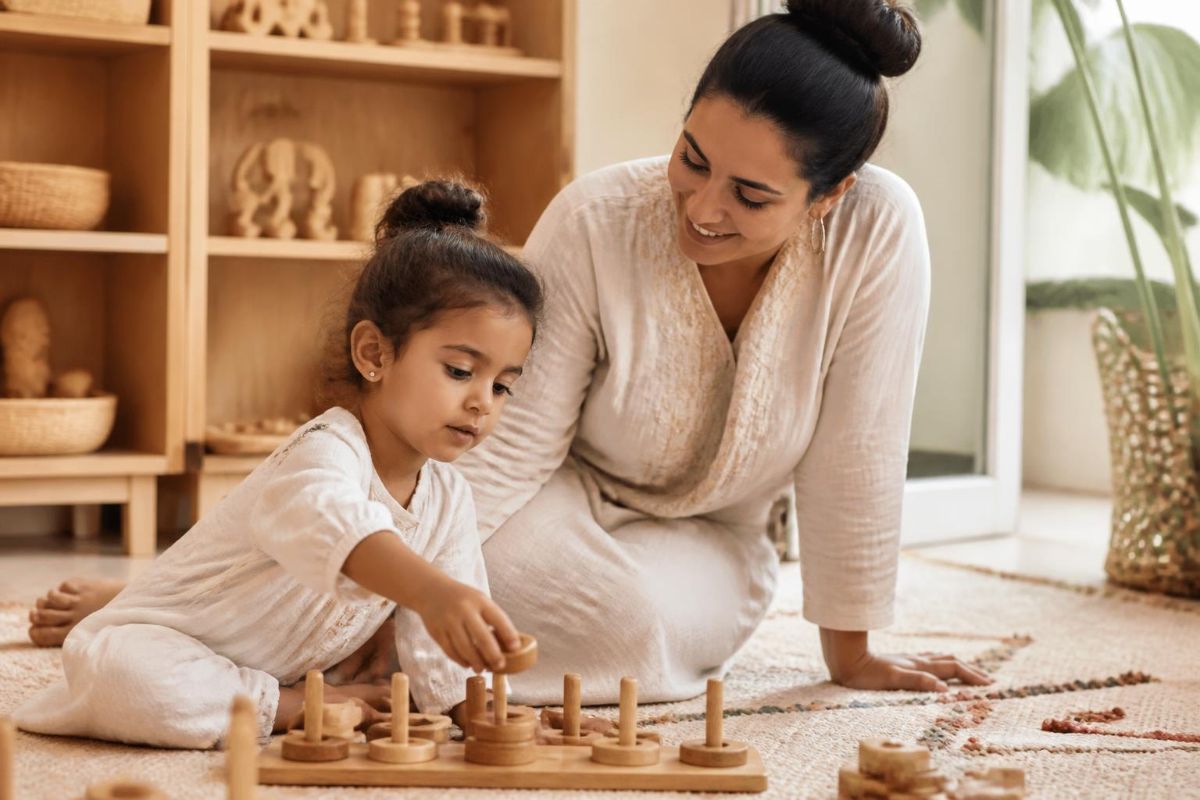
Baby lies on their back on a mat, watching their hands. They wriggle, half turn over, try again. Nothing spectacular, and yet they are hard at work. Free movement (motricité libre in French) means giving them exactly that time: no imposed position, no seat to "hold them up", no hands to make them walk. They discover each movement alone, at their own pace.
The idea comes from a Budapest paediatrician, Emmi Pikler. It is now taken up by the French Haute Autorité de santé (HAS), the national health authority. Here is where it comes from, what it offers, and how to apply it in a Moroccan home, with or without a play gym.
What is free movement?
It means letting the child discover positions and movements for themselves, starting on the back, without placing them in a posture they cannot yet reach alone. They roll, crawl, sit up, get on all fours, then stand when their body is ready.
The principle was formalised by Emmi Pikler (1902-1984), a family paediatrician in Budapest. In 1946, at the request of the Hungarian government, she opened a nursery at 3 Lóczy Street, which gave the approach its name. Her research on motor development was published in French as Se mouvoir en liberté dès le premier âge ("Moving freely from the earliest age").
The Pikler Lóczy-France association sums up what underpins care at Lóczy: autonomous development, without stimulation or direct educational intervention from the adult. At birth, the back is the only starting position; the rest of motor development rests on the child's own initiative. The adult first meets their essential needs, then offers them a space of their own for free activity.

What the HAS and the WHO say
In France, the HAS made it the basis of its 2020 recommendations against skull deformations: prevention rests on respecting the infant's free and spontaneous movement, it writes. It describes a baby placed on the back, on a firm mat on the floor, with toys placed around them, and asks that parents be told about the harmful effect of all devices that hold baby in place.
The World Health Organization (WHO) points the same way: before age 1, it recommends floor play several times a day, at least 30 minutes on the tummy for a baby who is not yet mobile, and no more than an hour at a time strapped into a pushchair, a high chair or a back baby carrier.
What are the benefits for baby?
The first is documented by the HAS: a lower risk of a flat head. A baby who is free to turn their head and change position does not keep resting on the same spot. Our article on plagiocephaly covers this topic in detail.
The second concerns muscles. The American Academy of Pediatrics (AAP) explains that tummy time helps baby build muscle and acquire the skills for the next stages, and prepares them to slide on the tummy and then crawl. A trainer from the Association Montessori Internationale puts it this way: by moving freely, the child experiences creeping, crawling on all fours, cruising along furniture, then walking.
The third is harder to measure, but it is at the heart of the Pikler approach: encouraging autonomous development. A baby who sits up alone has found their own balance.
In practice: the floor, a firm mat, soft clothes
Free movement requires almost no equipment. You need:
- floor space, clean and safe, away from stairs, sockets and small objects;
- a firm mat, more comfortable than cold tiles in winter: a play mat, some foam mats or a clean, flat living-room rug;
- a few toys around them, not on them, to invite them to turn their head and reach out;
- soft clothes that leave legs and arms free, as the AMI advises; a soft bodysuit and trousers are better than jeans or a long dress.
At first, short moments are enough, several times a day, when baby is rested. Vary positions: on the back, on the side, on the tummy under your eye, as the HAS recommends. For tummy time, the AAP advises starting with 3 to 5 minutes, 2 to 3 times a day, and increasing gradually.
As soon as baby gets around, the space has to follow: our home safety checklist helps you go through it.
From the shop
Mats for moving freely on the floor
A firm mat, big enough to roll and crawl on, is all you need. These models, at various prices, offer a clean, comfortable surface on tiles; the arch and toys are optional.
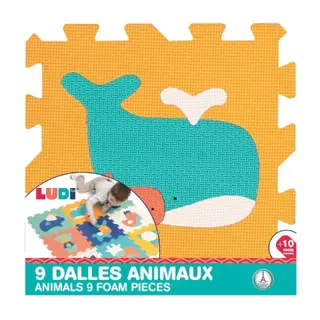 −42 %LudiAnimal tiles play mat, from birth – Ludi143 DH
instead of 245 DHView product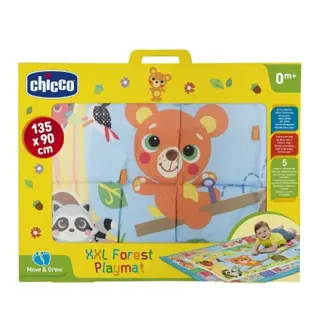 −48 %ChiccoMove’n Grow XXL forest activity gym – Chicco234 DH
instead of 450 DHView product −42 %LudiPlay course – Ludi348 DH
instead of 595 DHView product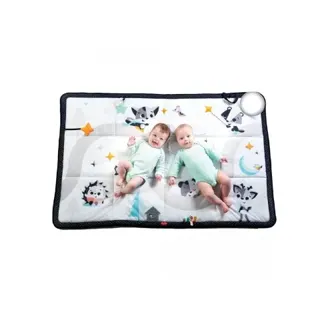 −54 %Tiny LoveBlack & White giant activity mat – Tiny Love365 DH
instead of 790 DHView product −48 %Doudou et CompagnieTapidou playpen mat, blue bear – Doudou et Compagnie619 DH
instead of 1 190 DHView product −9 %Tiny LoveSuper Mat activity mat, Garden of Adventures – Tiny Love683 DH
instead of 750 DHView product- The whole aisle · Activity mats21 products online, delivered anywhere in Morocco.Open the aisle
Products sold by La Maison du Bébé, publisher of this magazine. Prices as of 12 October 2026; please check the product page.
Should you sit them up, stand them up, make them walk?
No, that is the whole principle. Since motor development rests on the child's initiative, the Pikler approach rules out sitting baby propped in cushions before they sit alone, standing them up or making them walk by holding their arms. They reach each position by their own means.
This takes patience, because ages vary a great deal. The WHO motor development study observed healthy children sitting without support between 3.8 and 9.2 months, getting on all fours between 5.2 and 13.5 months and walking alone between 8.2 and 17.6 months. The baby walker is not part of the approach: our article on first steps explains why paediatricians advise against it.
Bouncer, car seat, rocker: how long?
As little as possible. The HAS asks you to limit as much as possible the time spent in baby equipment, a bouncer, recliner or car-seat carrier, and to keep the car seat for car journeys. It lists the bouncer, the rocker, the hammock and the bed reducer among the devices that hold the body in place and favour a flat head. The WHO sets a ceiling: no more than an hour at a time.
The bouncer keeps its usefulness for short moments: during a shower, a meal, a conversation at adult level. To choose and use one well, see our bouncer and rocker guide. And for sleep, it is always in their own bed, on the back, following the rules of safe sleep.
The adult's role: present, without doing it for them
Free movement does not mean a baby left alone or never carried. The HAS also recommends carrying, in your arms or in a wrap, and describes tummy time as a special moment of exchange with the adult. According to the Pikler approach, the adult cares for the child, then leaves them a space for free play while staying available.
Your role: prepare a safe space, observe, encourage with a word or a smile, and resist the urge to help too quickly. For play ideas suited to each age, read our play and stimulation activities from 0 to 12 months.
Frequently asked questions
Can baby nap in a bouncer?
No. The French Haute Autorité de santé (HAS) asks that baby be put down on the back, in their own bed, on a firm mattress, in a sleeping bag. It lists the bouncer, the rocker and the hammock among the devices that hold the body in place and favour a flat head. If baby falls asleep in the bouncer, move them to their bed as soon as possible.
Does free movement mean you should not carry baby?
No. The HAS recommends both free movement and carrying the infant in your arms or in a wrap. The two complement each other: carrying meets baby's need for closeness, the floor gives them time to move alone. What should be limited is equipment that immobilises baby for long periods: bouncer, car seat, rocker.
My baby cries as soon as I put them on their back on the floor: what can I do?
Stay close, at their level: lie down on the mat, talk to them, place one or two toys around them, as the HAS advises. Start with short moments, when baby is rested and fed, then lengthen them gradually. Vary positions too, with time on the tummy, always under your eye.
Is a baby walker compatible with free movement?
No. A trainer from the Association Montessori Internationale points out that there is no need to push a baby to walk before they are ready by putting them in a walker. A walker stands baby up before they can do it alone, the opposite of free movement. Our article on first steps explains why paediatricians advise against it and what alternatives to choose.
Sources
- Fiche mémo : Prévention des déformations crâniennes positionnelles et mort inattendue du nourrissonHaute Autorité de santé (HAS) · France
- Prévenir la tête plate : conseils aux parentsHaute Autorité de santé (HAS) · France
- Son parcours personnel (Emmi Pikler)Association Pikler Lóczy-France · France
- Les fondements de l'accueil à « lóczy »Association Pikler Lóczy-France · France
- To grow up healthy, children need to sit less and play moreWorld Health Organization (WHO) · International
- WHO Motor Development Study: Windows of achievement for six gross motor development milestonesWorld Health Organization, Multicentre Growth Reference Study (Acta Paediatrica, 2006) · International
- Back to Sleep, Tummy to Play: Give Your Baby a Safe, Strong StartAmerican Academy of Pediatrics (HealthyChildren.org) · United States
- Meeting an Infant's Movement NeedsAssociation Montessori Internationale (AMI) · International