




Article contents
Key points
- Measure first: a humidifier is only useful if the air stays below 30% humidity.
- Cool mist for a child's room: warm mist can burn.
- A built-in hygrometer or a humidity setting stops you going above 50%.
- Demineralised water, changed every day, and cleaning every three days.
- An air purifier filters particles but adds no moisture.
A humidifier in your baby's room is often the first purchase that comes to mind when their nose gets blocked or the heating dries the air. Well chosen and well maintained, it makes the air more comfortable when it really is dry. Badly chosen, it can burn, spread a white dust or push humidity up until mould appears.
This guide helps you decide whether you need one, compare the types of device and the criteria that matter, then use it safely. For humidity levels and the signs of dry air, first read our article on dry air in your baby's room.
Do you really need a humidifier?
Before buying, measure. The right humidity level in a bedroom is between 30 and 50%, according to Health Canada and the US Environmental Protection Agency (EPA). A humidifier is only worthwhile if the hygrometer consistently shows below 30%.
- Yes, probably: a heated bedroom in winter or a chergui spell, with a hygrometer that stays below 30%.
- No: if the hygrometer already shows 30 to 50% or more, which can happen near the sea, or if condensation forms on the windows in the morning. The EPA then advises turning the setting down, moving the device or using it less.
- Not instead of care: for a blocked nose, the first step is still a saline nose rinse, detailed in our article on rinsing your baby's nose.
Think about temperature too: an overheated bedroom feels drier. Keep it at around 18 to 20 °C, as our article on the temperature of your baby's room explains.

Cool mist or warm mist: which should you choose for a baby?
There are three main families of device. For a child's room, the Mayo Clinic always recommends a cool-mist model.
| Type | How it works | Strengths | Points to watch |
|---|---|---|---|
| Ultrasonic (cool mist) | A vibrating membrane turns water into a fine mist | Quiet, no hot water | Disperses minerals from tap water (white dust) and germs from a poorly maintained tank |
| Evaporative (cool mist) | A fan blows air through a wet wick | Generally releases fewer pollutants | Fan noise, wick to replace, tank to clean |
| Warm mist (vaporiser) | Water is heated until it boils | Generally releases few germs and minerals | Steam and boiling water: risk of burns, not advised with children |
These strengths and weaknesses come from the EPA's guide to home humidifiers. Ultrasonic models are discreet and give off no heat, but, along with impeller models, they are the type that disperses the most minerals and germs when the water is hard or the tank poorly maintained (EPA): they need demineralised water and regular cleaning. Evaporative models release less, at the cost of a little noise. Warm mist, however, has no place near a child: the Mayo Clinic advises against this type of device if you have children, and for croup the NHS advises against making a child breathe in steam.
Which features should you compare before buying a humidifier?
- Built-in hygrometer or humidistat: the device displays the humidity level and stops when the set level is reached, which keeps you from going above 50% (Mayo Clinic, EPA).
- Capacity and running time: the tank should last a whole night at the chosen output, with no refilling at 3 am.
- Area covered: compare the stated m² with the size of the bedroom; a device too powerful for a small room quickly pushes humidity up.
- Noise: look at the stated noise level in decibels; the lower it is, the quieter the device at night.
- Night light: handy for night feeds, if the light can be dimmed or switched off.
- Automatic shut-off when the tank is empty.
- Easy cleaning: wide opening, accessible parts, no nooks where water stagnates.
- Stability: a wide base that is hard to knock over.
Some models include an essential oil diffuser: to be on the safe side, do not use it in your baby's room. ANSES, the French health safety agency, calls for vigilance about diffusing essential oils, which can release irritating substances, and asks for these products to be kept out of reach of young children.
As an example, Babymoov's Hygro humidifier combines several of these features: cool mist, humidity display, night light. It is in our humidifiers aisle; it was out of stock at the time of publication, so check its availability on its product page.
Humidifier, air purifier or 3-in-1: what is the difference?
The two devices look alike but do not do the same job. A humidifier adds water vapour to the air; a purifier passes the air through a filter that traps particles, without changing the humidity.
- Humidifier: useful if the air is dry, below 30%. It does not filter the air.
- HEPA-filter purifier: traps fine airborne particles, such as dust or pollen, but does not correct dry air. The EPA points out that it complements airing and removing sources of pollution without replacing them, and advises avoiding devices that deliberately produce ozone.
- "3-in-1" devices: read the three advertised functions carefully, as the term does not always mean purifier, humidifier and night light.
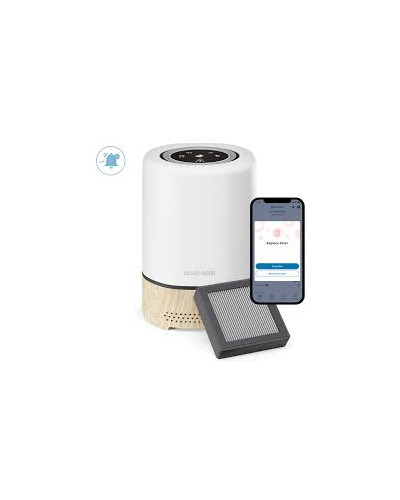
The Maxi-Cosi Clean 3-in-1 air purifier, for example, combines air purification, a night light and four soothing sounds. According to the manufacturer, it uses an H13-class True HEPA filter, offers three fan speeds and is controlled from the Maxi-Cosi Connected Home app or its touch panel. It is not a humidifier: it adds no water to the air and does not correct dry air. Its filter, designed for about 1,000 hours, cannot be washed: you replace it, for example with the brand's pack of three HEPA filters.
From the shop
Air purifier, filters and night lights for the bedroom
Maxi-Cosi's Clean 3-in-1 purifier, which filters the air without humidifying it, its replacement HEPA filters, and soft night lights, placed away from the cot, for night wakings.
 Maxi-CosiClean 3-in-1 air purifier Maxi-CosiView product
 Maxi-CosiHEPA filters x3 for Clean 3-in-1 air purifier Maxi-CosiView product
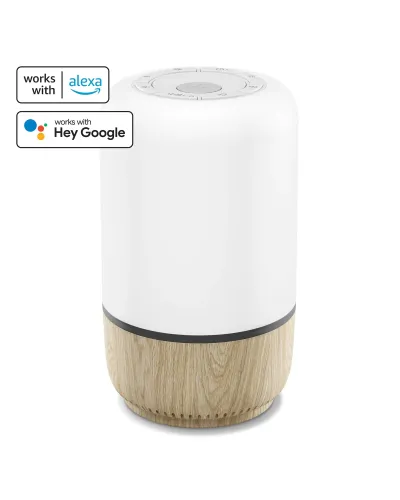 Maxi-CosiSoothe connected musical night light Maxi-CosiView product
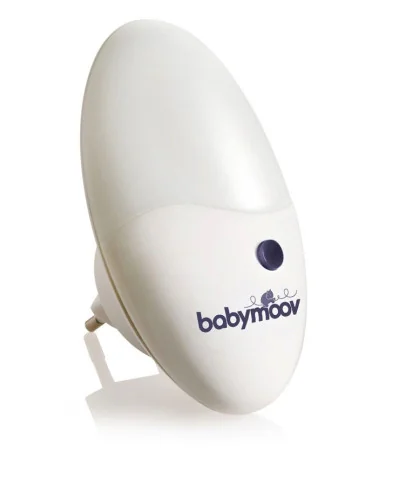 BabymoovWall night light BabymoovView product
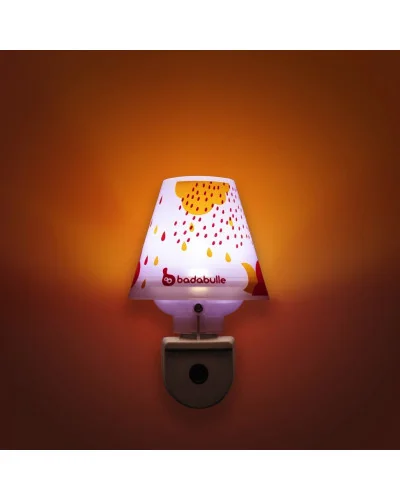 BadabulleAutomatic wall night light Pink Drops BadabulleView product
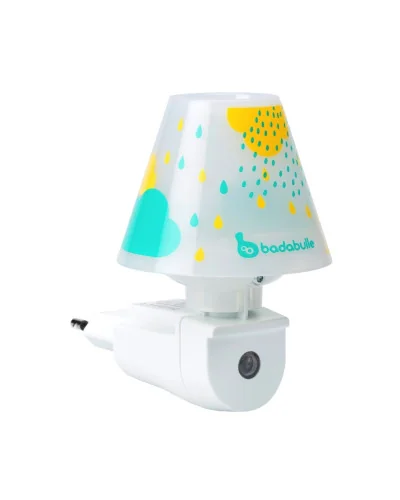 BadabulleWall night light Blue Drops BadabulleView product
 ChiccoProjector Next2 Stars neutral beige ChiccoView product
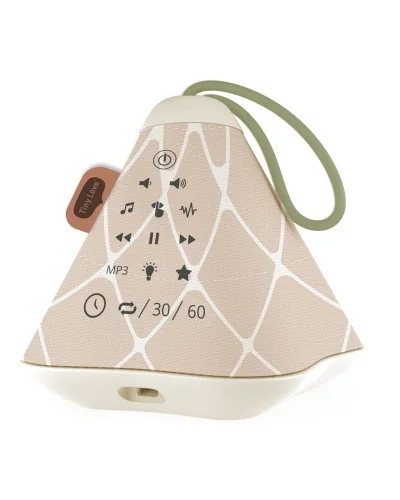 Tiny LoveTiny Dreamer 3-in-1 musical projector night light Boho Chic Tiny LoveView product
- The whole aisle · All night lightsDelivered anywhere in Morocco, free from 300 DH.Open the aisle
Products sold by La Maison du Bébé, publisher of this magazine. Please check price and availability on the product page.
How do you use and maintain a humidifier safely?
Every day
- Empty, wipe and refill the tank (EPA): water must never be left standing.
- Use demineralised or distilled water, which limits limescale and white dust (EPA, CPSC). Bottled mineral or spring water is not demineralised, the EPA specifies.
- Set the target below 50%: the EPA advises against humidifying above that.
- Put the device on stable furniture, out of reach, away from the cot, with the cord tidied away, never on the floor where your baby crawls.
Every three days
- Unplug, descale and clean the tank and the parts in contact with water, following the instructions (EPA, Mayo Clinic).
- Rinse thoroughly after any cleaning or disinfecting product, so you do not breathe in the residues (EPA, CPSC).
At the end of the season
- Clean, dry completely and store the device dry; replace worn wicks or cartridges.
If your baby coughs or breathes less easily since you started using the device, switch it off and talk to the doctor, the EPA advises. If they have a cold, our article on colds in babies details the signs that mean you should see a doctor.
What mistakes should you avoid with a humidifier?
- Humidifying without measuring: near the sea, the air is not necessarily dry.
- Leaving yesterday's water in the tank.
- Filling an ultrasonic model with hard tap water.
- Turning the device up to maximum "so it works better": above 60%, moisture can condense and encourage mould and bacteria (CPSC).
- Pointing the mist at the cot, or placing the device against a wall or curtain that ends up soaking up moisture.
- Relying on it to replace daily airing, nose rinsing or a medical consultation.
From the shop
Also useful, for minor colds
Saline solution, saline drops, nasal aspirators and a thermometer, to keep near the changing table.
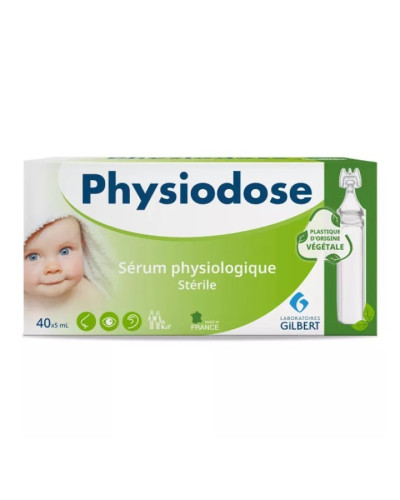 Laboratoires GilbertGilbert PHY Bébé Sérum physiologique 40 unidoses de 5 mlView product
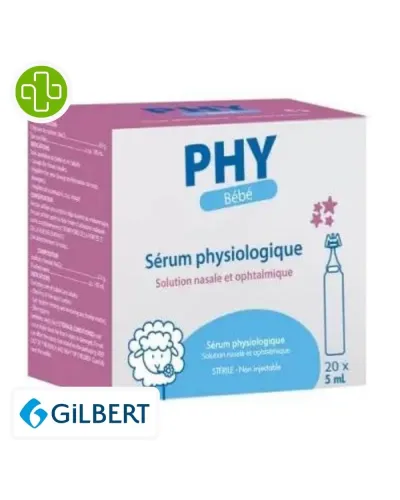 Laboratoires GilbertGILBERT PHY SERUM PHYSIOLOGIQUE 20U 5mlView product
 Laboratoires GilbertGILBERT PHY SERUM PHYSIOLOGIQUE 30U 5mlView product
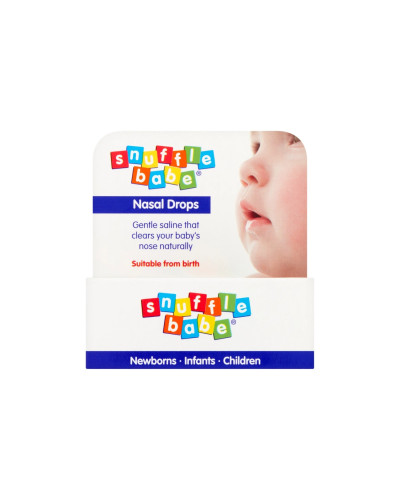 Snufflebabe (Dendron Brands)Snufflebabe gouttes nasales salines pour bébé dès la naissance 10 mlView product
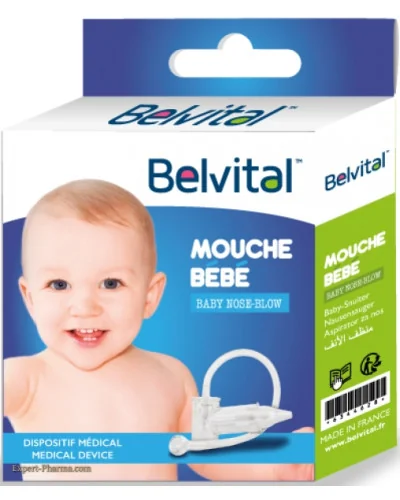 BelvitalManual nasal aspirator from birth BelvitalView product
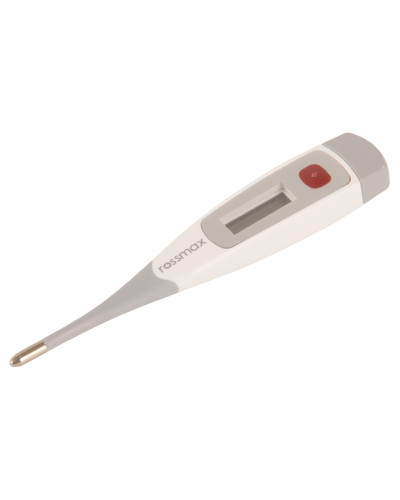 RossmaxRossmax Digital Thermometer with Flexible TipView product
- The whole aisle · All nasal aspiratorsDelivered anywhere in Morocco, free from 300 DH.Open the aisle
Products sold by La Maison du Bébé, publisher of this magazine. Please check price and availability on the product page.
Frequently asked questions
From what age can you use a humidifier for a baby?
The sources we consulted set no minimum age: the device humidifies the room, not the child. What matters is a real need, with air measured below 30%, the type of device, cool mist as the Mayo Clinic recommends for children, a setting below 50% and daily maintenance. Place it out of reach, away from the cot, on stable furniture.
Can I leave a humidifier on all night?
You can if it has a hygrometer or humidistat that switches it off when the target is reached, set below 50% as the EPA advises. Without this regulation, it can push humidity too high as the hours go by. In the morning, look at the windows: condensation signals air that is too humid. Empty and refill the tank every day.
What water should I put in a baby humidifier?
Demineralised or distilled water, recommend the US EPA and CPSC. Tap water contains minerals that form limescale, which encourages germs, and that ultrasonic models disperse as white dust. The EPA specifies that bottled mineral or spring water is not demineralised. Change the water every day, and never top up what is left in the tank.
Is an ultrasonic humidifier dangerous for babies?
No, if it is used and maintained properly. The EPA observes that ultrasonic models release more minerals and germs than other types when the water is hard or the tank is dirty. Hence three rules: demineralised water, water changed every day, cleaning every three days. Set it below 50% and keep it away from the cot.
Can I put essential oils in my baby's humidifier?
It is best not to in a baby's room. ANSES, the French health safety agency, calls for vigilance about diffusing essential oils, which can release irritating substances, particularly for people with asthma, and asks for these products to be kept out of reach of young children. Many humidifiers are not designed for this use: read the instructions, and ask your doctor or pharmacist for advice.
Can an air purifier replace a humidifier?
No, they do two different things. A purifier passes air through a filter, often HEPA, that traps fine particles, without changing the humidity; a humidifier adds water vapour without filtering. Maxi-Cosi's Clean 3-in-1 purifier, for example, combines purification, a night light and soothing sounds, but does not humidify. The EPA points out that no purifier replaces airing the room.
Sources
- Use and Care of Home HumidifiersEPA (Environmental Protection Agency)
- Dirty Humidifiers May Cause Health ProblemsCPSC (Consumer Product Safety Commission)
- Guide to addressing moisture and mould indoorsHealth Canada
- A Brief Guide to Mold, Moisture and Your HomeEPA (Environmental Protection Agency)
- Humidifiers: Ease skin, breathing symptomsMayo Clinic
- Warm-mist versus cool-mist humidifier: Which is better for a cold?Mayo Clinic
- CroupNHS
- Guide to Air Cleaners in the HomeEPA (Environmental Protection Agency)
- ANSES calls for vigilance concerning essential-oil based sprays and diffusersANSES (French Agency for Food, Environmental and Occupational Health & Safety)
- Clean 3-in-1 Air Purifier (manufacturer's product page)Maxi-Cosi