





Article contents
Key points
- An ordinary acute cough lasts 10 to 14 days, sometimes 3 to 4 weeks without complications.
- Before age 2, no cough syrup at all, whether the cough is dry or chesty.
- Honey can soothe a night cough, but never before age 1.
- Nasal rinsing remains the first step when the nose is blocked.
- Difficult breathing, barking cough with noise on breathing in, pauses in breathing: call 141.
He has been coughing for three days, mostly at night, and you can hear him through the baby monitor. A dry cough that wakes him, then in the morning a chestier one, as if he had "phlegm on his chest". A baby's cough worries parents a great deal, even though it is almost always the sign of a simple virus.
A cough is not a disease: it is a defence reflex that clears the airways. The challenge is twofold: soothe your child without blocking that reflex, and spot the rare coughs that need quick medical advice. Here is how to find your way.
Why does my baby cough?
In the vast majority of cases, an infant's acute cough is due to an ordinary viral infection, reminds the French medicines agency (Afssaps, now ANSM). A cold, a nose and throat infection: the secretions from the nose run down the throat and irritate it.
Santé.fr lists other causes: bronchiolitis, laryngitis, pneumonia, asthma, whooping cough, flu, measles. And one cause never to forget in a little one who puts everything in their mouth: a foreign object swallowed the wrong way, such as a peanut or a small toy. A cough that starts suddenly during a meal or play, in a child who was well until then, should make you think of this possibility.
The environment matters too: tobacco, dust, smoke from the kanoun (charcoal brazier) or incense irritate the airways.

Dry, chesty, barking: what does each cough mean?
The type of cough gives a lead, but is not enough for a diagnosis. It is all the signs together that count.
| Type of cough | What you hear | Common causes |
|---|---|---|
| Dry | Irritating cough, no phlegm, often at night | Start of a cold, irritation, asthma, allergy |
| Chesty | "Wet" cough, with secretions | A cold developing, bronchitis, bronchiolitis |
| Barking | Hoarse, like a seal's bark, cracked voice | Laryngitis (croup) |
| Coughing fits | Bouts of coughing that never seem to end, sometimes followed by a noisy gasp or vomiting | Whooping cough |
| Wheezy | Whistling on breathing out, fast breathing | Bronchiolitis, asthma |
A chesty cough is useful, stresses Santé.fr: it clears the bronchial tubes. The barking night cough is covered in our article on laryngitis, and coughing fits in the one on whooping cough in babies.
How long does a cough last?
An ordinary acute cough generally lasts 10 to 14 days, and sometimes up to 3 to 4 weeks without complications, according to Afssaps. It is often the last thing to go after a cold: the child feels better, eats and plays, but keeps coughing.
What should send you back to the doctor is no improvement after 10 to 15 days, a worsening, or the appearance of new signs: fever coming back, tiredness, breathing difficulty.
How to soothe a baby's cough
The recommended measures are simple, and they are the same in France, Canada or the United Kingdom.
- Rinse the nose with saline when it is blocked, especially before meals and bedtime. The technique is explained in our nasal rinsing guide.
- Offer drinks often: more frequent breastfeeds or bottles for a baby, water and warm drinks for an older child.
- Keep the bedroom at 19-20 °C, aired every day, and humidify the air if it is very dry.
- Ban tobacco from the whole home, even rooms where the child does not sleep. No kanoun or incense in the bedroom.
- Hold an older child in a semi-sitting position on your lap or on the sofa when they cough.
- Give a little honey at bedtime, from age 1 only.
Inhaling hot steam is only considered from age 3, according to Santé.fr, and always under supervision, to avoid burns.
From the shop
For a clear nose and gentler air
Nothing here makes a cough disappear: these products simply help keep the nose clear and the bedroom air less dry.
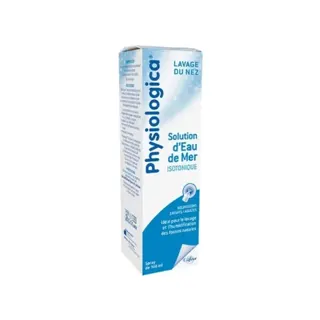 −48 %GifrerIsotonic seawater nasal spray, 100 ml – Gifrer29 DH
instead of 56 DHView product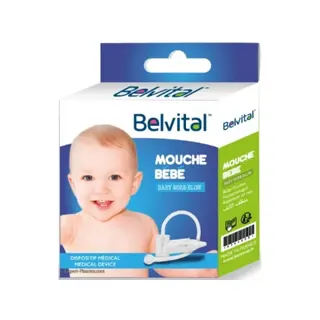 −41 %BelvitalManual baby nasal aspirator, from birth – Belvital41 DH
instead of 70 DHView product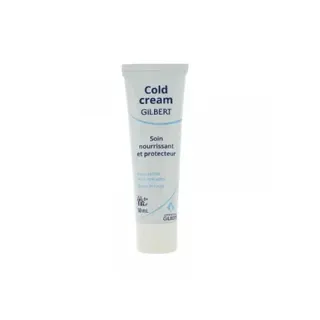 −48 %Laboratoires GilbertGilbert Cold Cream, 50 ml24 DH
instead of 46 DHView product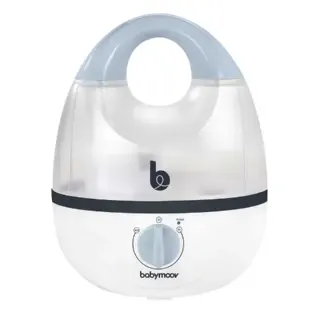 −9 %BabymoovHygro nursery air humidifier – Babymoov810 DH
instead of 890 DHView product- The whole aisle · Baby nasal aspirators1 products online, delivered anywhere in Morocco.Open the aisle
Products sold by La Maison du Bébé, publisher of this magazine. Prices as of 12 October 2026; please check the product page.
And cough syrups?
The health authorities' answer is clear: no cough syrup for young children.
- In France, no syrup, whether the cough is dry or chesty, should be given before age 2 (Santé.fr). Since 2010, bronchial thinners (mucolytics) have been contraindicated in infants, because they can worsen congestion. Cough suppressants have never been shown to shorten or reduce a cough.
- In Canada, Health Canada has advised against over-the-counter cough and cold medicines before age 6 since 2009, because of possible serious side effects.
- In the United Kingdom, the NHS reminds us that some cough medicines must not be given before age 12, and that codeine is contraindicated before that age.
Some medicines are particularly to be avoided in young children: terpene derivatives (camphor, eucalyptol, menthol), in syrup, suppository or ointment, because of a risk of seizures, and sedating antihistamines. The same goes for essential oils rubbed on the chest.
In Morocco, many syrups are sold without a prescription in pharmacies. If your child is over 2 and a dry cough really stops them sleeping, ask the doctor or pharmacist for advice, giving age and weight: they choose the product and the dose. For the fever that comes with a cough, our article on baby fever explains how to react. Antibiotics are no use against a virus.
The signs that mean you should see a doctor
A cough becomes worrying because of what comes with it, not because of its sound. Keep in mind the signs in the box below and, if in doubt, our guide to paediatric emergencies. If night coughs keep coming back without a cold, or come with wheezing, think of mentioning it to the paediatrician: it may be asthma.
Frequently asked questions
Why does my baby cough mostly at night?
Lying down, a child swallows nasal secretions less easily; they run down the throat and trigger coughing. Rinsing the nose before bedtime often helps. However, a night cough that keeps coming back without a cold, or wheezing, may point to asthma: the French medicines agency asks you to stay alert to a recurring night cough. Talk to the paediatrician.
Are herbal or honey syrups sold in pharmacies safer?
Not necessarily. Some contain honey, forbidden before age 1, or terpene derivatives, which are contraindicated in young children because of a risk of seizures. Health Canada advises against all over-the-counter cough and cold medicines before age 6. Before buying any product, even a 'natural' one, ask the pharmacist, giving your child's age.
Does a chesty cough need chest physiotherapy?
Not for an ordinary cough. The 2010 French recommendations on acute cough in infants do not advise it in this case. The doctor may prescribe it in certain situations of heavy congestion. Nasal rinsing, frequent drinks and patience are enough in most cases.
My child has been coughing for three weeks. Is that normal?
A cough after a cold can drag on for 3 to 4 weeks without complications. But beyond 10 to 15 days with no improvement, or if it gets worse, you should see a doctor. The doctor will look for whooping cough, asthma, sinusitis or an inhaled foreign object, especially if the cough began suddenly during a meal or play.
Sources
- Toux de l'enfantSanté.fr, Service public d'information en santé · France
- Mise au point : prise en charge de la toux aiguë chez le nourrisson de moins de deux ans (octobre 2010)Afssaps (aujourd'hui ANSM) · France
- Pour ou contre le miel en cas de toux ?mpedia.fr, Association française de pédiatrie ambulatoire (AFPA) · France
- Rhume et toux : pas de médicaments avant 6 ansNaître et grandir · Canada (Quebec)
- CoughNHS · United Kingdom