





Article contents
Key points
- A barking cough, a hoarse voice and a high-pitched noise on breathing in: that is the croup trio.
- A calm child breathes better: crying makes the difficulty worse.
- Keep them upright and offer a drink; a few minutes of fresh air may help.
- Antibiotics do nothing: croup is caused by a virus.
- Pulling in under the ribs, drooling, blue lips, drowsiness: call 141.
It is 2 a.m. Your child, tucked up with a little cold, suddenly wakes with a strange, hoarse cough that sounds like a dog barking or a seal calling. Their voice is cracked, and when they breathe in they make a high-pitched, whistling noise. It is very frightening, and it is most often croup (called laryngite in French).
In the vast majority of cases, croup in children can be managed at home and passes within a few days. But it can narrow the airways enough to make breathing really difficult. Knowing how to calm a night-time attack, and recognising the moment to call for help, makes all the difference.
What is croup, and who gets it?
Croup is an inflammation of the larynx, the part of the throat that holds the vocal cords. It is almost always caused by a virus, most often a parainfluenza virus, and usually appears a day or two after a cold, in autumn and winter, according to French health insurance (Assurance maladie).
It affects children from 6 months to 6 years, with a peak between 18 months and 3 years. A young child's larynx is narrow: swelling just below the vocal cords (subglottic oedema) is enough to reduce the passage of air. In French it is called laryngite or faux croup.

How do you recognise croup?
Three signs, often in the middle of the night, give it away:
- a hoarse, “barking” cough, very different from a cold cough;
- a husky or lost voice, and cries that sound muffled;
- a high-pitched noise on breathing in, called stridor, when air struggles to get through.
The fever is usually moderate, below 38.5 °C according to Naître et grandir. When croup gets worse, breathing becomes laboured: the hollows between the ribs and above the breastbone sink in with each breath (this is called retraction). To tell the other childhood coughs apart, see our guide to your baby's cough; if your infant wheezes mostly when breathing out and breathes fast, think of bronchiolitis.
What should you do during a night-time attack?
The first step is to calm your child: crying makes breathing harder, the NHS reminds us.
- Pick them up, talk softly, switch on a dim light. Your calm helps more than anything.
- Keep them sitting or half-sitting, held against you, rather than lying down.
- Watch their breathing: hollows under the ribs, noise on breathing in at rest, lip colour, how alert they are.
- Offer a drink in small sips if they are breathing without difficulty.
- If it is cold outside, the Canadian Paediatric Society and Naître et grandir suggest taking them out for a few minutes, well wrapped up, onto the balcony or to an open window: fresh air may bring relief.
- Call your doctor in the morning, or sooner if the difficulty does not ease. And call 141 at the first sign of severity (see the box below).
Winter nights, often cool in Morocco, lend themselves well to this. Never leave your child alone while you do it, and go back inside if they shiver.
What treatment can the doctor prescribe?
Mild forms are managed at home, without any specific medicine. If breathing is significantly affected, the doctor may prescribe a corticosteroid by mouth for a very short period, according to Assurance maladie; in hospital, other treatments exist for severe forms. The medicine and the dose are set by the doctor.
What does not help:
- antibiotics, because croup is viral;
- cough and cold syrups, which the Canadians advise against before age 6 unless a doctor says otherwise;
- essential oils and “natural” products, with no proven effect according to Naître et grandir, and dangerous for young children.
For fever or discomfort, ask the doctor or pharmacist which fever reducer to give and at what dose; our article on fever in babies explains the benchmarks. A clear nose, thanks to a saline rinse as for a cold, also helps your child breathe more calmly.
From the shop
For the bedroom and the little nose during croup
No device treats croup. A well-maintained humidifier only prevents air that is too dry, and a clear nose helps your child breathe calmly.
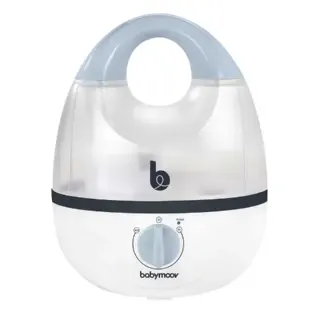 −9 %BabymoovHygro nursery air humidifier – Babymoov810 DH
instead of 890 DHView product −48 %GifrerIsotonic seawater nasal spray, 100 ml – Gifrer29 DH
instead of 56 DHView product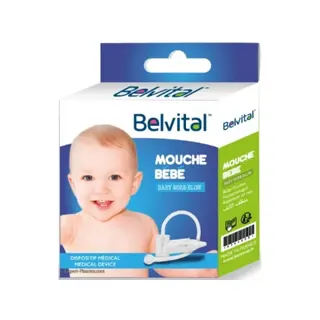 −41 %BelvitalManual baby nasal aspirator, from birth – Belvital41 DH
instead of 70 DHView product- The whole aisle · Humidifiers2 products online, delivered anywhere in Morocco.Open the aisle
Products sold by La Maison du Bébé, publisher of this magazine. Prices as of 12 October 2026; please check the product page.
How long does croup last?
Croup generally clears up in under a week, according to Assurance maladie, and the Canadian Paediatric Society mentions 5 to 7 days. The NHS observes that symptoms often improve within 48 hours. Nights are usually harder than days.
Your child can go back to nursery or school as soon as they feel better. A fever that lingers or a cough that gets worse after a few days means going back to the doctor: a secondary infection, though rare, remains possible.
Croup or emergency: the signs that leave no doubt
Breathing difficulty that is getting worse, an exhausted child or one who drools: call for help without waiting. Assurance maladie specifies that breathing distress is more common before 6 months. It also warns about epiglottitis, rare but serious: sudden onset, a high fever above 39 °C, a child who drools, cannot swallow their saliva and breathes with the mouth open. In that case, never lay them down: keep them sitting.
Another trap flagged by Assurance maladie: sudden breathing difficulty, with no fever or cold, in a child who was playing or eating, should make you think of an inhaled small object. To know where to go depending on the situation, keep our guide to paediatric emergencies to hand.
Frequently asked questions
Is croup contagious?
The virus that causes it is, just like a cold virus. The Canadian Paediatric Society explains that it spreads through hands, touched objects and droplets released when coughing or sneezing. Hand washing, tissues thrown away and coughing into the elbow limit the spread. French health insurance (Assurance maladie) says the child can return to nursery or school as soon as they feel better.
How long does croup last?
Recovery is usually quick, in under a week according to Assurance maladie; the Canadian Paediatric Society mentions 5 to 7 days. The NHS notes that symptoms often improve within 48 hours. The following nights may still be marked by coughing. If the voice stays hoarse or lost for more than a week, see a doctor.
My child keeps getting croup. Is that serious?
Some children have several episodes, often with every cold. When they keep coming back, Assurance maladie advises an ENT consultation and tests to look for a contributing factor: reflux, allergy or a narrowing of the larynx. Keep a record of the episodes and how severe they were for the doctor, and ask what to do during the next night-time attack.
Croup or epiglottitis: how can I tell the difference?
Epiglottitis is rare but an emergency. It starts suddenly with a high fever, often above 39 °C, a very sore throat, and a child who drools, cannot swallow and breathes with the mouth open. Croup mostly causes a barking cough and a moderate fever. If you have the slightest doubt, do not lay your child down and call 141.
Sources
- Définition et symptômes de la laryngiteAssurance maladie (ameli.fr) · France
- Laryngite de l'enfant : consultation, traitement et évolutionAssurance maladie (ameli.fr) · France
- Toux de l'enfantSanté.fr, Service public d'information en santé · France
- Le faux croup (laryngotrachéite)Soins de nos enfants, Canadian Paediatric Society · Canada
- La laryngite (faux croup)Naître et grandir · Canada (Québec)
- CroupNHS · United Kingdom