










Article contents
Key points
- No bowel movement for 2 to 3 days after a vaginal birth, 3 to 5 days after a caesarean: that is normal.
- Stitches do not give way when you open your bowels.
- Knees higher than the pelvis and no straining: position changes everything.
- Cream, suppository or laxative: ask the pharmacist which is compatible with breastfeeding.
- A hard, very painful lump, heavy bleeding or fever: see someone.
Three days since the baby was born, and still nothing. You dread going to the toilet, because of the stitches, and you have also discovered a small painful lump at the edge of the anus. Haemorrhoids after childbirth, like the constipation that keeps them going, are among the little troubles least talked about. Yet they are very common, and the UK's NHS describes them as very frequent after a birth.
The good news is that they usually disappear within a few days or weeks. Here is why they appear, how to make the first bowel movement less daunting, what you can do at home and what should make you seek care.
Why do so many mothers get haemorrhoids?
Haemorrhoids are dilated, swollen veins around the anus and rectum, reminds Naître et grandir. Pregnancy already encourages them, with the womb pressing on the pelvis and the frequent constipation of the last months; our article on the minor ailments of pregnancy covers it. The effort of pushing during labour often brings them out.
Constipation then keeps the problem going. NHS inform cites it as a common cause of haemorrhoids after birth. The MSD Manual sums it up: preventing constipation can avoid or relieve haemorrhoid flare-ups.

Why is the gut so slow after birth?
Several reasons add up: you ate little during labour, you move less, you often drink too little, and you hold back out of fear of pain. Some strong painkillers, the opioids, also slow the gut, as does anaesthesia, point out Naître et grandir and the MSD Manual.
The Quebec guide Mieux vivre gives reassuring reference points: not opening your bowels for two to three days after a vaginal birth, or up to three to five days after a caesarean, is normal.
The first bowel movement: how to make it less daunting
Fear of the first bowel movement is very widespread, especially after an episiotomy or a tear. Mieux vivre and NHS inform say it clearly: stitches do not give way when you go to the toilet.
- Do not wait: go as soon as you feel the urge. Holding back hardens the stool.
- Get set up with knees higher than the pelvis, feet raised, body leaning forward, as the HUG in Geneva advise. A small stool under your feet is enough. Squat toilets give this position naturally; if squatting pulls on your stitches, the stool is more comfortable.
- Do not push: breathe out gently, mouth slightly open, and let it come.
- Support your stitches with a clean pad or compress held against the perineum, as the NHS suggests.
- Rinse rather than rub: a jet of lukewarm water, then pat dry, always from front to back.
Care of the stitches themselves is detailed in our article on episiotomy and tears. After a caesarean, remember to press a cushion against your belly: our guide to caesarean scar care explains why.
From the shop
For gentler intimate washing
A bidet-style shower to rinse without rubbing after a bowel movement, a soothing perineal spray and washable briefs for the bleeding: small comforts, not treatments.
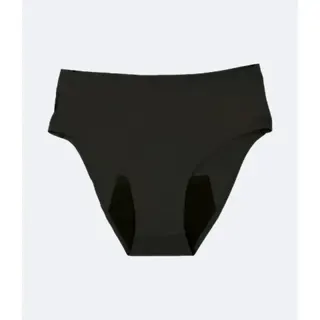 −21 %DoomooFlowly postpartum and period underwear, Black, XS-S-M – Doomoo355 DH
instead of 450 DHView product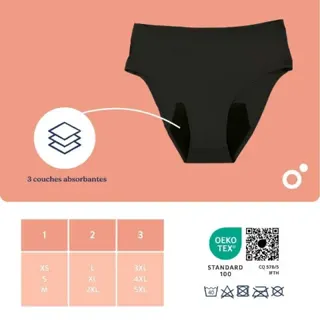 −21 %DoomooFlowly postpartum and period underwear, Black, L/XL/2XL – Doomoo355 DH
instead of 450 DHView product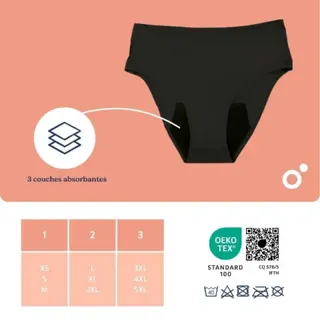 −21 %DoomooFlowly postpartum and period underwear, Black, 3XL/4XL/5XL – Doomoo355 DH
instead of 450 DHView product- The whole aisle · Mum’s hygiene8 products online, delivered anywhere in Morocco.Open the aisle
Products sold by La Maison du Bébé, publisher of this magazine. Prices as of 12 October 2026; please check the product page.
What to eat to get things moving, the Moroccan way
The CNGOF recommends preventing constipation first through diet and lifestyle. The sources consulted agree: fibre, increased gradually, about two litres of water a day, fresh or lightly processed foods. Naître et grandir also mentions prune juice.
Moroccan cooking offers everything you need:
- Pulses: harira, bissara, lentils and the chickpeas of the tagine.
- Vegetables at every meal: vegetable tagine, cooked salads (zaalouk, cumin carrots), vegetable soup.
- Wholemeal bread or barley bread rather than white bread, at least at one meal in two.
- Fruit: fresh or dried figs, prunes, oranges, and the dates you keep a handful of by the bed.
- Water within reach during every feed. Mint tea is comforting, but it does not replace water.
The dishes of the nfissa, such as sellou or msemen, are rich and comforting. Keep them, but vary with these higher-fibre foods. If you are breastfeeding, our article on the diet of a breastfeeding mother sorts myths from real needs.
Move too: a few steps several times a day wake up the gut, reminds Mieux vivre.
How to ease haemorrhoids at home
- Cold, in the first days: an ice pack wrapped in a cloth reduces pain and swelling at the perineum, according to the MSD Manual. The HUG suggest 15 minutes, two to four times a day.
- Lukewarm sitz baths, afterwards: sitting for a few minutes in a few centimetres of clean lukewarm water soothes, according to the MSD Manual and Naître et grandir. Full baths are still best avoided while you are bleeding.
- Sitting without pressure: a cushion, or two rolled cloths either side, as the HUG suggest. Avoid the ring cushion, which congests the perineum.
- A suitable cream or suppository, chosen with your pharmacist or midwife. Tell them you are breastfeeding: the composition matters.
- A gentle laxative if dietary measures are not enough. Mieux vivre, the NHS and NHS inform direct you to a professional to choose it. Do not take a "natural" herbal laxative without advice if you are breastfeeding.
The dose and duration of any medicine are set by the doctor or pharmacist.
Haemorrhoids or something else: when to worry
Most postpartum haemorrhoids are simply a nuisance. A few situations call for an examination: a hard, bluish and very painful lump, which may be a thrombosed haemorrhoid; very sharp pain during and after a bowel movement, which suggests an anal fissure; blood in quantity, or black stools.
Leaking stool or wind that you cannot control is not something to keep to yourself either: the NHS asks you to mention it to the midwife or doctor. It can be treated, and our article on pelvic floor rehabilitation explains how. For the rest of the body after baby, see our guide to the first six weeks.
Frequently asked questions
Do haemorrhoids after childbirth go away by themselves?
Most often, yes. The NHS states that they usually go within a few days or weeks, and NHS inform even speaks of a few days. They improve faster when your bowels are soft. If they stay troublesome beyond the postnatal check, or bleed regularly, show them to your doctor: other treatments exist.
Can I use a haemorrhoid cream while breastfeeding?
Often, but not just any cream. Some preparations contain a local anaesthetic, a corticosteroid or other active ingredients whose compatibility with breastfeeding varies. The NHS advises asking the midwife or pharmacist, who will choose a suitable product and tell you how long to use it. Always say that you are breastfeeding.
I am terrified of opening my bowels because of my stitches: what can I do?
This fear is common, but the Quebec guide Mieux vivre is categorical: perineal stitches do not give way when you open your bowels. The NHS advises holding a clean pad against the stitches while you push. Go as soon as you feel the urge, without straining, and keep stools soft with water and fibre.
Is it a haemorrhoid or an anal fissure?
Only an examination can tell. A haemorrhoid is a swollen vein, often forming a small soft lump at the edge of the anus. Very sharp pain, like a burn or a cut, during and after a bowel movement points more towards a fissure. In both cases, avoiding constipation is the basis of treatment. See someone if the pain lasts or if you bleed.
Sources
- Your body after the birthNHS · United Kingdom
- You and your body after birth (Ready Steady Baby)NHS inform · United Kingdom (Scotland)
- Le corps après l'accouchementMieux vivre avec notre enfant, INSPQ · Canada (Quebec)
- Récupérer après l'accouchementNaître et grandir · Canada (Quebec)
- Soins du post-partumMSD Manual, professional edition · United States
- Prendre soin de son périnée après la naissance de votre enfantGeneva University Hospitals (HUG) · Switzerland
- Recommandations pour la pratique clinique : post-partum (2015)French College of Obstetricians and Gynaecologists (CNGOF) · France