










Article contents
Key points
- Episiotomy is no longer routine: it does not protect against severe tears.
- First- and second-degree tears are by far the most common.
- Rinse with lukewarm water, pat dry, wipe from front to back.
- Growing pain, pus, a bad smell or fever: seek care without delay.
- If sex is still painful at your postnatal check, talk about it.
Baby is born, has just been laid on your belly, and the midwife says: “There is a small tear, I am going to stitch you up.” Or an episiotomy was performed as the head came out. Either way, the following days revolve around the same question: how do you sit, use the toilet and wash without pain?
These perineal injuries are very common. According to the UK's NHS, up to 9 in 10 women having a first baby vaginally have a tear, a graze or an episiotomy. In the vast majority of cases they heal well. Here is how to look after them, and the signs that should prompt a consultation.
Episiotomy or tear: what is the difference?
The perineum is the area between the vagina and the anus. At birth it stretches enormously, and it can tear: that is a tear, which happens by itself. An episiotomy is a cut of 2.5 to 5 cm, made to enlarge the vaginal opening, under local anaesthetic or an epidural.
It is no longer performed routinely. The French college of gynaecologists and obstetricians (CNGOF) has advised against routine use since 2005, because it does not protect against severe tears. Naître et grandir adds that in some situations it may even increase the risk of a deep tear. In France, its rate fell from 20.1% of births in 2016 to 8.3% in 2021.
It is still used in specific situations: baby needs to be born quickly because of signs of distress, a vacuum or forceps are needed, notably for a first baby, or a tear towards the anus is looming. When one is made, the CNGOF recommends an oblique cut, known as mediolateral. The course of pushing is described in our article on natural birth, step by step.
The four degrees of tearing
Tears are classified by depth. The CNGOF uses the international classification:
| Degree | What is affected | Frequency |
|---|---|---|
| 1st degree | The skin and the lining of the vagina or vulva | Among the most common |
| 2nd degree | The perineal muscles | Among the most common, especially with a first baby |
| 3rd degree | The anal sphincter, partly or fully | Less common |
| 4th degree | The sphincter and the lining of the rectum | About 1% of births (Naître et grandir) |
Third- and fourth-degree tears are grouped by doctors under the name “obstetric anal sphincter injuries”. According to Naître et grandir, fourth-degree tears are often linked to forceps or vacuum, to a baby weighing over 4 kg or to a birth in the posterior position, with baby facing upwards. The CNGOF recommends examining the perineum carefully after every vaginal birth, so as not to miss a sphincter injury.
Stitches: how do they heal?
Repair usually takes place within the hour after birth, under local anaesthetic, or under the epidural if it is in place. The threads are dissolvable: there is no need to come back to have them removed. They disappear around day 10, according to the Hôpitaux universitaires de Genève (HUG).
The usual timeline looks like this:
- the first 3 days: pain and tingling, stronger when sitting or walking;
- between 6 and 10 days: the skin has healed;
- around one month: the stitches have healed, according to the NHS;
- around 6 weeks: healing of a tear or episiotomy is complete, according to the MSD Manual.
Pain lasting more than 2 to 3 weeks is not usual: show it to a professional.
Easing the pain day to day
A few simple steps make a clear difference:
- Cold: an ice pack wrapped in a cloth, never directly on the skin, for 15 minutes, two to four times a day, especially if there is swelling.
- Pain relief: take what your doctor or pharmacist advises, telling them if you are breastfeeding. The NHS points out that aspirin is not recommended while breastfeeding.
- Off-loading positions: lying on your side or back, legs slightly raised, propped by a nursing pillow or a bolster.
- Sitting: slip two rolled-up cloths under your thighs, so that the perineum does not touch the seat. Avoid the ring cushion, which increases swelling, warns the HUG.
- Fresh air: lie on a towel, without underwear, for about ten minutes once or twice a day.
- A lukewarm sitz bath, 10 to 15 minutes, in a clean basin with no scented product, also relieves many women.
From the shop
For a soothed perineum in the first weeks
A handheld shower for rinsing without rubbing, a soothing spray, washable underwear and a cushion to prop yourself without pressure: a way through the first days more comfortably. None of these replaces your midwife's advice.
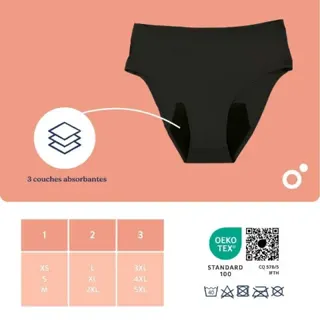 −21 %DoomooFlowly postpartum and period underwear, Black, L/XL/2XL – Doomoo355 DH
instead of 450 DHView product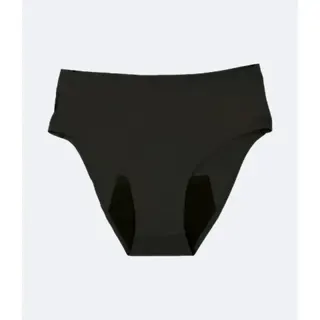 −21 %DoomooFlowly postpartum and period underwear, Black, XS-S-M – Doomoo355 DH
instead of 450 DHView product −35 %DoomooSofty nursing pillow, Flower Yellow – Doomoo403 DH
instead of 620 DHView product −9 %BabymoovB.Love XXL pillow, Wind Blue – Babymoov683 DH
instead of 750 DHView product- The whole aisle · Mum’s hygiene8 products online, delivered anywhere in Morocco.Open the aisle
Products sold by La Maison du Bébé, publisher of this magazine. Prices as of 12 October 2026; please check the product page.
Hygiene: the right gestures, and those to avoid
Wash twice a day, and after each trip to the toilet, very gently:
- Rinse with lukewarm water, pouring water over the vulva during and after urinating, with a handheld perineal shower or a small bottle. The sting of urine on the stitches is eased.
- Do not soap the vulva: rinse by pouring from the lower belly towards the tailbone. The HUG use a chamomile solution.
- Dry by patting, without rubbing, with a clean cloth or soft paper.
- Always wipe from front to back, to keep germs away from the wound.
- Change pads often, at least every 4 hours at first. No tampons.
As for the toilet, the stitches do not give way when you have a bowel movement, even though the fear is common. To strain less, raise your feet so that your knees are higher than your pelvis, lean forward a little, and gently press a clean pad against the scar. Eat fibre and drink enough; if constipation sets in, ask your doctor or pharmacist for a suitable laxative.
Infection or opening of the wound: how to spot them
A scar that is healing well hurts a little less each day. The opposite should alert you: growing pain, red and swollen skin, a discharge of pus or an unusual smell can signal infection. A mirror helps you look. A perineal infection is treated with antibiotics and local care, and needs prompt attention. More rarely, the scar opens, partly or fully: this is wound dehiscence, which the doctor assesses to decide whether to stitch again.
Sex and the perineum: what comes next
There is no fixed time to resume sex. The NHS notes that pain during intercourse is common in the first months after a tear or episiotomy, and that a water-based lubricant helps with dryness. According to the CNGOF, this pain, more frequent at first after a vaginal birth than after a caesarean, makes no difference beyond 6 months. Pain that persists is not something to endure in silence: our article on resuming sex after baby tackles the subject without taboo.
The perineum also needs to regain its strength. Pelvic floor contraction exercises help healing and relieve pressure on the wound, according to the NHS. Leaks of urine, gas or stool that are still there one month after birth should be reported to your midwife or doctor. The exercises and sessions are explained in our article on pelvic floor rehabilitation, and the rest of the weeks after birth in our guide to your body after birth.
Frequently asked questions
Does perineal massage during pregnancy prevent an episiotomy?
It makes one a little less likely. The CNGOF, the French college of gynaecologists, encourages this massage for women who wish to do it: it reduces the use of episiotomy, but not the risk of a severe tear. Naître et grandir places it in the last 4 to 6 weeks of pregnancy, with a benefit mostly for a first baby. According to the NHS, women who did it daily gained the most. Ask your midwife to show you the technique.
Can you choose your birthing position to limit tearing?
Yes, choose the one in which you feel best. The CNGOF recommends letting the woman adopt the most comfortable position, because none has proved better at preventing severe tears. As the head emerges, the midwife may ask you to stop pushing and breathe in small breaths, so that the perineum stretches slowly. Warm compresses on the perineum also seem to reduce the risk of damage to the sphincter.
After a severe tear, can you give birth vaginally next time?
Often, yes. After an injury to the anal sphincter, the CNGOF recommends discussing the mode of delivery with the future mother, but not offering a routine caesarean. The risk of a new injury of this type is estimated at around 5 to 8%, and another vaginal birth is not linked to more anal incontinence. Raise it early in your next pregnancy with your gynaecologist.
Can you take a bath with stitches?
A lukewarm sitz bath, in a clean basin or bathtub, with no oil or scented product, is advised by Naître et grandir to soothe the perineum. For a full bath, opinions differ: the HUG prefer showers and advise against baths and swimming during the 4 to 6 weeks of bleeding. For the hammam, wait until the bleeding has stopped and the scar is well closed, and ask your midwife.
Sources
- Episiotomy and perineal tearsNHS · Royaume-Uni
- Prévention et protection périnéale en obstétrique : recommandations pour la pratique clinique (2018)Collège national des gynécologues et obstétriciens français (CNGOF) · France
- Recommandations pour la pratique clinique : post-partum (2015)Collège national des gynécologues et obstétriciens français (CNGOF) · France
- Comment se déroule un accouchement ?Assurance Maladie (ameli.fr) · France
- Soin périnée après la naissance de votre enfantHôpitaux universitaires de Genève (HUG) · Suisse
- Accouchement : qu'est-ce qu'une épisiotomie ?Naître et grandir · Canada (Québec)
- Récupérer après l'accouchementNaître et grandir · Canada (Québec)
- Le corps après l'accouchementMieux vivre avec notre enfant, INSPQ · Canada (Quebec)
- Après la grossesse et l'accouchement (post-partum) : retour du corps à la normaleManuel MSD, édition grand public · États-Unis