










Article contents
Key points
- The mucus plug shows the cervix is getting ready, not necessarily that labour has started.
- Real contractions get stronger and closer, even at rest or after a warm bath.
- First baby: you usually leave after an hour of contractions every 5 minutes.
- Waters breaking: call or go in, even without contractions, especially if the fluid is coloured.
- Bleeding, reduced baby movements, constant pain: go straight away.
It is two in the morning, you are 39 weeks pregnant, and your belly has tightened for the third time in twenty minutes. Is this it? Should you wake your husband, call the clinic, grab the bag? The signs of labour are not always as clear as in the movies, and many mums-to-be arrive at the maternity unit too early, or hesitate too long.
Here is how to recognise real labour, the landmarks midwives use to decide when to leave, and the situations where you do not wait.
Which signs show that labour is approaching?
Several small changes can appear in the last weeks. They show that the body is getting ready, without saying when labour will begin.
- The bump drops: the baby engages in the pelvis, about two weeks before birth with a first baby, sometimes at the start of labour with later ones. You breathe more easily, but pass urine more often.
- Stools become more frequent or looser, under the effect of prostaglandins.
- The lower back aches, and the pelvis feels looser.
- A sudden burst of energy hits some women a day or two before labour. Better to use it to rest than to do a big spring clean.
These signs can appear three or four weeks before the big day, or a few hours before. None of them, on its own, is a reason to go to the maternity unit.

The mucus plug: a sign, not a signal to leave
The mucus plug seals the cervix during pregnancy. When the cervix starts to change, it comes away: a thick, jelly-like, yellowish mucus, sometimes tinged with pink or brown. Some women lose it all at once, others in small pieces, and others never notice it.
Losing it can come 24 to 48 hours before birth, several weeks before, or during labour. So it is not a reason to leave. On the other hand, bright red, liquid blood, like a period, is not the mucus plug: you must call the maternity unit.
Real or false contractions: how to tell the difference?
Braxton Hicks contractions, the "practice" ones, tighten the belly without opening the cervix. They are usually not very painful, but the line with real labour is not always clear. This table helps sort them out.
| False contractions | Real labour contractions | |
|---|---|---|
| Rhythm | Irregular | Regular, closer and closer |
| Intensity | Stable or fading | Stronger and longer all the time |
| Length | Short, variable | At least 30 seconds, up to 90 seconds later on |
| Rest, bath, change of position | They space out or stop | They carry on |
| What you feel | Belly tightening, often without real pain | Pain low in the abdomen and lower back |
| Effect on the cervix | None | It shortens and opens |
The simplest test, suggested by Naître et grandir in Quebec: drink a glass of water and take a warm bath of about thirty minutes. If the contractions space out, it is probably false labour. If they keep getting closer, labour has probably started.
When should you leave for the maternity unit?
There is no universal rule. Each unit has its own landmarks, and the best thing to do is ask for yours at the last check-up. The published guidelines are similar, though.
| Situation | Usual landmark to leave or call |
|---|---|
| First baby | Contractions of about 1 minute, every 5 minutes or less, for 1 hour |
| Second baby or more | Contractions of at least 45 seconds, every 5 minutes, for 1 hour |
| Maternity unit more than 30 minutes away, and not your first | Leave as soon as contractions come every 10 minutes |
| Very fast previous birth | Leave earlier, as advised by your midwife or gynaecologist |
Landmarks from Naître et grandir (Quebec); CHUV (Switzerland) mentions contractions every 3 to 5 minutes, lasting about a minute.
Another clue counts as much as the stopwatch: when you can no longer talk during a contraction, or can no longer cope with the pain at home, it is time to go.
Before that, the latent phase, which softens and opens the cervix to about 4 cm, can last hours, stop and then restart. It is often longer with a first baby. Midwives advise spending it at home: eat lightly, drink, go to the toilet regularly, alternate walking and rest, place a hot-water bottle on your lower back. If in doubt, call: the maternity unit or your gynaecologist will guide you. For what comes next, our article on the stages of a vaginal birth details what awaits you, and the one on the epidural answers questions about pain relief.
Waters breaking: what to do?
The rupture of the bag of waters shows as a flow of fluid, either in a gush or drop by drop. It is normally clear and pale, sometimes slightly pink at first.
- Put on a sanitary pad, never a tampon, to see the colour and amount.
- Call or go to the maternity unit, even without contractions: the team checks that all is well for the baby.
- Go without waiting if the fluid is green, yellow, brown or foul-smelling, or mixed with blood.
Labour most often starts within the next 24 hours. If not, induction is usually offered, because an open bag of waters exposes the baby to a small risk of infection. Meanwhile, keep an eye on the baby's movements and your temperature.
Casablanca traffic: plan the journey ahead
In a big city, the trip to the maternity unit can take far longer at rush hour than in the middle of the night. A few precautions, taken around the end of the 8th month, spare you last-minute stress.
- Do the journey once during the day, at rush hour, and note a back-up route. If you live far away, discuss leaving earlier with your midwife or gynaecologist.
- Find the night entrance and the access to the obstetric emergency department of the clinic or hospital. If you have not chosen yet, our guide to choosing a maternity unit in Morocco lists the questions to ask.
- Do not drive yourself during labour. Arrange who takes you, day or night, and a plan B if your husband is at work or away.
- Keep in your bag your pregnancy file, blood group card and health insurance card.
- Pack the hospital bag from the 7th month. Our maternity bag guide gives the full list, for you and for the baby.
- Fit the car seat in advance. The baby will come home from the maternity unit in a shell suited to a newborn; see our group 0+ car seats and our advice on fitting it properly.
From the shop
Ready to go: the hospital bag and the car seat
Two purchases to wrap up before the end of the 8th month: a practical maternity bag, and a car seat suited to a newborn for the journey home.
 −48 %Pasito a PasitoElodie maternity bag, blue – Pasito a Pasito676 DH
instead of 1 300 DHView product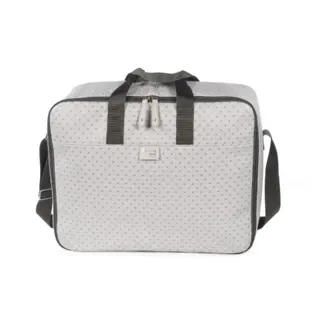 −41 %Walking MumArchie maternity bag – Walking Mum755 DH
instead of 1 290 DHView product −35 %DoomooMommy Vanity maternity pouch, Sand, beige corduroy – Doomoo774 DH
instead of 1 190 DHView product −61 %Maxi Cosi - Bébé ConfortCiti car seat, Essential Black – Maxi-Cosi737 DH
instead of 1 890 DHView product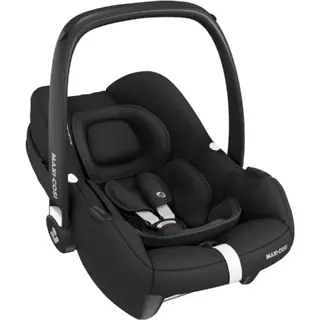 −9 %Maxi Cosi - Bébé ConfortCabrioFix i-Size car seat, Essential Black, group 0+ – Maxi-Cosi2 002 DH
instead of 2 200 DHView product −9 %Maxi Cosi - Bébé ConfortPebble S car seat, Tonal Graphite – Maxi-Cosi2 184 DH
instead of 2 400 DHView product- The whole aisle · Maternity bags12 products online, delivered anywhere in Morocco.Open the aisle
Products sold by La Maison du Bébé, publisher of this magazine. Prices as of 12 October 2026; please check the product page.
In which cases should you leave right away?
Some signs are not a case of "wait until they get closer". They call for an immediate call to the maternity unit, or leaving without delay, day or night. They are listed in the box below. If you have a doubt about your baby's movements, our article on feeling your baby move explains what is normal in late pregnancy.
Frequently asked questions
How do I know whether my waters have broken or it is urine?
Amniotic fluid is usually clear and pale, without the smell of urine, and it keeps trickling in small amounts, especially when you move. The difference is not always obvious. Wear a sanitary pad (not a tampon) to observe the amount and colour, then call your maternity unit: the midwife can check on site whether it really is your waters.
Can you give birth without losing your waters or mucus plug?
Yes. In many women the bag of waters stays intact until a late stage of labour, and the midwife can break it herself during dilation. The mucus plug sometimes goes unnoticed, or comes away bit by bit with discharge. It is regular contractions that mark the start of labour.
My waters have broken but I have no contractions: what should I do?
Call your maternity unit or go in, even without pain: the team checks the colour of the fluid, your baby's wellbeing and the absence of infection. Labour most often starts within 24 hours. If it does not, induction is generally offered, because an open bag of waters slightly raises the risk of infection for the baby.
The maternity unit sent me home: is that normal?
It is common, especially with a first baby. Early labour, called the latent phase, can last hours, or even stop and restart later. It is often easier to get through at home: eat lightly, drink, rest between contractions, take a warm bath. Go back when the contractions get closer together or at any warning sign.
Can I eat when contractions start?
At home, during the latent phase, the midwives at CHUV (Switzerland) advise eating lightly and drinking to keep your energy up: bread, rice, pasta, fruit. Once at the maternity unit with labour well established, the rules vary: clear liquids are generally allowed, solid meals often discouraged. Ask for your unit's rule.
Sources
- Signs that labour has begunNHS · United Kingdom
- Quand se rendre au lieu de naissance ?Naître et grandir · Canada (Quebec)
- Accouchement : les signes du travailNaître et grandir · Canada (Quebec)
- S'agit-il de vraies contractions ?Naître et grandir · Canada (Quebec)
- Mise en route du travail de l'accouchementCHUV, Department of Women, Mother and Child · Switzerland
- Comment se déroule un accouchement ?Assurance Maladie (ameli.fr) · France