










Article contents
Key points
- Planned or emergency, it is almost always done awake, under a spinal or epidural anaesthetic.
- Skin-to-skin and the first feed remain possible, in theatre, in recovery or on the ward.
- Walking early and every day lowers the risk of a blood clot in the leg.
- For about six weeks, lift nothing heavier than your baby.
- A vaginal birth is often still possible afterwards: it succeeds three times out of four.
It was booked for a Tuesday morning, or it was decided in the middle of the night, after hours of labour. Either way, a caesarean section is a surgical operation in its own right, followed by a longer recovery than after a vaginal birth. In France, it accounted for 22% of deliveries in 2024, according to the DREES; in Quebec, about one in four.
Knowing what happens in theatre, how to look after your scar and how quickly to resume your activities helps you get through these weeks more calmly. Here are the landmarks, without forgetting a very Moroccan question: why are there so many?
Why is a caesarean done?
To deliver the baby when a vaginal birth would be risky, for the baby or the mother. It is called planned when the decision is made before labour, for example in the case of:
- a placenta covering the cervix (placenta praevia);
- certain breech presentations, or a baby's position that does not allow a vaginal birth;
- certain maternal health problems, or a high-risk pregnancy;
- a previous caesarean, when a vaginal birth is not advised.
It is called an emergency caesarean when it is decided before or during labour: the baby's heart rate shows signs of distress, labour is no longer progressing despite stimulation, or a vaginal birth becomes too difficult. In France, more than two thirds of caesareans are decided as emergencies in this way.
In Morocco, many caesareans: what do the figures say?
Caesarean use is rising everywhere. According to the World Health Organization (WHO), it accounted for 21% of births worldwide in 2018, against about 7% in 1990. For North Africa, the WHO put it at 32%, an estimate based on only five countries and therefore very uncertain, with a projection of 48% in 2030.
In Morocco, public figures are scarce. In an opinion piece published by TelQuel in August 2026, an obstetrician-gynaecologist cites CNOPS data: in the private-practice sector, the caesarean rate would have risen from 35% in 2006 to 61% in 2017. He specifies that these figures do not hold for the whole private sector. Among the explanations he puts forward: later pregnancies, more overweight, gestational diabetes and high blood pressure, fear of legal liability, funding that pays poorly for the long monitoring of a labour, and fear of vaginal birth.
The WHO sets no ideal rate. It asks that each decision meet the woman's needs, after clear information on benefits and risks, and recommends a second opinion where possible. In practice, ask your gynaecologist why a caesarean is being proposed, what the alternative would be, and what the maternity unit's caesarean rate is. Our article on choosing where to give birth in Morocco helps you prepare these questions.
What happens in theatre?
If it is planned, you will have fasted for a few hours. A drip is placed in your arm, and a catheter empties your bladder during the operation.
- Anaesthesia: most often a spinal or epidural, which numbs the lower body. You stay awake. General anaesthesia is reserved for cases where the others are not possible. Our article on the epidural explains how it is placed.
- Your companion: they can usually sit near your head, except under general anaesthesia. In Morocco, the rule depends on the establishment: ask in advance.
- The operation: a screen hides your belly. The incision, 10 to 20 cm, is almost always horizontal, just above the pubic bone. The baby is born within 5 to 10 minutes, and the operation lasts 40 to 50 minutes in all.
- The end: an oxytocin injection helps the uterus contract and limits bleeding. The uterus is closed with dissolvable stitches, the skin with stitches or staples.
Skin-to-skin and the first feed: it is possible
Yes, and it is recommended, as after a vaginal birth. If your condition and the baby's allow it, the baby is placed against you in theatre, or a little later in recovery or on the ward. If you cannot, dad can take over. This contact matters: babies born by caesarean sometimes have a lower temperature in the first hours, and skin-to-skin warms them. They also more often have slight breathing difficulty, especially before 39 weeks, which usually improves within a few days.
Breastfeeding can be harder at first, because of pain and limited movement. Positions that do not press on the scar, such as the football hold or lying on your side, are detailed in our article on breastfeeding positions. A nursing pillow, to put on your birth list, keeps the baby at the right height without effort.
From the shop
Comfort for the weeks after a caesarean
A nursing pillow keeps the baby at the right height without pressing on your belly, and washable postpartum underwear carries you through the weeks of bleeding. No need to buy more.
 −35 %DoomooSofty nursing pillow, Flower Yellow – Doomoo403 DH
instead of 620 DHView product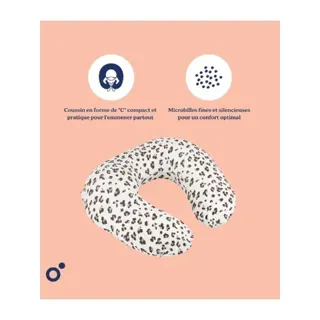 −9 %DoomooSofty nursing pillow, Leopard Cream – Doomoo564 DH
instead of 620 DHView product −9 %BabymoovB.Love XXL pillow, Wind Blue – Babymoov683 DH
instead of 750 DHView product DoomooBuddy maternity and nursing pillow, Chiné Sand – Doomoo890 DHView product
 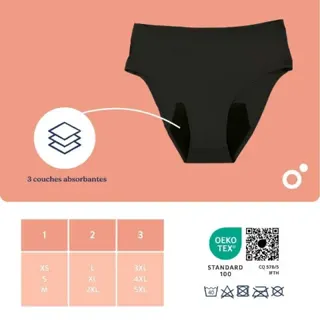 −21 %DoomooFlowly postpartum and period underwear, Black, L/XL/2XL – Doomoo355 DH
instead of 450 DHView product −21 %DoomooFlowly postpartum and period underwear, Black, XS-S-M – Doomoo355 DH
instead of 450 DHView product- The whole aisle · Nursing pillows40 products online, delivered anywhere in Morocco.Open the aisle
Products sold by La Maison du Bébé, publisher of this magazine. Prices as of 12 October 2026; please check the product page.
The first days: getting up, pain, keeping watch
You are encouraged to get up and walk early, as soon as the anaesthetic has worn off. It is uncomfortable, but important: walking a little every day lowers the risk of a clot in a vein (phlebitis). Depending on the case, compression stockings or injections are added. The urinary catheter is usually removed 12 to 18 hours after the operation, and you can drink and eat as soon as you feel like it.
Scar pain lasts a few days, sometimes several weeks. Painkillers are prescribed: ask your doctor or pharmacist which suit you if you are breastfeeding. Bowel movements often take 3 to 5 days to resume, which is normal. Bleeding is the same as after a vaginal birth: our article on the postpartum period explains how it evolves.
Caring for your caesarean scar
Care is simple:
- Wash it every day in the shower, with a mild unperfumed soap, without rubbing, then pat dry with a clean towel.
- Wear loose clothes and cotton underwear that does not rub on the wound. For bleeding, the washable postpartum underwear in our mum's hygiene section replaces disposable pants.
- Adhesive strips come off by themselves around day 7, or can be removed. Staples or non-dissolvable stitches are usually taken out between day 3 and day 7.
- From 6 weeks, Naître et grandir advises massaging the scar every day for 5 minutes, in small circles on either side, without pulling it apart.
Slight redness and a little clear, odourless fluid are normal. The skin around it often stays numb, and feeling returns slowly, over several months. The scar is red at first, then fades. On brown or black skin, it may leave a darker or lighter mark, notes the NHS.
Back home: carrying the baby, driving, getting back to sport
You can pick up and carry your baby as soon as you are home. For the rest, the sources give similar landmarks:
| Activity | Usual landmark |
|---|---|
| Lifting more than the baby | Not before about 6 weeks |
| Driving | Not before 4 weeks (Naître et grandir); a few weeks, sometimes 6 (NHS) |
| Cycling, running, intense sport | Not before 6 weeks; 8 to 10 weeks according to Assurance Maladie, after medical advice |
| Sex | After several weeks, once the wound has healed |
| Stairs | Limit them in the first days |
The rule is the same for everything: resume when the movement no longer hurts, gradually. For babywearing, wait until walking is comfortable, check that the carrier's belt does not rest on the scar, and follow the safety rules in our guide to baby carriers and slings. Resuming sex is covered in our article on sex after birth.
Emotions count too. A caesarean, especially an unplanned one, can leave mixed feelings, which change over time. Talking to your midwife, your doctor or a psychologist helps you turn the page.
And for a future pregnancy?
Most women who have had a caesarean have no problems in later pregnancies. A vaginal birth often remains possible: according to the Quebec guide Mieux vivre, it succeeds three times out of four. Rupture of the uterus at the scar is very unlikely; if it happens, it calls for an emergency caesarean. A caesarean also slightly raises the risk of placental abnormalities in later pregnancies, which are therefore monitored closely.
It is the team that assesses, with each pregnancy, whether a vaginal birth can be considered. To space your births, our article on contraception after the baby details the options.
Frequently asked questions
Can you ask for a caesarean without a medical reason?
You can talk about it, but it is not a trivial choice. The WHO reminds us that an unnecessary operation can harm mother and child: heavy bleeding, infection, slower recovery, delayed skin-to-skin and breastfeeding, complications in later pregnancies. If fear of childbirth is pushing you towards a caesarean, tell your gynaecologist or midwife: suitable preparation and precise answers often change the picture.
How long do you stay in the maternity unit after a caesarean?
Generally a little longer than after a vaginal birth. In the UK, most women go home 1 to 2 days after the operation; elsewhere, the stay is often longer. In Morocco, the length varies by establishment: ask when you register, and before leaving, have the scar care and the signs that should bring you back explained to you.
Bath, hammam, swimming pool: when is it possible after a caesarean?
Showering is allowed from the first days. For baths, opinions vary: the Quebec guide Mieux vivre allows it around day 5 if the scar is doing well, while Naître et grandir prefers showers to baths and swimming during recovery. None of our sources covers the hammam: wait until the scar is well closed and the bleeding has stopped, and ask your midwife or doctor.
Can you breastfeed normally after a caesarean?
Yes. Latching can be a little harder in the first days, because of pain and limited movement, but the team helps you find a position that spares the scar. As for painkillers, the NHS notes that some, such as aspirin or codeine, are generally not advised while breastfeeding: ask your doctor or pharmacist what suits you.
Sources
- CésarienneMieux vivre avec notre enfant, INSPQ · Canada (Quebec)
- Accouchement vaginal après une césarienneMieux vivre avec notre enfant, INSPQ · Canada (Quebec)
- Récupérer après l'accouchementNaître et grandir · Canada (Quebec)
- Caesarean section: what happensNHS · United Kingdom
- Caesarean section: recoveryNHS · United Kingdom
- Comment se déroule un accouchement ?Assurance Maladie (ameli.fr) · France
- Caesarean section rates continue to rise, amid growing inequalities in accessWorld Health Organization (WHO) · International
- [Tribune] Pourquoi pratique-t-on autant de césariennes au Maroc ?TelQuel · Morocco
- La naissance : caractéristiques des accouchements (Les établissements de santé, édition 2026, fiche 20)DREES, French Ministry of Health · France