










Article contents
Key points
- “Natural” means a vaginal birth, with or without an epidural.
- Dilation is the longest stage, especially with a first baby.
- Pushing when the urge comes is less tiring and reduces the need for instruments.
- The placenta usually comes out within half an hour of the birth.
- Skin-to-skin is recommended for every healthy baby, from birth.
“Natural birth” is the term most people use for a vaginal birth, where baby is born through the vagina rather than by caesarean. It can happen with or without an epidural: the stages are the same. What changes from one woman to another is mostly the length, and how each phase feels.
Knowing what is going on, and why your midwife suggests a particular position or gesture, helps you stay in charge of how things unfold. Here are the stages, from the first contraction to the first skin-to-skin.
How long does a vaginal birth take?
It varies a lot. For a first baby, the Assurance Maladie gives an average dilation of about 8 hours, against about 4 hours for later babies. The CHU de Liège counts roughly a dozen hours in all for a first birth, a little less afterwards.
| Stage | What happens | Indicative length (first baby) |
|---|---|---|
| Latent phase | The cervix softens, shortens and opens to 4 or 5 cm | A few hours, sometimes longer, often at home |
| Active phase of dilation | The cervix opens to 10 cm | A few hours |
| Pushing and birth | Baby moves down into the pelvis, then is born | A few minutes up to 3 hours |
| Delivery of the placenta | The placenta comes out | Usually 5 to 30 minutes |
Figures differ a little between maternity units, because they do not all place the start of the active phase at the same point: 4 cm for some, 5 cm for others. Remember the order of magnitude, and the fact that a first labour takes time.
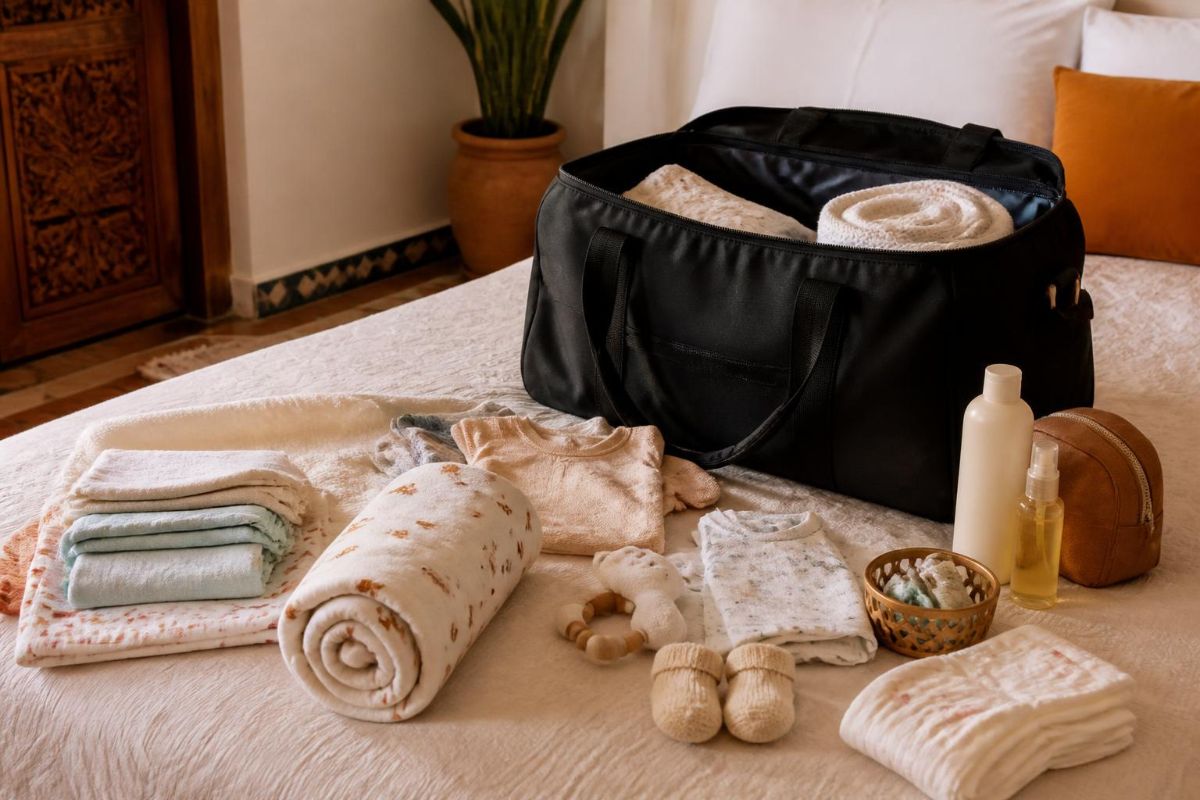
Cervical dilation, the longest stage
It all begins with the latent phase. Contractions are at first irregular and short, 30 to 45 seconds, then become organised. It can last hours, stop and start again, and is usually spent at home. How do you know when to leave? Our article on the signs of labour gives the landmarks.
Then comes the active phase. Contractions last about a minute and come less than 5 minutes apart. The cervix opens by about half a centimetre an hour on average, more slowly up to 6 cm, faster afterwards. This is often when the waters break, on their own or with the midwife's help.
The end of dilation, called transition, is the shortest and most intense part. Contractions sometimes come every 2 to 3 minutes and last up to 90 seconds. Hot flushes, cold hands and feet, nausea and irritability can appear. You need to resist the urge to push until the cervix is fully open, breathing out in short puffs.
Throughout this stage, the midwife monitors contractions and baby's heartbeat, checks the cervix regularly and helps you change position. Walking, standing, rocking on a ball or taking a bath, where the maternity unit allows it, often ease pain and help labour along. If you want pain relief, our article on the epidural explains how it is placed and what it feels like.
Pushing and baby's birth
When the cervix reaches 10 cm, the second stage begins. Baby moves down into the pelvis, turns to fit through, then is born. It can take up to 3 hours with a first baby, much less with later ones. The actual expulsion, the pushing efforts themselves, most often lasts about thirty minutes.
Two approaches coexist. You can push as soon as dilation is complete, which is more common without an epidural. Or you can wait until the urge to push comes by itself, which lets baby descend unaided. According to Naître et grandir, this second approach is less tiring for the mother, limits the use of forceps or vacuum and reduces the risk of tearing.
With each contraction, you breathe in, push for about ten seconds, release, and repeat two or three times. Changing position about every 15 minutes helps baby progress:
- on your side, one leg supported;
- half sitting, back propped up;
- squatting or kneeling, leaning forward;
- on all fours.
As the head emerges, the perineum stretches and causes an intense burning sensation. Once the head is out, there is often a pause, then one last push frees the shoulders, and baby is here.
Forceps, vacuum, episiotomy: when?
Most vaginal births take place without intervention. But if baby shows signs of tiring, or stops descending despite effective pushing, the team may help baby out with a vacuum or forceps. If that is not possible, an emergency caesarean is performed.
An episiotomy, a small cut in the perineum, is no longer routine: it does not protect against severe tears. In France, its rate fell from 20% of births in 2016 to 8% in 2021. Care and healing are covered in our article on episiotomy and tears.
Delivery of the placenta
After the birth, the uterus keeps contracting to detach the placenta. It usually comes out between 5 and 30 minutes later, sometimes after one or two small pushes. To limit the risk of haemorrhage, oxytocin is most often injected at the moment of birth, and the midwife massages the uterus so that it stays firm.
If the placenta is slow, beyond about half an hour, or if you bleed heavily, the doctor removes it by hand. Any tears or the episiotomy are stitched afterwards.
From the shop
For the maternity ward and the days that follow
A well-organised bag, something to look after yourself once baby is born, and nothing superfluous: our selection for your hospital stay.
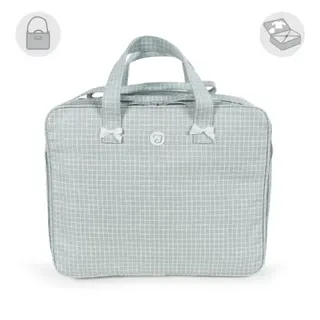 −48 %Pasito a PasitoMiel maternity bag, grey – Pasito a Pasito728 DH
instead of 1 400 DHView product −48 %Pasito a PasitoNido Volante maternity bag, blue – Pasito a Pasito780 DH
instead of 1 500 DHView product −35 %DoomooMommy Vanity maternity pouch, Sand, beige corduroy – Doomoo774 DH
instead of 1 190 DHView product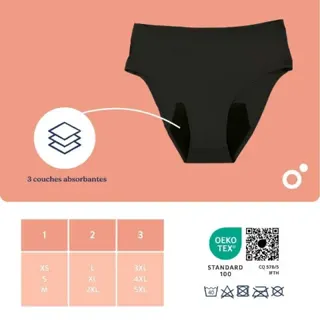 −21 %DoomooFlowly postpartum and period underwear, Black, L/XL/2XL – Doomoo355 DH
instead of 450 DHView product- The whole aisle · Maternity bags12 products online, delivered anywhere in Morocco.Open the aisle
Products sold by La Maison du Bébé, publisher of this magazine. Prices as of 12 October 2026; please check the product page.
Just after the birth: skin-to-skin and monitoring
Baby is placed naked on your chest, dried and covered. If all is well, the cord is cut a little later, which gives baby more iron. This skin-to-skin is recommended for all newborns, including after a caesarean. The CHU de Liège suggests prolonging it for one to two hours.
This contact helps stabilise baby's breathing, heart, temperature and blood sugar. For you, it encourages the release of oxytocin, which makes the uterus contract and limits bleeding. Many babies look for the breast within the first hour: it is the right moment for a first feed, if you are breastfeeding.
During these two hours in the delivery room, the team regularly checks your blood pressure, pulse, how firm the uterus is and your bleeding. Baby is weighed, measured and examined; depending on the unit, baby also receives vitamin K and eye care. Then you move to your room, and the stay described in our article on the first days in the maternity unit begins.
What you can ask your maternity unit
Practices vary widely from one establishment to another, in Morocco as elsewhere. Before your due date, ask a few simple questions: who follows the labour, a midwife, your gynaecologist or both? Can you move freely, use a ball, drink during labour? Can your partner or another person stay with you? Is skin-to-skin offered straight away?
The answers help you arrive prepared, and to choose with full knowledge if you are still hesitating between two establishments.
Frequently asked questions
Can a birth with an epidural still be called natural?
Yes, in everyday language. “Natural birth” mostly means a vaginal birth, as opposed to a caesarean. Some women keep the word for a birth without pain relief. With or without an epidural, the stages are the same: dilation, pushing, delivery of the placenta. In France, more than eight women in ten had an epidural in 2021, and the figure is also above 80% of births at the HUG in Geneva.
Can you drink and eat during labour?
Rules vary from one maternity unit to another. At the start, at home, it is advised to eat lightly and drink well. Once in the delivery room, small amounts of clear liquids such as water are generally allowed, but not a solid meal, because the stomach should stay empty in case a caesarean becomes necessary. Ask your maternity unit for its policy in advance.
Can the father be present at the birth?
In many maternity units, a person of your choice can stay with you throughout labour and birth, and sometimes even while the epidural is placed. In Morocco, the rule depends on the establishment and sometimes on the department: ask during your visit or registration, to avoid an unpleasant surprise on the day.
Is a second labour faster?
Usually, yes. According to the French health insurance service (Assurance Maladie), dilation lasts around 8 hours on average with a first baby, against about 4 hours for later ones, and pushing is shorter too. That is an average: every birth is different. If your first labour was quick, talk to your midwife about when to leave for the maternity unit.
What happens if labour is not progressing?
The team monitors progress: for example, a cervix that stops opening for more than 2 hours in the active phase, or a baby who stops descending for more than an hour despite effective pushing. They may then break your waters, offer an oxytocin drip to strengthen contractions and, if that is not enough, an instrument-assisted birth or a caesarean.
Sources
- Comment se déroule un accouchement ?Assurance Maladie (ameli.fr) · France
- Les stades du travail et de l'accouchementNaître et grandir · Canada (Québec)
- Naître au CHU de Liège (brochure Bonjour naître, 2023)CHU de Liège · Belgique
- Giving birthHôpitaux universitaires de Genève (HUG) · Suisse
- Mise en route du travail de l'accouchementCHUV, Département femme-mère-enfant · Suisse
- Signs that labour has begunNHS · Royaume-Uni