










Article contents
Key points
- Skin-to-skin in the first hours is recommended, after a vaginal birth as after a caesarean.
- Baby's checks and screening tests vary by maternity unit: ask for the list.
- Mild jaundice often appears around day 2 or 3: it is monitored on site.
- Limit visitors: short visits, few people, and never anyone who is ill.
- Before leaving: birth notice, reports, prescriptions and the car seat installed.
Baby is born, the delivery room empties, and there you are in a room with a newborn whose every need you have yet to learn. The first days in the maternity unit go quickly, between care, feeds, checks and visitors. Yet they have a precise purpose: to make sure mother and baby are well, and to let you go home with the right gestures.
Here is what happens, from the first hour to the journey home, and what you can ask the team.
The first two hours: skin-to-skin and monitoring
From birth, baby is dried and placed naked against you, covered with a cloth. This skin-to-skin is recommended for all newborns, including after a caesarean, where it can take place in theatre or a little later. It helps baby regulate breathing, heart, temperature and blood sugar, and it encourages a first feed within the hour.
Meanwhile, the team watches you closely, usually for two hours in the delivery room: blood pressure, pulse, temperature, bleeding, and how firm the uterus is, which the midwife sometimes massages, and this can be unpleasant. An ice pack on the perineum eases swelling after a vaginal birth.
Which checks does baby have in the maternity unit?
A first assessment is done in the minutes after birth, then the paediatrician examines baby in detail during the stay, and again before discharge. Screening varies greatly between countries and establishments. The table below shows what, for example, a Belgian university maternity unit offers. Ask yours what is planned.
| Care or check | When | What it is for |
|---|---|---|
| Weighing and measuring | Just after birth | Starting point of the growth curve |
| Vitamin K | In the first hours | To prevent rare bleeding in newborns |
| Eye care | In the first hours | To prevent certain eye infections |
| Full examination by the paediatrician | During the stay and before discharge | To check that all is well, from head to toe |
| Hearing screening | For example the day after birth | To spot a hearing problem early, with a painless test |
| Guthrie test (heel prick) | Between 48 and 96 hours of life | To screen for rare conditions that need early treatment |
| Jaundice monitoring | From day 2 or 3 | Skin measurement, then a blood test if needed |
Jaundice is common and often harmless. When the level is too high, baby is treated with phototherapy, sometimes in the room itself. Our article on newborn jaundice explains when it should worry you. The vaccines planned at birth by the national programme are listed in our vaccination schedule in Morocco.
The first feeds: learning together
Breastfeeding is learned, by you and by baby. In the maternity unit, the team can help you spot baby's wakeful phases and hunger signs, find a comfortable position and check that the feed is effective. In some units, a lactation consultant visits rooms on request.
Make the most of this stay to ask to be shown once, then a second time if needed. If feeding hurts, say so without waiting: the team can check how baby is positioned at the breast. Our guide to getting breastfeeding off to a good start takes over at home.
And you? Mother's care
Midwives come by regularly to check that the uterus is contracting, that bleeding is decreasing normally and that any scar, from an episiotomy, a tear or a caesarean, looks right. The first time you get up, do it with someone beside you.
The rest is simple to say, harder to do: sleep whenever baby sleeps. Some maternity units even set an early-afternoon nap period, when the ward quietens. If emotions overflow, if you cry without knowing why, tell the team: it is common and deserves to be heard. What happens in your body in the following weeks is detailed in our article on the postpartum period.
Visitors: setting limits without upsetting the family
In Morocco, a birth is a celebration, and the extended family wants to see baby straight away. Mothers, aunts and neighbours arrive with trays, and the room fills up. It is a mark of affection. It is also exhausting, and hard to square with feeds and rest.
Some European maternity units regulate visits: fixed hours at the end of the day, a small circle, short duration, and nobody who is ill. You can apply the same rule, with the team's support.
- Appoint a “doorkeeper”, your partner or a sister, who announces visitors and cuts them short.
- Offer a time slot, for example late afternoon, and send the others to the house, after you are back.
- No visit from anyone coughing or with a fever, and handwashing for everyone before touching baby.
- Keep feeds to yourself if you wish: it is perfectly legitimate to ask to be alone for a few minutes.
The big celebration will come later. If you are organising the sbou3, the seventh-day celebration, it will be the occasion to present baby to everyone, with more time and calm.
Leaving: the papers not to forget
Before you leave, the gynaecologist or midwife sees you one last time, and the paediatrician examines baby. Check that you go home with:
- The birth notice, essential to register baby at the civil registry within 30 days. The steps are explained in our article on declaring a birth in Morocco.
- The delivery report and the report on baby's stay, useful for the doctor who will follow up.
- Any prescriptions, for you and for baby.
- The appointments planned: the paediatrician's visit in the first days, a jaundice check if needed, your postnatal consultation.
- The invoices and receipts needed for reimbursement by your health insurance.
The journey home by car
Baby's first journey is made in a car seat suited to newborns, an infant carrier installed rear-facing, never in arms. Install it a few days before your due date and practise adjusting the harness: leaving the maternity unit with a three-kilo baby is not the moment to discover the instructions. Our article on installing the car seat properly lists the common mistakes, and you will find suitable infant carriers in our group 0+ car seats section.
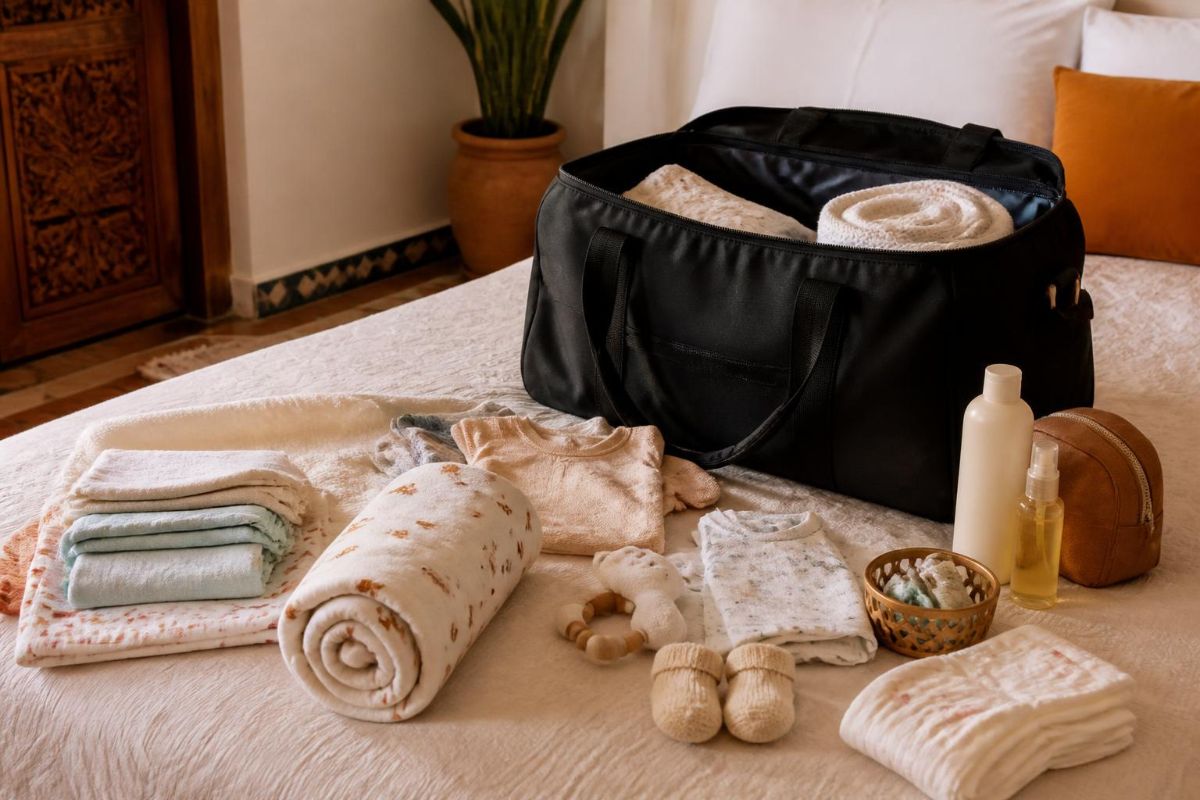
For the outfit, favour clothes that are easy to put on and suited to the season, rather than a complicated ceremonial outfit. Our hospital going-home outfits section offers, for example, velour sleepsuits in size 1 month: check that they open easily, for nappy changes.
From the shop
For leaving the maternity unit
A soft outfit that is easy to put on for the first journey, the bag that goes with it, and a newborn-suited infant car seat: the essentials for coming home.
 −74 %Pureté du bébéEssentials velvet sleepsuit, girl, 1 month, beige, model 216 – Pureté du bébé164 DH
instead of 630 DHView product −74 %Pureté du bébéEssentials velvet sleepsuit, girl, 1 month, white – Pureté du bébé203 DH
instead of 780 DHView product −48 %Pasito a PasitoElodie maternity bag, blue – Pasito a Pasito676 DH
instead of 1 300 DHView product −61 %Maxi Cosi - Bébé ConfortCiti car seat, Essential Black – Maxi-Cosi737 DH
instead of 1 890 DHView product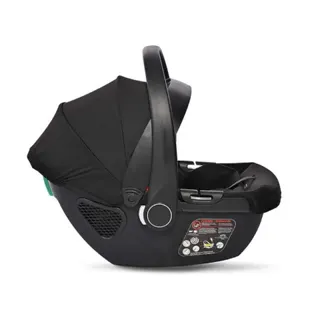 JovikidsAria i-Size infant carrier car seat, 40-87 cm, black – Jovikids990 DHView product
  −9 %Maxi Cosi - Bébé ConfortCabrioFix i-Size car seat, Essential Black, group 0+ – Maxi-Cosi2 002 DH
instead of 2 200 DHView product- The whole aisle · Christening and coming-home outfits16 products online, delivered anywhere in Morocco.Open the aisle
Products sold by La Maison du Bébé, publisher of this magazine. Prices as of 12 October 2026; please check the product page.
Frequently asked questions
How long do you stay in the maternity unit after giving birth?
It depends on the establishment, the type of birth and the health of you and baby. As an example, the CHU de Liège in Belgium plans for 72 hours at most after an uncomplicated birth. In Morocco, practices vary from one clinic or hospital to another: ask for the usual length when you register, so that you can organise your return.
Should baby's first bath be given in the maternity unit?
There is no rush. Vernix, the whitish coating that covers the skin at birth, protects it, and the newborn's temperature is still unstable. Some maternity units offer the first bath on day 2 or 3, guided by a midwife, which lets you learn the gestures. Our guide to bathing baby safely details what comes next at home.
Can the father sleep in the maternity unit?
It depends on the room and the establishment. Some maternity units, such as the CHU de Liège, provide a bed for the companion in a private room, but do not allow them to stay overnight in a shared room, out of respect for the other mother. In Morocco as elsewhere, ask when you choose your maternity unit, and find out whether there is a supplement.
When must baby's birth be declared in Morocco?
Within 30 days of the birth, at the civil registry office of the place of birth. You need the birth notice issued by the maternity unit and the ID of the person making the declaration. After that, authorisation must be requested from the civil registry authority, which takes time: so check that the birth notice is in your file before leaving the establishment.
Sources
- Naître au CHU de Liège (brochure Bonjour naître, 2023)CHU de Liège · Belgique
- Les stades du travail et de l'accouchementNaître et grandir · Canada (Québec)
- Comment se déroule un accouchement ?Assurance Maladie (ameli.fr) · France
- Enregistrement des naissancesHCR Maroc (aide aux démarches d'état civil) · Maroc