





Article contents
Key points
- No method guarantees a birth without pain or intervention: the aim is to understand and feel ready.
- Slow breathing, moving, changing position: the key techniques are practised during pregnancy.
- Prenatal yoga is safe if you avoid postures that make your blood pressure drop.
- A birth plan fits on one page, is discussed in advance and stays flexible on the day.
- The father has a real role: massage, encouragement and support throughout labour.
Long before they are pregnant, many women have heard stories of long, painful or complicated births. In an opinion piece published by TelQuel in 2026, a Moroccan obstetrician-gynaecologist observed that this fear, fed by family and friends, even weighs on the choice of a caesarean. He argued that preparing for childbirth should be a full part of pregnancy care, not an optional extra.
Preparing does not mean learning not to feel pain. It means understanding what is going to happen, knowing what to do with your body and your breath, and arriving at the maternity unit with your questions already answered. Here are the main methods, what they offer, how to find a class in Morocco, and a birth plan template.
What is the point of preparing for childbirth?
It gives you landmarks, for your body as well as your mind. In France, the national health insurance (Assurance maladie) describes what antenatal sessions cover:
- how pregnancy, birth and the postnatal period unfold;
- breathing exercises and body work;
- relaxation and postures, for example to ease swollen legs;
- the role of each member of the medical team;
- newborn care and getting ready to go home.
In France, this programme includes an early prenatal interview, recommended from the 4th month, followed by seven sessions with a midwife or doctor, often in small groups. In the UK, classes usually start 8 to 10 weeks before the birth, for about two hours a week.
A word of honesty: no method guarantees a birth without pain or without intervention. The NHS makes this point about hypnobirthing. Preparation mainly helps you take an active part in the experience, and better understand medical decisions if they become necessary.

Which preparation method should you choose?
There is no best method, only the one that suits you. Many women combine two. Here are the main ones, as described by the French hospital group Elsan:
| Method | Principle | Good to know |
|---|---|---|
| Standard antenatal classes | Theory, group discussion, breathing, relaxation and pushing exercises | Often from the 7th month; the father is welcome at some sessions |
| Prenatal yoga | Breathing, relaxation, stretching, postures for the pelvis | Avoid postures that lower blood pressure |
| Sophrology | Relaxation of body and mind, breath control to recover between contractions | Aims to help you cope better with pain |
| Haptonomy | Affective touch through the bump; the baby senses the contact and responds | Practised as a couple, the father takes an active part |
| Aquatic preparation | Gentle exercises in water, relaxation and breathing | The water supports the bump and frees your movements |
| Prenatal singing | Singing to relax and bond with the baby | No talent required, open to both parents |
| Bonapace method | Acupressure, massage and breathing to divert attention from pain | The partner plays the leading role |
| Hypnobirthing | Deep relaxation, breathing, visualisation, self-hypnosis | Learnt as a couple; does not guarantee a birth without intervention |
These descriptions come from the maternity units that offer these methods. Trust what genuinely relaxes you, and talk it over with your midwife.
Breathing, moving, relaxing: techniques for the big day
Quebec's guide Mieux vivre avec notre enfant sums up the techniques that help you cope with pain, and points out that they are prepared during pregnancy:
- breathe slowly, make sounds if it helps, stay in the present moment;
- move: walk, squat, change position, sit on a large birthing ball; movement helps labour progress;
- water: a bath or shower can help;
- massage, gentle or firm on painful areas, heat or cold;
- music and a calm atmosphere, the "bubble" you create for yourself.
As for positions, lying flat on your back is often the least comfortable. Standing, squatting, sitting on the ball or on all fours, with your upper body upright, can speed labour up. To follow the stages of labour, read our article on vaginal birth, and for the medical option, the one on the epidural.
Prenatal yoga, swimming, Pilates: moving to prepare
Physical activity is part of preparation. If there is no medical reason against it, the Assurance maladie recommends at least 150 to 180 minutes a week, spread over several sessions: walking, swimming, aqua aerobics, an exercise bike. Yoga and Pilates carry no risk, provided you avoid postures that can lower your blood pressure.
If you are looking for a prenatal yoga class in Casablanca or elsewhere, ask a few questions before signing up:
- is the teacher trained in pregnancy yoga?
- is the class only for pregnant women, in a small group?
- from what stage of pregnancy does she accept students, and does she ask for your doctor's approval?
Tell your doctor or midwife before you start. For other suitable activities, see our article on exercise during pregnancy.
How do you find a midwife or a class in Morocco?
The midwifery profession is governed by Law 44-13, adopted in 2016, which notably allows midwives to work in private practice or open a birth centre. The country had about 70 of them in 2021, according to Médias24. According to the Moroccan Association of Midwives, quoted by Médias24 in 2021, the State has trained around 5,000 midwives.
In practice, there are several ways in:
- your gynaecologist, who can refer you to a midwife or a class;
- the maternity unit or clinic where you plan to give birth: ask whether it runs sessions or a tour of the facilities;
- a midwife in private practice, for individual or couple sessions;
- prenatal yoga or aqua aerobics classes, as a complement.
Ask the same questions everywhere: number of sessions, price, group or individual, whether the father can attend, content (breathing, positions, breastfeeding, going home). Our article on choosing a maternity unit in Morocco also lists the questions to ask before the big day.
The birth plan: what it is for, and a template
A birth plan describes your ideal birth and helps you make your wishes known. According to the Mieux vivre guide, a good plan is clear and short, ideally one page, discussed with your health professional before the birth, and flexible: you can change your mind during labour, and no one can predict how everything will go.
Here is an outline to adapt:
- About me: first name, languages spoken (Darija, French…), relevant medical history, particular fears (needles, blood).
- Who is with me: during labour, at the birth, and in case of a caesarean.
- Pain relief: epidural wanted or not, other options (bath, ball, massage), freedom to move.
- Interventions: what I would like explained to me before an induction, an episiotomy or instruments.
- The first moments: skin-to-skin, baby close to me, privacy.
- Feeding my baby: breastfeeding planned, help wanted with the first feed.
- The unexpected: if the baby has to go to the neonatal unit, who goes with them.
Take it to an appointment in the third trimester, and slip a copy into your medical file.
What is the father's role in the preparation?
It can be central. In France, the early prenatal interview can be done as a couple, and some sessions are open to fathers. Haptonomy and the Bonapace method actually rely on him. During labour, the Mieux vivre guide details what your birth partner can do: encourage you, massage you, hold your hand, cool your face with a damp cloth, create a calm atmosphere.
The father can also take charge of the logistics: the journey, the paperwork, the bag, childcare for older children. Find out in advance whether he can be present in the delivery room, and read our article on finding your place as a new dad.
The hospital bag and final preparations
Pack your bag a few weeks before the due date, and arrange childcare for older children in advance. For the full list, follow our guide to the maternity bag, and choose a practical bag from our maternity bags range. To know when to leave, reread the signs that labour is starting.
From the shop
The final preparations
A hospital bag packed in advance and a pillow for resting on your side: two useful purchases before the big day, with no need to pick the most expensive.
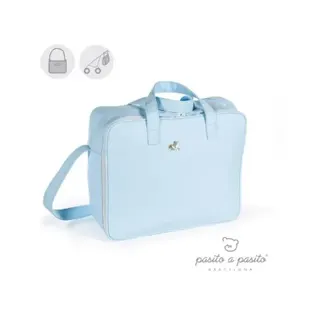 −48 %Pasito a PasitoElodie maternity bag, blue – Pasito a Pasito676 DH
instead of 1 300 DHView product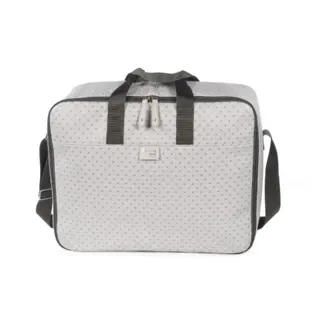 −41 %Walking MumArchie maternity bag – Walking Mum755 DH
instead of 1 290 DHView product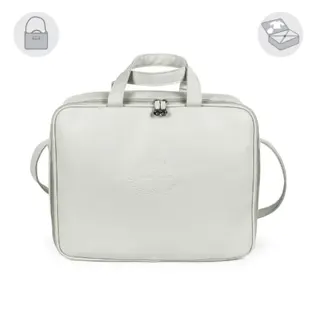 −48 %Pasito a PasitoSherwood maternity bag, grey – Pasito a Pasito832 DH
instead of 1 600 DHView product −35 %DoomooSofty nursing pillow, Flower Yellow – Doomoo403 DH
instead of 620 DHView product −9 %DoomooComfy Big nursing and maternity pillow, Tetra Brick – Doomoo619 DH
instead of 680 DHView product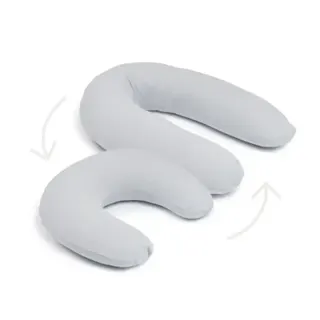 −9 %DoomooTwisty 2-in-1 pregnancy pillow, Pearl Grey, pearl grey cover – Doomoo901 DH
instead of 990 DHView product- The whole aisle · Maternity bags12 products online, delivered anywhere in Morocco.Open the aisle
Products sold by La Maison du Bébé, publisher of this magazine. Prices as of 12 October 2026; please check the product page.
Frequently asked questions
When should I start preparing for childbirth?
Standard classes usually begin in the third trimester: around the 7th month according to the French hospital group Elsan, 8 to 10 weeks before the birth according to the UK's NHS. You can start earlier, though: in France, an early prenatal interview is recommended from the 4th month. In Morocco, start looking in the second trimester, so you have time to find a midwife or a class that suits you.
Are antenatal classes still useful if I plan an epidural or a caesarean?
Yes. Classes are not only about pain: they explain how birth unfolds, the possible interventions, the postnatal period, newborn care and going home. Breathing techniques also help while you wait for the epidural, and knowing what happens in the operating theatre makes a caesarean less daunting.
Is prenatal yoga safe?
Yes, as long as there is no medical reason against it. France's national health insurance (Assurance maladie) states that yoga and Pilates carry no risk provided you avoid postures that can lower your blood pressure. Tell your doctor or midwife before you start, choose a pregnancy-specific class with a trained teacher, and stop if you feel pain or unwell.
What is haptonomy?
It is a form of preparation based on affective touch: the parents place their hands on the bump, and the baby senses the contact and responds to it. The aim is to build a bond before birth and to approach labour more calmly. It is practised as a couple with a trained practitioner, and the father takes an active part.
Do I need to prepare again for a second baby?
It is not compulsory, but the UK's NHS notes that refresher classes can help, especially when several years separate the pregnancies. It is also a chance to talk through a difficult first birth, prepare your older child for the baby's arrival and rethink how you will organise life at home with two children.
Sources
- Devenir parentsAssurance maladie (ameli.fr) · France
- Comment choisir son activité physique ou son sport pendant sa grossesse ?Assurance maladie (ameli.fr) · France
- Tout savoir sur la préparation à la naissanceElsan (Hôpital privé la Châtaigneraie) · France
- Antenatal and hypnobirthing classesNHS (Best Start in Life) · United Kingdom
- Plan de naissanceMieux vivre avec notre enfant, INSPQ · Canada (Québec)
- Techniques et positions pour apprivoiser la douleur pendant le travailMieux vivre avec notre enfant, INSPQ · Canada (Québec)
- [Tribune] Pourquoi pratique-t-on autant de césariennes au Maroc ?TelQuel (Dr Fouad Sellak, obstetrician-gynaecologist) · Morocco
- La simplification des procédures d'exercice de la profession de sage-femme fait débatMédias24 · Morocco