





Article contents
Key points
- The first month ends at about 6 weeks: the first two weeks counted come before conception.
- By the end of the month, the embryo measures about 6 mm and its heart is forming.
- Some women have no symptoms yet: that does not rule out a pregnancy.
- The WHO advises a first contact with a health professional before 12 weeks.
- Bleeding or pain on one side of the abdomen: get checked straight away.
Two lines on the test, sitting on the edge of the sink. You look at it again, then once more. If you have just found out, you are most probably 1 month pregnant, sometimes a little less. Nothing shows yet, but everything has already begun.
This first month is above all a month of questions: how far along are you exactly, what is happening to your baby, and who should you call first? Here are the useful landmarks, without repeating the detailed guides we point you to along the way.
How many weeks is 1 month pregnant?
The first month of pregnancy ends at about 6 weeks and 2 days, which is 4 weeks and 2 days after conception. Doctors count pregnancy from the first day of your last period: in Morocco, as in France, these are called weeks of amenorrhoea, written "SA" on your paperwork. Since conception happens about two weeks later, the first two weeks go by… before your baby even exists.
| Milestone | Weeks from last period (SA) | Weeks since conception |
|---|---|---|
| Conception | around 2 weeks | 0 weeks |
| Missed period | around 4 weeks | around 2 weeks |
| End of the 1st month | 6 weeks + 2 days | 4 weeks + 2 days |
That is why your gynaecologist talks about "6 weeks" when you thought you were at 4. The full calculation, with your due date, is in our article on how to work out your weeks of pregnancy.

What is happening to your baby in the first month?
Everything is falling into place at great speed. At 4 weeks, the embryo measures about 2 mm, the size of a poppy seed, according to the UK's NHS. It floats in a small fluid-filled sac, nourished by a yolk sac, while its outer layer prepares the future placenta.
At around 5 weeks, the brain and spinal cord are forming, and the heart beats for the first time. At 6 weeks, the embryo reaches about 6 mm: you can make out the buds of the arms and legs, small dips where the ears will be, and a bump where the heart is. WebMD compares it to a grain of rice by the end of the month.
To follow what comes next, week after week, see our week-by-week pregnancy calendar.
Symptoms in the first month of pregnancy
The first sign is still a missed period, if your cycles are regular. Then, for many women, the pregnancy hormone (hCG) brings:
- swollen, tender breasts;
- great tiredness, sometimes from the moment you wake up;
- nausea, which despite the name "morning sickness" can strike at any time of day;
- a metallic taste in the mouth and a heightened sense of smell that makes the smell of coffee or frying unbearable;
- needing to pee more often;
- small cramps similar to period pain, and sometimes light bleeding.
The NHS points out that some women have no symptoms at all at this stage, and that does not mean anything is wrong with the pregnancy. To tell these signs apart from those of an approaching period, read our article on the first symptoms of pregnancy. If nausea settles in, our tips to ease pregnancy nausea will come in handy next month.
The test: when to take it, and do you need a blood test?
Some urine tests detect pregnancy from about three and a half weeks, according to the NHS, but a negative result taken too early proves nothing. The most reliable approach is to wait until the first day your period is late. A blood test (beta-hCG level) gives a precise figure; it is not compulsory if the urine test is clearly positive. Everything is explained in our guide to taking a pregnancy test in Morocco.
When should you book your first appointment?
As soon as the test is positive, book an appointment, without waiting until there is "something to see". The World Health Organization (WHO) recommends a first contact with a health professional within the first 12 weeks, then at least eight contacts in total during pregnancy. In the UK, this first appointment takes place between 8 and 12 weeks; in France, before the end of the 3rd month.
In Morocco, you can be followed at your local health centre, by a gynaecologist, in a private clinic or at the hospital. In April 2025, the Ministry of Health launched a national campaign around a simple message: "early and regular" pregnancy care. According to the national survey cited on that occasion (ENPSF 2018), maternal mortality fell by 35% between 2010 and 2016.
At this first appointment, you are usually given a blood test: blood group, rubella, toxoplasmosis, hepatitis B and HIV, according to the French schedule. Bring:
- the date of the first day of your last period;
- a list of your medicines and medical history;
- your vaccination record, if you have it.
Good habits from the very first month
- Folic acid: it helps prevent certain defects of the spine, such as spina bifida. The NHS advises taking it until at least 12 weeks; the dose is set by your doctor or pharmacist.
- No alcohol, no tobacco, and less coffee and tea.
- No medicine without advice, not even a common painkiller, France's national health insurance reminds us.
- Care at the table: meat and eggs well cooked, raw vegetables carefully washed, no raw-milk cheese. The rules are detailed in our guide to eating well during pregnancy.
- Move a little every day: a brisk 10-minute walk is enough to start.
From the shop
First purchases, without rushing
In the first month, you need almost nothing. A soft bra eases tender breasts, and a cover keeps your first test results together in one place.
 −48 %MedelaMaternity and nursing bra, size S – Medela208 DH
instead of 400 DHView product −48 %MedelaMaternity and nursing bra, size S, white – Medela208 DH
instead of 400 DHView product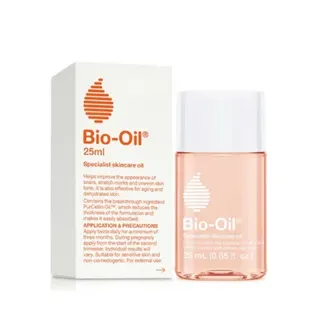 −48 %Bio-OilFace and body skincare oil, 25 ml – Bio-Oil26 DH
instead of 50 DHView product −48 %Bio-OilFace and body skincare oil, 60 ml – Bio-Oil31 DH
instead of 60 DHView product −48 %Pasito a PasitoCotton health record cover, white – Pasito a Pasito234 DH
instead of 450 DHView product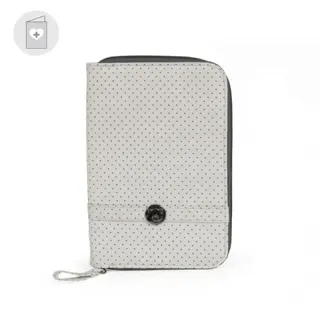 −48 %Pasito a PasitoChloé health record cover, grey – Pasito a Pasito312 DH
instead of 600 DHView product- The whole aisle · Mum’s hygiene8 products online, delivered anywhere in Morocco.Open the aisle
Products sold by La Maison du Bébé, publisher of this magazine. Prices as of 12 October 2026; please check the product page.
If your skin already feels tight or your breasts are sore, a care oil adds comfort, with no promise against stretch marks. A wire-free maternity bra is often more comfortable than a standard one.
Frequently asked questions
Can you see the baby on a scan at 1 month pregnant?
It is possible at the very end of the month, but it is not routine. At around 6 weeks, the embryo measures about 6 mm, and a vaginal ultrasound can sometimes show its heart beating, according to the UK's NHS. It is only offered if there is bleeding, pain or doubt. The routine dating scan takes place later, between 11 and 14 weeks.
Does your bump show at 1 month pregnant?
No. The uterus is still tucked inside the pelvis. You may, however, feel bloated, especially in the evening, and find your trousers a little tight. The NHS notes that in a second pregnancy the bump may show slightly earlier, because the muscles have already been stretched. A real bump usually appears in the second trimester.
Can you have a period when you are 1 month pregnant?
Not a real period. A small, light bleed can, however, happen when the egg implants in the uterus, and be mistaken for a short period. The NHS advises reporting any bleeding during pregnancy, even slight. If it comes with pain on one side of the abdomen or you feel faint, get seen the same day, or go to the emergency department.
I took a medicine before I knew I was pregnant: is it serious?
Most of the time, no, but talk to your doctor or pharmacist quickly, giving the exact name of the product. Do not take anything else without advice, even a common medicine. On the other hand, if you are on long-term treatment (thyroid, epilepsy, blood pressure, asthma…), do not stop it on your own: the NHS points out that stopping can be riskier than the treatment itself.
Sources
- New guidelines on antenatal care for a positive pregnancy experience (7 November 2016)World Health Organization (WHO) · International
- Week 4 (Your pregnancy week by week)NHS, Best Start in Life · United Kingdom
- Week 6 (Your pregnancy week by week)NHS, Best Start in Life · United Kingdom
- Your antenatal appointmentsNHS · United Kingdom
- Guide maternité : l'arrivée de mon enfant (2023)MGEN, French national health insurance schedule · France
- The First Trimester: Your Baby's Growth and Development in Early PregnancyWebMD (reviewed by Traci C. Johnson, MD, March 2023) · United States
- Campagne nationale sur l'importance des soins prénatals (7 April 2025)Hespress FR, based on the Ministry of Health and Social Protection · Morocco