





Article contents
Key points
- First scan around 11-14 weeks: due date, number of embryos, nuchal translucency.
- Second around 20-22 weeks: a detailed look at the organs and growth.
- Third around 32 weeks (French schedule): baby's position, placenta, amniotic fluid.
- Down syndrome screening is offered, never imposed: you decide at every step.
- Scans are done for medical reasons, not for keepsake pictures.
The room is dimly lit, the gel is cold, and a small moving shape appears on the screen. Every pregnancy scan is a big moment, often eagerly awaited by the whole family. It is also a precise medical examination, with a different purpose in each trimester.
Here is what each ultrasound is for, when it takes place, which tests go with it, and the questions to ask so you leave the room having understood everything.
How many scans during pregnancy?
It depends on the country. For an uncomplicated pregnancy, the UK and Switzerland plan at least two routine scans, around 12 and 20 weeks. France recommends three, in the 3rd, 5th and 8th months, according to French national health insurance. Extra scans are added if the situation calls for it: bleeding, twins, growth that needs monitoring, diabetes…
In Morocco, the schedule depends on where you are followed: a gynaecologist in private practice, a clinic, a hospital or a public health centre. Ask for it at your first visit and note the dates. All the weeks below are counted from the first day of your last period, shown as SA (semaines d'aménorrhée) in Moroccan notes: if that count is unclear, see how to work out how many weeks pregnant you are.

Before 11 weeks: an early scan, sometimes
A very early scan is not routine. It may be requested if you have bleeding, pain or doubts about your dates, especially to check that the pregnancy is inside the uterus. At this stage, the probe is sometimes placed in the vagina for a better view. According to the Larousse encyclopaedia, the gestational sac is visible from around 5 weeks, the embryo around 6 weeks, and the heartbeat can be seen clearly around 7 weeks.
The first scan (11 to 14 weeks): dating and screening
This is the dating scan, offered between 10 and 14 weeks in the UK and between 11 and 13 weeks in Quebec. It is used to:
- set the due date, by measuring the embryo's length from head to bottom: this is the most accurate method;
- count the embryos and check that their size matches the dates;
- measure nuchal translucency, a thin layer of fluid under the skin at the back of the neck, which is part of the calculation of the chance of a chromosomal condition;
- take a first look at the baby's development, which will be examined in detail in the second trimester.
Down syndrome (trisomy 21) screening combines, between 11 and 14 weeks, the nuchal translucency measurement and a blood test. It is offered, never imposed: in Quebec as in the UK, you can accept or decline at every step. If the result shows a higher chance, you will be offered a test of fetal DNA in your blood, or a diagnostic test such as amniocentesis.
The second scan (20 to 22 weeks): checking the organs
It is often called the anomaly scan or morphology scan: the sonographer reviews the baby's organs one by one. Between 18 and 22 weeks, according to the Mayo Clinic, they examine in particular the four chambers of the heart and its valves, the brain and cerebellum, the spine, the hands, the legs and where the cord joins the tummy.
It also checks the baby's growth, the amount of amniotic fluid and where the placenta lies. This is often when you can find out the sex, if the baby's position allows and if you want to know: it is all explained in our article on boy or girl: when and how to find out.
The third scan (around 32 weeks): getting ready for the birth
In the French schedule, which many Moroccan gynaecologists follow, it takes place during the 8th month, around 32 weeks. It checks:
- the baby's growth;
- their position, head down or breech;
- where the placenta lies;
- the amount of amniotic fluid.
Its findings help your gynaecologist prepare for the birth. To follow your baby's progress between examinations, our article on pregnancy week by week gives size and weight markers.
Routine blood and urine tests
The scan doesn't tell you everything. Blood and urine tests punctuate the pregnancy. The list varies by country, but generally includes:
| Test | What it looks for | When |
|---|---|---|
| Blood group and Rhesus factor | Incompatibility with the baby | Early pregnancy |
| Full blood count | Anaemia | Early, then as needed |
| Serology | Rubella, hepatitis B, syphilis, HIV | Early pregnancy |
| Toxoplasmosis | Whether or not you are immune to the parasite | Early pregnancy (in France) |
| Blood sugar | Gestational diabetes | Early, and often between 24 and 28 weeks |
| Urine test | Protein, urinary infection | Regularly |
| Vaginal swab | Group B streptococcus | Around 36 weeks in Quebec |
Toxoplasmosis is a good illustration of the differences between countries: French national health insurance tests for it routinely, while the Quebec programme does not list it among the basic tests. If you are not immune, everyday precautions matter a great deal: they are detailed in our article on toxoplasmosis in pregnancy.
Antenatal care in Morocco: a few practical pointers
In the public and private sectors alike, keep all your scan reports and test results in one folder, and bring it to every appointment and on the day of the birth. The cost of scans and tests varies between practices and laboratories: check in advance with your gynaecologist and with your health insurance (AMO) or top-up insurer what is covered.
A health record cover keeps these papers together and clean, and will later hold baby's health record book.
From the shop
Keep your health record safe
Scan reports, test results, then baby's health record book: a cover keeps all these papers clean and together. Several designs, at similar prices.
 −48 %Pasito a PasitoCotton health record cover, white – Pasito a Pasito234 DH
instead of 450 DHView product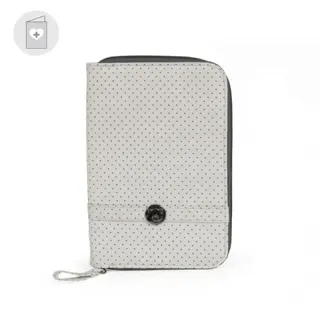 −48 %Pasito a PasitoChloé health record cover, grey – Pasito a Pasito312 DH
instead of 600 DHView product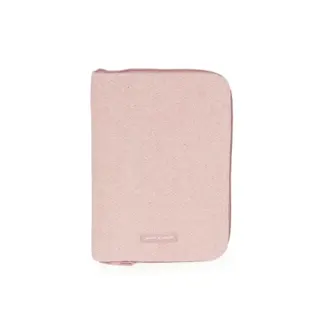 −48 %Pasito a PasitoBohemian health record cover, pink – Pasito a Pasito312 DH
instead of 600 DHView product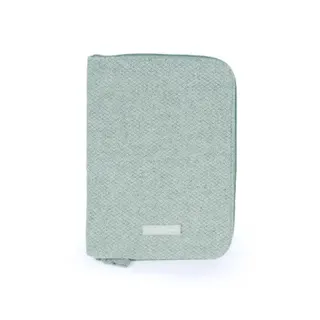 −48 %Pasito a PasitoBohemian health record cover, grey – Pasito a Pasito312 DH
instead of 600 DHView product −48 %Pasito a PasitoNido Volante health record cover, blue – Pasito a Pasito354 DH
instead of 680 DHView product- The whole aisle · Health record covers6 products online, delivered anywhere in Morocco.Open the aisle
Products sold by La Maison du Bébé, publisher of this magazine. Prices as of 12 October 2026; please check the product page.
Scans done outside medical care, as "3D keepsakes", do not replace any of these examinations. The Mayo Clinic notes that most professionals advise against them when they meet no medical need.
Frequently asked questions
Are ultrasound scans dangerous for my baby?
The risks are considered low. The Mayo Clinic nevertheless points out that, like any medical test, an ultrasound should be done for a medical reason, as part of antenatal care. That is why most professionals advise against keepsake scans done without a medical reason, for example to find out the sex or get a video.
3D or 4D scan: is it useful?
A three-dimensional scan can give clearer images of certain parts of the body and help the doctor refine a diagnosis. It isn't needed for normal antenatal care. If your gynaecologist offers it during an examination, enjoy it; but an extra session, purely for pleasure, is not recommended.
What happens if Down syndrome screening shows a high chance?
A higher-chance result does not mean the baby has the condition: it only indicates a higher probability. You will then be offered either a test of fetal DNA in your blood, or a diagnostic test such as amniocentesis, which is reliable but carries a small risk of miscarriage. You can take time to talk it through and choose at every step.
I am Rhesus negative: what does that change?
If your blood group is Rhesus negative, your doctor will monitor compatibility with your baby's. In Quebec, an injection of anti-D immunoglobulin is offered around 28 weeks, then after the birth if needed, and also after bleeding, a miscarriage or an invasive test. So report any bleeding during pregnancy.
Can you find out the baby's sex at the first scan?
It is rarely reliable. According to the Mayo Clinic, the sex often becomes identifiable on a scan from around 14 weeks, and it can usually be seen clearly at the second-trimester scan, if the baby's position allows. Even then, there is a small margin of error. If you would rather keep the surprise, say so at the start of the scan.
Sources
- Suivi de grossesseMieux vivre avec notre enfant, INSPQ · Canada (Quebec)
- Ultrasound scansNHS 111 Wales · United Kingdom
- Screening for Down's syndrome, Edwards' syndrome and Patau's syndromeNHS 111 Wales · United Kingdom
- Fetal ultrasoundMayo Clinic · United States
- Je prépare l'arrivée de mon enfantAssurance Maladie, French national health insurance (guide published by ARS Mayotte) · France
- GrossesseEncyclopédie Larousse · France
- Vous attendez un bébéGeneva University Hospitals (HUG) · Switzerland