










Article contents
Key points
- A daily shower, mild soap and thorough drying: that is the essence of care.
- Adhesive strips fall off on their own in about a week; staples and non-absorbable stitches come out around days 3 to 7.
- Numb skin and itching around the scar are common and temporary.
- Massage starts around 6 weeks, once the wound is well closed.
- Nothing heavier than your baby for about 6 weeks, and no driving until you can brake without hesitating.
In the shower, ten days after the birth, you finally dare to look. A red line, a little swollen, just above the pubic bone. The skin around it feels almost nothing, and yet it itches. The c-section scar raises many questions, often asked too late, once you are back home.
In Morocco, the question concerns many women. In an opinion piece published by TelQuel in 2026, a gynaecologist cites CNOPS data: in the private sector, the share of caesareans reportedly rose from 35% in 2006 to 61% in 2017, figures he considers cannot be extrapolated to the whole private sector. How the operation goes and the recovery are detailed in our article on caesarean birth. Here, we focus on the scar: how to care for it, what you may feel, and what should worry you.
What does a caesarean scar look like?
Most often it is a horizontal incision of 10 to 20 cm, just above the pubic hair, according to the NHS. A vertical incision, below the navel, is rarer. The wound is closed with stitches that dissolve on their own, with stitches to be removed or with staples, often covered by small adhesive strips.
Before leaving the maternity unit, ask what was used: it determines whether you need to come back for removal. Red and visible at first, the scar fades with time. On olive or darker skin, the NHS specifies, it can leave a darker or paler mark.

Care, week by week
| When | What happens | What you do |
|---|---|---|
| The first 24 hours | A dressing covers the wound | Nothing: the team looks after it |
| Days 1 to 2 | The dressing is usually removed | Showering becomes possible |
| Days 3 to 7 | Staples or non-absorbable stitches removed, depending on the team | Removal appointment if needed |
| About 1 week | The adhesive strips fall off | Do not tear them off |
| 5 to 6 weeks | The wound is closed with no discharge | Massage can begin |
| About 6 weeks | The skin has healed | Gradual return to activities |
These reference points come from the Ottawa Hospital, the MSD Manual, the NHS and Naître et grandir. Timings vary between teams: follow your maternity unit's instructions first.
The shower, every day
The Ottawa Hospital sums up home care in a few steps:
- Wash the scar with water and mild soap in the shower, without rubbing.
- Rinse well.
- Dry completely, patting with a clean towel, before dressing.
- Let the strips fall off on their own.
No antiseptic or cream is needed on a wound that is healing well. Wear loose or high-waisted clothes, and cotton briefs that do not rub on the incision, advises the NHS.
Pain, itching, numbness: what is normal
Pain is significant in the first days and gradually lessens. According to Naître et grandir, painkillers may be needed for one to two weeks. The Ottawa Hospital adds that period-like cramps are normal: these are afterpains, which also affect women who had a caesarean. The choice of a painkiller compatible with breastfeeding is up to the doctor or pharmacist.
Numbness of the skin around the scar is common. How long it lasts varies from woman to woman, notes the Mieux vivre guide. Sensation returns slowly.
Itching is part of healing, even once the wound has closed. Do not scratch.
Bruises, slight redness, a little swelling and a little clear, odourless fluid are also normal, according to Naître et grandir and the Ottawa Hospital.
Getting up, coughing, sneezing pulls on the scar. Press a cushion against your belly, and to get out of bed, turn onto your side first and then push up on your arms. Do not strain on the toilet: our article on constipation and haemorrhoids after baby gives the right reflexes.
Scar massage: when and how?
From six weeks, once the wound is well closed and free of scabs, Naître et grandir advises massaging the scar every day for five minutes. Make small circles with the pads of your fingers, on either side of the scar, without pulling it apart. The aim is to soften the area gently.
A neutral oil or cream makes the movement more pleasant. None makes a scar disappear: it is the massage that counts, and time. Avoid massaging an area that is still bright red, weeping or painful.
From the shop
For the scar and the weeks that follow
A neutral oil or cream makes massage easier once the wound has closed, without making the scar disappear. And washable briefs for the bleeding, which also happens after a caesarean.
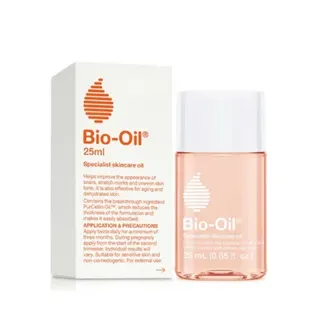 −48 %Bio-OilFace and body skincare oil, 25 ml – Bio-Oil26 DH
instead of 50 DHView product −48 %Bio-OilFace and body skincare oil, 60 ml – Bio-Oil31 DH
instead of 60 DHView product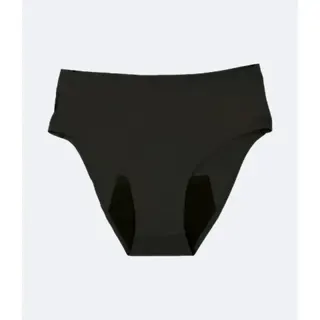 −21 %DoomooFlowly postpartum and period underwear, Black, XS-S-M – Doomoo355 DH
instead of 450 DHView product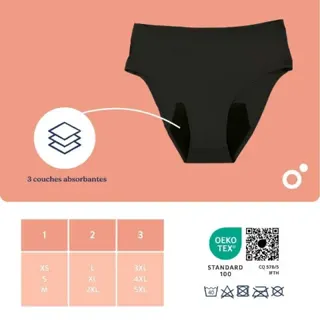 −21 %DoomooFlowly postpartum and period underwear, Black, L/XL/2XL – Doomoo355 DH
instead of 450 DHView product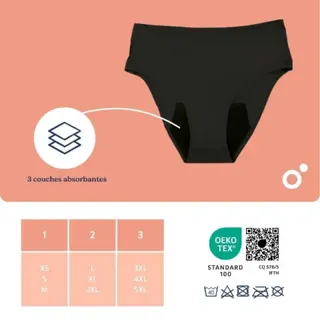 −21 %DoomooFlowly postpartum and period underwear, Black, 3XL/4XL/5XL – Doomoo355 DH
instead of 450 DHView product- The whole aisle · Mum’s hygiene8 products online, delivered anywhere in Morocco.Open the aisle
Products sold by La Maison du Bébé, publisher of this magazine. Prices as of 12 October 2026; please check the product page.
Lifting, driving, exercise: the timelines
- Lifting: nothing heavier than your baby for about six weeks. The Ottawa Hospital sets the limit at 4.5 kg and lists the car seat among loads to hand to someone else. Water jugs, shopping and your older child on your hip will have to wait.
- Walking: yes, from the first days and a little more each day. Moving helps recovery and limits the risk of clots, remind the NHS and the Mieux vivre guide.
- Driving: not until you can brake suddenly without hesitating, nor if your painkillers make you drowsy. Naître et grandir speaks of four weeks, the NHS of about six.
- Exercise: Assurance Maladie places the return around 8 to 10 weeks after a caesarean, after medical advice. Details are in our article on getting back to exercise after baby.
A postpartum belt can ease the first days, but it does not flatten the belly: see our article on the belly after childbirth.
How to recognise an infected scar
Infection shows as spreading redness, skin that is hot, swollen or hard, pain that increases instead of decreasing, and a discharge that changes: heavier, yellow or green, foul-smelling. Fever and chills sometimes follow. More rarely, the wound opens or starts bleeding again.
Smoking, diabetes, high blood pressure, significant overweight or a previous infection raise the risk, notes the Ottawa Hospital. An infection caught early is easily treated: do not wait for the postnatal check. The other postpartum emergencies, such as phlebitis, are gathered in our article on complications after childbirth.
Frequently asked questions
When can I take a bath or go to the hammam after a caesarean?
Not before the wound is well closed. The Ottawa Hospital rules out baths, spas and swimming until the carer gives the go-ahead, generally when the skin has healed and the bleeding has stopped. The Quebec guide Mieux vivre allows a bath around day 5 if everything is healing well. No source covers the hammam: wait until lochia has ended and the scar is closed, then ask your doctor.
Why does my caesarean scar itch?
Itching often goes with healing, as does numbness of the skin around it: the Ottawa Hospital lists them among normal sensations, even after the wound has closed. Do not scratch, keep the area dry and wear loose clothes. If the itching comes with spreading redness, a discharge or heat, show the scar to a doctor.
Why does my belly make a little roll above the scar?
The skin and fat just above the scar often sag a little, especially in the first months, while the belly tightens again and swelling goes down. It is not a sign of a complication. The belly takes several months to regain its shape. A hard, hot or painful lump, however, should be examined.
How long does the skin stay numb around the scar?
It varies. The Quebec guide Mieux vivre stresses that whether numbness occurs, and how long it lasts, differs from one woman to another. Sensation usually returns slowly. An area may stay a little less sensitive for a long time, without being serious.
Sources
- Récupérer après l'accouchementNaître et grandir · Canada (Quebec)
- Comment se rétablir d'un accouchement par césarienneThe Ottawa Hospital · Canada (Ontario)
- CésarienneMieux vivre avec notre enfant, INSPQ · Canada (Quebec)
- Caesarean section: recoveryNHS · United Kingdom
- Soins du post-partumMSD Manual, professional edition · United States
- Après l'accouchement : le retour à la maisonAssurance Maladie (ameli.fr) · France
- [Tribune] Pourquoi pratique-t-on autant de césariennes au Maroc ?TelQuel · Morocco