










Article contents
Key points
- Afterpains help the womb return to its size and limit bleeding.
- They are stronger during feeds, because of the oxytocin released.
- They are often more marked after a second or third baby.
- A painkiller compatible with breastfeeding can help: ask a doctor or pharmacist which one.
- Severe pain, fever or foul-smelling discharge are not afterpains: get checked.
Your baby has been feeding for two minutes and suddenly a cramp grips your lower belly, like a painful period. You were told about the contractions of labour, much less about the ones that come after. These are afterpains: womb contractions that follow the birth and surprise many new mothers.
They are normal and even useful. They can also really hurt, especially after a second baby. Here is what is happening, what soothes it, and how to tell an afterpain from a pain that should send you to a doctor.
Why does the womb still contract after birth?
Because it has two jobs to do: close over the wound left by the placenta and return to its size. By contracting, the womb compresses the blood vessels in the area where the placenta was attached. That is what limits bleeding after childbirth, explains Naître et grandir.
This return to normal is called uterine involution. According to the MSD Manual, the womb can no longer be felt through the belly by about the second week, and it regains its pre-pregnancy size in 4 to 6 weeks. Naître et grandir says 4 to 8 weeks. Afterpains mostly mark the start of this work.

Why are they stronger during feeds?
Because the baby's suckling releases oxytocin, the hormone that also makes the womb contract in labour. At each feed, the womb therefore receives a small contraction signal. The NHS notes that bleeding is often redder and heavier during breastfeeding for the same reason.
It is unpleasant, but it is a good sign: breastfeeding helps the womb shrink. If you are not breastfeeding, you can have afterpains too: the womb contracts after every birth. They are simply not triggered again by feeds.
In the first days, these cramps add to the difficulties of latching. Our guide to comfortable breastfeeding positions helps you find the one that eases you.
Why are they stronger with a second baby?
Afterpains are often more intense after a second or third birth. The Quebec and Scottish guides confirm it. The Allo Docteurs site, quoting a midwife, explains it by a more stretched womb that takes longer to shrink. The same logic applies after twins or a large baby.
Many mothers are surprised to suffer more than after their first child, when they "already knew". It is not a sign of any problem. Simply tell the maternity team: you can be offered a suitable painkiller from the first hours.
How long do afterpains last?
Each contraction generally lasts a few minutes, sometimes longer. The pain most often fades after a few days, specifies Allo Docteurs. The womb then keeps shrinking, without you necessarily feeling it.
| Reference | What is usual |
|---|---|
| Sensation | Lower-belly cramp, like painful periods, sometimes into the back |
| Timing | Mostly during feeds, and when the bladder is full |
| Intensity | Stronger after a 2nd or 3rd baby, twins or a large baby |
| Duration | Mostly the first days, then it eases |
How to ease afterpains
A painkiller, on advice. Afterpains may need painkillers, reminds the MSD Manual. In France, the CNGOF states that anti-inflammatories are effective on these pains and that paracetamol is the first-choice painkiller during breastfeeding. Naître et grandir also mentions ibuprofen, unless a professional advises otherwise. The choice and the dose are set by your doctor, midwife or pharmacist, taking breastfeeding and your history into account. Avoid dipping into the family medicine cabinet.
Comfort measures. The sources consulted have not evaluated them, but they are harmless and many women find them useful:
- Empty your bladder often, especially before the feed. The HUG in Geneva advise going to the toilet every two hours in the first days.
- Breathe slowly, blowing out for a long time, as in labour.
- Change position: lying on your side, or on your front with a cushion under the hips if that is comfortable.
- Gentle heat on the lower belly, with a lukewarm hot-water bottle wrapped in a cloth. Never scalding, and not on a recent caesarean scar.
From the shop
Comfort for the first days
Afterpains need no purchase. During these days bleeding often increases at feeds: washable briefs in your size and a bidet-style shower simply make daily life more comfortable.
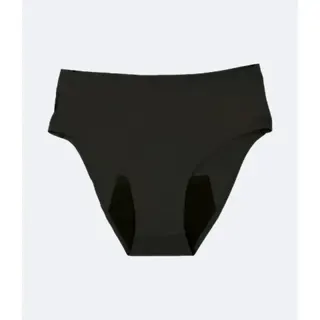 −21 %DoomooFlowly postpartum and period underwear, Black, XS-S-M – Doomoo355 DH
instead of 450 DHView product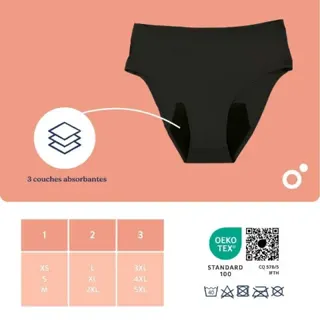 −21 %DoomooFlowly postpartum and period underwear, Black, L/XL/2XL – Doomoo355 DH
instead of 450 DHView product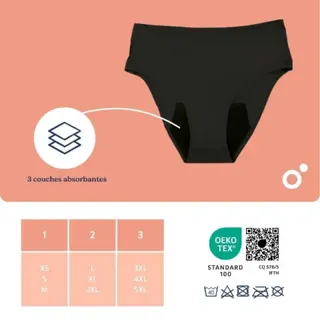 −21 %DoomooFlowly postpartum and period underwear, Black, 3XL/4XL/5XL – Doomoo355 DH
instead of 450 DHView product- The whole aisle · Mum’s hygiene8 products online, delivered anywhere in Morocco.Open the aisle
Products sold by La Maison du Bébé, publisher of this magazine. Prices as of 12 October 2026; please check the product page.
Afterpains and traditions: the belt, the herbal teas
In many Moroccan families, the new mother's belly is bound to "put the womb back in place". None of the sources consulted shows that a bandage speeds up uterine involution: it is the contractions that do this work. Our article on the belly after childbirth reviews the postpartum belt. If it comforts you, wear it without tightening.
The herbal teas and traditional preparations offered during the nfissa are a gesture of affection. Be wary, however, of plant mixtures whose composition is unknown, especially if you are breastfeeding: ask your pharmacist before drinking them regularly.
Afterpain or abnormal pain: how to tell?
An afterpain comes and goes, feels like a period cramp and lessens day by day. A pain that does not give way, that worsens or comes with fever is not an afterpain. Naître et grandir asks you to seek care for severe pain in the belly or genital area, or with fever. Allo Docteurs adds that recurring pain with fever or headaches means contacting the emergency services.
These signs can reveal an infection of the womb or a retained piece of placenta. To know what normal bleeding looks like, see our article on lochia and how it evolves. The full list of postpartum emergencies is in warning signs after childbirth, and the rest of the recovery in our guide to the postpartum period week by week.
Frequently asked questions
How long do afterpains last?
Each contraction lasts a few minutes, and afterpains are mostly troublesome in the first days. The pain usually fades after a few days, even though the womb keeps shrinking for several weeks. Pain that worsens, lasts beyond the first week or comes with fever is no longer a simple afterpain: get examined.
Do you get afterpains after a caesarean?
Yes. The womb has to return to its size whatever the way of giving birth, and it contracts in the same way, especially during feeds. After a caesarean, these cramps add to the pain of the scar. The painkillers prescribed at the maternity unit often cover both: ask the team what you can take once you are home.
Should I stop breastfeeding if afterpains hurt too much?
No. Contractions during feeds are unpleasant but short-lived, and they help the womb shrink and bleed less. To be more comfortable, take the painkiller your doctor recommended, empty your bladder before the feed and settle in comfortably. If the pain stops you breastfeeding, talk to your midwife.
Are afterpains a sign that my periods are coming back?
No. Afterpains feel like period pain, but they have nothing to do with a cycle: it is the womb contracting to return to its size and close the vessels left by the placenta. Your first periods come back later, on a very variable date, especially if you are breastfeeding.
Sources
- Récupérer après l'accouchementNaître et grandir · Canada (Quebec)
- Le corps après l'accouchementMieux vivre avec notre enfant, INSPQ · Canada (Quebec)
- Tranchées : faut-il s'inquiéter de ces contractions après l'accouchement ?Allo Docteurs (France Télévisions) · France
- Recommandations pour la pratique clinique : post-partum (2015)French College of Obstetricians and Gynaecologists (CNGOF) · France
- You and your body after birth (Ready Steady Baby)NHS inform · United Kingdom (Scotland)
- Your body after the birthNHS · United Kingdom
- Soins du post-partumMSD Manual, professional edition · United States
- Prendre soin de son périnée après la naissance de votre enfantGeneva University Hospitals (HUG) · Switzerland