










Article contents
Key points
- Lochia generally lasts 3 to 6 weeks and gets paler over time.
- Pads or washable briefs: no tampons or menstrual cup before the postnatal check.
- Redder bleeding during feeds is normal: the womb is contracting.
- A clot bigger than an egg, or a full pad within an hour twice in a row: get help quickly.
- A strong smell and fever suggest an infection: see someone the same day.
Day four at home. You get up after the night feed and feel a rush of blood, with a clot. Is that normal? Most of the time, yes. Lochia, the name for the bleeding that follows childbirth, is part of the postpartum period for every mother, whether she gave birth vaginally or by caesarean.
It still worries people, because it is rarely discussed and its look changes from one week to the next. Here is how it evolves, what is normal, how to manage day to day, and above all the signs that must never wait.
Where does lochia come from?
Lochia comes from the spot where the placenta was attached inside the womb. When it separates, it leaves a wound that bleeds, then gradually heals. The blood mixes with bits of lining and mucus, which explains the changes in colour and texture.
Meanwhile, the womb contracts to return to its size. These contractions, called afterpains, tighten the blood vessels and limit bleeding. This is also why the discharge increases during feeds: breastfeeding makes the womb contract, notes the UK's NHS.

How long does lochia last?
Generally three to six weeks, according to the Quebec guide Mieux vivre. Naître et grandir gives a wider range, from 10 days to 6 weeks. The HUG in Geneva speak of four to six weeks. Differences between women are normal. What matters is that the bleeding lessens and fades over time.
| Period | Colour | Usual amount |
|---|---|---|
| The first 3 or 4 days | Bright red | Heavier than a period, small clots possible |
| About day 5 to week 2 | Pink then brown | Decreasing |
| From about 10 to 12 days | Yellowish to whitish | Light, sometimes just traces |
These reference points come from the MSD Manual and the Quebec guides. The MSD Manual specifies that the normal blood loss linked to the placental site is around 250 ml in total.
And the "little return of periods"?
Many women see a redder, more definite bleed come back after a quiet spell, often around the second week: it is commonly called the "petit retour de couches". Naître et grandir confirms that discharge can stay irregular for up to six weeks. It is not a rule: the difference between lochia and real periods is explained in our article on the return of periods after baby.
Clots, smell: what is normal?
Clots are common in the first days, especially in the morning, after passing urine or after feeding: the blood has gathered while you were lying down. The Mieux vivre guide is clear: if the bleeding eases once the clot has passed, there is no cause for concern. A clot bigger than an egg, however, should lead you to seek care.
The smell of lochia is like that of periods, a little stale. A strong, unpleasant smell, especially with fever or a painful belly, can point to an infection of the womb. It is not a question of insufficient hygiene, and it can be treated: see someone the same day.
Which protection to use?
Sanitary pads, or washable period briefs, changed at least every four hours at the start. Tampons and menstrual cups are best avoided: the NHS advises waiting until the postnatal check at six weeks, because of the risk of infection.
For the first days, plan very absorbent night pads or maternity pads. After that, ordinary pads are enough, then panty liners towards the end. Wash your hands before and after each change.
For washing, water is enough. The HUG advise not to soap the vulva, to pour water from front to back, then pat dry. Vaginal douching is ruled out, reminds the MSD Manual. A perineal shower makes it easy to rinse in the toilet, which also eases things when passing urine stings.
From the shop
To get through the weeks of lochia
Washable postpartum briefs in your size and a bidet-style shower for intimate washing: ordinary pharmacy pads do the rest very well.
 −21 %DoomooFlowly postpartum and period underwear, Black, XS-S-M – Doomoo355 DH
instead of 450 DHView product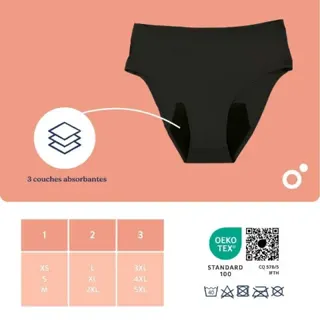 −21 %DoomooFlowly postpartum and period underwear, Black, L/XL/2XL – Doomoo355 DH
instead of 450 DHView product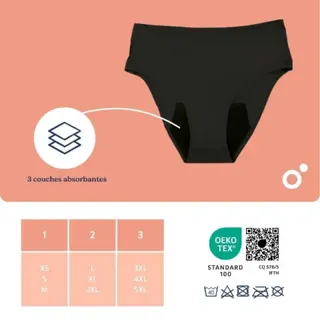 −21 %DoomooFlowly postpartum and period underwear, Black, 3XL/4XL/5XL – Doomoo355 DH
instead of 450 DHView product- The whole aisle · Mum’s hygiene8 products online, delivered anywhere in Morocco.Open the aisle
Products sold by La Maison du Bébé, publisher of this magazine. Prices as of 12 October 2026; please check the product page.
Washable postpartum briefs avoid piling up disposable pads, provided you have several and choose your size. They are not essential: pharmacy pads do exactly the same job.
Rest, nfissa, effort: what makes bleeding vary
Unusual effort, a day on your feet or a heavy load can bring back red blood. It is often a sign that you need to slow down. During the nfissa, the forty days when the new mother is surrounded and relieved of chores, tradition and medical advice agree here: you rest, but you get up and walk a little each day. Our article on the nfissa and its traditions sorts out what helps from what serves no purpose.
As for bathing, the HUG advise against baths and swimming during the weeks of discharge and allow showers. The hammam on day 40 often falls after lochia has ended. And for prayer or fasting when bleeding stops before day 40, that is a religious question, covered in our article on the nifas.
Haemorrhage and infection: the two dangers to know
Worldwide, postpartum haemorrhage is the leading cause of nearly one in four maternal deaths, according to the WHO. In Morocco, maternal mortality has fallen sharply, from 244 to 72 deaths per 100,000 births between 2000 and 2020 according to United Nations data relayed by Pharmacie.ma. The risk is therefore low, but it exists, including after you are back home.
Late haemorrhage can occur several days, even several weeks after birth. NHS inform defines it as abnormal or heavy bleeding between 24 hours and 12 weeks after the birth. It is often linked to a fragment of placenta left in the womb or to an infection.
Infection of the womb shows as fever, foul-smelling discharge and a painful belly. It responds well to treatment, provided you do not wait.
The other emergencies of the weeks after birth, such as phlebitis or pre-eclampsia, are gathered in our article on warning signs after childbirth. For an overview of the body after baby, also read the first six weeks of the postpartum period.
Frequently asked questions
How long do you bleed after a caesarean?
About as long as after a vaginal birth. Lochia comes from the wound left in the womb by the placenta, whatever the way of giving birth. It therefore also lasts several weeks, getting clearer and clearer. The warning signs are the same: bleeding that increases, large clots, a bad smell or fever.
Lochia stopped and then started again: is that normal?
Often, yes. Naître et grandir notes that bleeding can stay irregular for up to six weeks, and some effort or a busy day is sometimes enough to bring it back. A short bleed that settles with rest is nothing to worry about. See someone, however, if it becomes heavy, or comes with clots, a bad smell, fever or a feeling of faintness.
Can I go to the hammam during lochia?
It is better to wait until the bleeding ends. The Geneva University Hospitals (HUG) advise against baths and swimming during the four to six weeks of discharge and allow showers. None of our sources mentions the hammam, but prolonged heat and shared water point the same way: wait until lochia stops, then ask your midwife.
Can I breastfeed if I am bleeding a lot?
Yes. Bleeding is often redder and heavier during feeds because breastfeeding makes the womb contract, explains the NHS. It is a normal mechanism that helps the womb return to its size. Only very heavy blood loss, with faintness or palpitations, means calling for emergency help.
Sources
- Le corps après l'accouchementMieux vivre avec notre enfant, INSPQ · Canada (Quebec)
- Récupérer après l'accouchementNaître et grandir · Canada (Quebec)
- Your body after the birthNHS · United Kingdom
- You and your body after birth (Ready Steady Baby)NHS inform · United Kingdom (Scotland)
- Soins du post-partumMSD Manual, professional edition · United States
- Prendre soin de son périnée après la naissance de votre enfantGeneva University Hospitals (HUG) · Switzerland
- WHO recommendations for the prevention and treatment of postpartum haemorrhageWorld Health Organization (WHO) · International
- Santé maternelle : une hécatombe à l'ombre du progrèsPharmacie.ma · Morocco