










Article contents
Key points
- About one woman in three has leaks in the months after birth.
- Pelvic floor exercises, done every day, are the first treatment.
- No running or jumping until your pelvic floor is strong again.
- Leaks that persist: mention them at the postnatal check, without embarrassment.
- Burning when passing urine or fever: think of a urinary infection and seek care.
You sneeze while holding the baby, and a few drops escape. Or it is a fit of laughter with your sister, a dash to catch your older child, an urge so pressing that you do not make it to the toilet. Urine leaks after childbirth are one of the most hushed-up subjects of the postpartum period, in Morocco as elsewhere. You feel ashamed, you think it is "the price to pay", you do not even mention it to the doctor.
Yet it is very common and, above all, it can be treated. Here is what is usual, the different types of leaks, what really helps and when to seek care.
Is it common to leak after giving birth?
Yes, very. About one woman in three leaks urine in the first months after birth, according to the Quebec guide Mieux vivre and NHS inform in Scotland. A French review published in 2006 in the journal for general practitioners put the frequency at between 15 and 40% of women at two months.
The risk is higher after a perineal tear or the birth of a large baby, specifies Mieux vivre. A vaginal birth is the main factor, but a caesarean does not protect completely: the same review pointed out that at least 30% of pregnant women already leak during pregnancy.
In the first days it is even common to have poor control of urine, stools or wind, note the HUG in Geneva. Perineal sensation is reduced by anaesthesia, swelling, a tear or an episiotomy. This generally sorts itself out quickly.

What types of leaks are there?
| Type | What you feel | Share of cases at 3 months* |
|---|---|---|
| Stress incontinence | A few drops when coughing, laughing, sneezing, running or carrying a load | About half |
| Urge incontinence | A sudden, very pressing need that is hard to hold until the toilet | About one in six |
| Mixed incontinence | Both at once | About a third |
*According to the 2006 French review cited above.
Stress incontinence is the most common after a birth. The pelvic floor muscles, which support the bladder, have been stretched and no longer close as well when pressure rises in the belly.
Urgency can have other causes. If it comes with burning when passing urine or very frequent urges, think of a urinary infection, which can be treated and should be checked quickly.
What really helps: pelvic floor exercises
Pelvic floor exercises, also called Kegel exercises, are the first treatment. They strengthen the muscles around the bladder, vagina and anus and help stop leaks, explains the NHS. It suggests building up gradually to 10 repetitions of each exercise, at least 3 times a day, breathing normally.
The step-by-step method, the exercises proposed by the HUG and the mistakes to avoid are in our article on pelvic floor rehabilitation after baby. One rule to remember here: you do not train by stopping the stream of urine. The HUG rule out this "stop-and-start" test.
Everyday habits that protect the pelvic floor
- Do not lift heavy loads: no more than the baby's weight during the first month, ask the HUG. Water jugs, shopping bags and your older child on your hip will have to wait.
- Avoid constipation and do not strain on the toilet: every push presses on the pelvic floor. Our advice is in the article on haemorrhoids and constipation after baby.
- Pass urine regularly, without waiting for a pressing urge, and take the time to empty your bladder completely.
- Protect yourself in the meantime: Naître et grandir reminds us that a pad can be used while things improve. There are products designed for urine leaks: your pharmacist will help you choose.
From the shop
The postpartum weeks, comfort side
These washable briefs are designed for postpartum bleeding, and the shower is for intimate washing. For urine leaks, ask your pharmacist about specific protection.
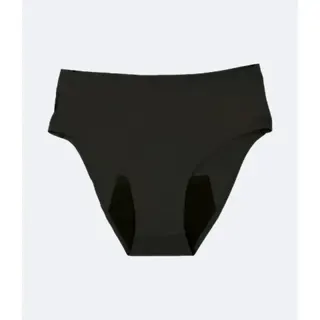 −21 %DoomooFlowly postpartum and period underwear, Black, XS-S-M – Doomoo355 DH
instead of 450 DHView product −21 %DoomooFlowly postpartum and period underwear, Black, L/XL/2XL – Doomoo355 DH
instead of 450 DHView product −21 %DoomooFlowly postpartum and period underwear, Black, 3XL/4XL/5XL – Doomoo355 DH
instead of 450 DHView product- The whole aisle · Mum’s hygiene8 products online, delivered anywhere in Morocco.Open the aisle
Products sold by La Maison du Bébé, publisher of this magazine. Prices as of 12 October 2026; please check the product page.
Sport: why wait before running and jumping?
Because high-impact sports press heavily on a pelvic floor that is still fragile. A French review stresses that exercises raising pressure in the belly increase the strain on the pelvic floor, and advises against an early return before rehabilitation.
Assurance Maladie places the return to physical activity, after medical advice, at around 4 to 6 weeks after a vaginal birth and 8 to 10 weeks after a caesarean. High-impact activities (running, jumping, team sports) wait until pelvic floor rehabilitation is finished. The NHS also advises avoiding sit-ups and planks at first. Walking is possible very early. The return programme is in our article on exercise after childbirth.
Rehabilitation: when and with whom, in Morocco?
Countries do not all set the same timetable:
- In Switzerland, the HUG ask you to tell the midwife or doctor if leaks persist 30 days after birth, and offer guided rehabilitation two to three months after the birth, in six to nine sessions.
- In France, the CNGOF recommends rehabilitation if leaks persist at 3 months, whatever their type, with at least three guided sessions and exercises at home. It recommends neither rehabilitation before 2 months nor routine sessions for women without leaks.
- In the United Kingdom, NHS inform advises seeing a doctor if leaks continue after six weeks; the doctor may refer you to a physiotherapist.
In Morocco, the right moment to talk about it is the postnatal check, between 6 and 8 weeks, with your gynaecologist or midwife. Just say: "I leak when I cough." If they think it useful, they will refer you to a physiotherapist or a midwife trained in pelvic floor rehabilitation. Ask them for an address rather than searching alone. According to the 2006 French review, rehabilitation makes stress leaks disappear in 30 to 50% of cases and reduces them in 60 to 90%; the exercises must then remain a habit, since the CNGOF notes that the benefit fades over the long term without maintenance.
If the leaks weigh on your mood, say so too. NHS inform points to a doubled risk of postnatal depression in affected women; our article on baby blues and postpartum depression helps you take stock. And for the overview, reread what happens in your body after birth.
Frequently asked questions
Will urine leaks after childbirth go away by themselves?
Often they lessen with time. Naître et grandir says leaks on coughing or laughing generally improve over the weeks, and a French review published in 2006 estimated that a third of cases clear up spontaneously within a year and a half. But there is no point waiting and doing nothing: pelvic floor exercises speed up recovery, and leaks that persist can be treated.
Can you have leaks after a caesarean?
Yes, though it is less common than after a vaginal birth. Pregnancy itself puts a strain on the pelvic floor. A French review from 2006 still attributed 3 to 4% of postpartum incontinence cases to caesareans. Pelvic floor exercises and the cautionary advice therefore apply to everyone.
Should I drink less to avoid leaks?
No. Postpartum guides advise the opposite: drink well, about two litres of water a day according to Naître et grandir, notably to avoid constipation, since every strain on the toilet loads the pelvic floor. It is better to spread drinks through the day and go to the toilet regularly, without waiting for a pressing urge. If you drink a lot and leak often, talk to your doctor.
Do urine leaks affect mood?
They can weigh heavily. NHS inform notes that women with stress incontinence have twice the risk of postnatal depression. Feeling embarrassed, or avoiding going out or carrying the baby for fear of a leak, is not trivial. Talk to your doctor or midwife: treating the leaks also helps you feel better.
Sources
- You and your body after birth (Ready Steady Baby)NHS inform · United Kingdom (Scotland)
- Your post-pregnancy bodyNHS · United Kingdom
- Le corps après l'accouchementMieux vivre avec notre enfant, INSPQ · Canada (Quebec)
- Récupérer après l'accouchementNaître et grandir · Canada (Quebec)
- Prendre soin de votre périnée : conseils et rééducationGeneva University Hospitals (HUG) · Switzerland
- Recommandations pour la pratique clinique : post-partum (2015)French College of Obstetricians and Gynaecologists (CNGOF) · France
- Après l'accouchement : le retour à la maisonAssurance Maladie (ameli.fr) · France
- Incontinence urinaire du post-partum : l'évoquer dans la consultation suivant l'accouchement (La Revue Exercer, 2006)French national college of teaching GPs (CNGE) · France