










Article contents
Key points
- They tell stories, invent, ask “why”: language becomes a tool for thinking.
- Role play and invented stories are part of normal development, not lying.
- They start to express anger with words rather than with their hands.
- WHO benchmark: 10 to 13 hours of sleep and less than an hour of screen time a day.
- Delay in more than one area, or loss of skills: talk to the doctor.
“Why is the sky blue? Why does grandpa have wrinkles? What if I were a lion?” At 4, your 4-year-old child asks a thousand questions, tells themselves stories out loud and turns the living room into a fire station. Development at 4 shows mostly in language and imagination: they no longer just make sentences, they use them to think, negotiate and play with others.
It is also the age when many Moroccan children start or continue their year of preschool. Here are the useful milestones, what helps at home, and the signs that should make you see a doctor.
What can a 4-year-old do?
Most children this age have acquired the skills below. They combine the milestones of the US CDC (for the end of the 4th year) and those of the Canadian Paediatric Society. A child may be ahead in one area and a little behind in another: it is the whole picture that counts.
| Area | What we often see around 4 |
|---|---|
| Language | Sentences of four words or more; tells an event from their day; repeats bits of nursery rhymes; answers “what is it for?” |
| Thinking | Names several colours; guesses what comes next in a familiar story; understands “same” and “different”; follows a three-step instruction |
| Movement | Hops and stands on one foot for a few seconds; catches a big ball; pours water with help; undoes a few buttons |
| Hand and drawing | Holds a pencil with fingers and thumb; draws a person with at least three body parts; uses child scissors |
| Relationships | Plays pretend (teacher, doctor); comforts a friend who is crying; likes to “help”; adapts behaviour to the place |
The person drawn at this age is often a “tadpole person”: a big head with arms and legs coming out of it. This is a normal stage. Your child colours better and better inside the lines and starts to copy a few letters, according to a Quebec milestones document.

Language: telling, inventing, asking why
At 4, your child holds a real conversation, follows a story without pictures and asks “why” in series. Some sounds still give them trouble, which remains usual. What matters is that, as at 3, someone outside the family understands them most of the time.
Imagination, for its part, explodes. They invent friends, say they saw a dragon at school, mix dream and reality. This is not lying: it is a stage of development. Make the most of it: read stories and ask them to imagine what happens next, have them tell you about their day at dinner.
If your child grows up with darija at home and French or Arabic at school, they may mix languages or answer in one when spoken to in the other. This is normal, as our article on the multilingual child in Morocco explains. If they often trip over words or get blocked, see our guidance on stuttering in children.
Emotions and tantrums: what changes at 4
At this age, your child accepts a limit better when it is explained and starts to express anger with words rather than hands. They cope a little better with waiting and look for compromises with other children.
Tantrums do not disappear for all that. Tiredness, hunger, a little brother taking up space still set them off. What helps:
- naming the emotion (“you are furious because the tower fell down”);
- offering a way out: a quiet corner, a cuddle, breathing together;
- holding the limit without shouting or humiliating, then talking about it later when calm.
Our article on children's tantrums details these reactions. Imitation games help a lot: playing doctor before a vaccine, teacher before the start of school, lets your child “rehearse” a situation that worries them.
What games for a 4-year-old?
The best games at this age work on imagination, hands and “taking turns”.
- Pretend play: play kitchen, dressing up, dolls, garage. Our imitation games cover these wishes.
- First board games that are cooperative or very short: they teach waiting, losing and counting squares. See our board games section and our guide to board games by age.
- Creating: modelling clay, cutting, gluing, painting. Our creative games and our article on hands-on activities give ideas.
- Moving: ball, hopping, an obstacle course in the garden or park. The WHO recommends at least three hours of physical activity a day at this age, including one hour of more intense activity.
From the shop
Games for a 4-year-old
Cooperative board games, progressive puzzles, skittles, an emotions picture book: games for taking turns, counting, storytelling and naming feelings. Check the age shown on each product page.
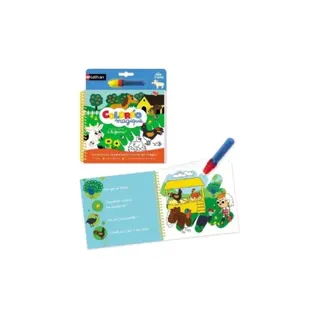 −41 %NathanColoréo magic water colouring, On the farm – Nathan59 DH
instead of 100 DHView product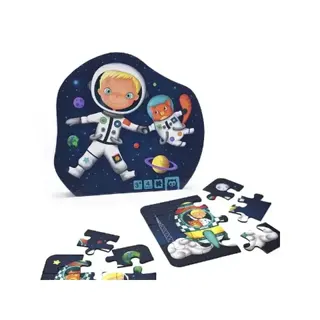 −48 %EurekakidsAstronaut 4-in-1 progressive puzzle, from 3 years – Eurekakids75 DH
instead of 145 DHView product −48 %NathanTake-anywhere emotions picture book – Nathan75 DH
instead of 145 DHView product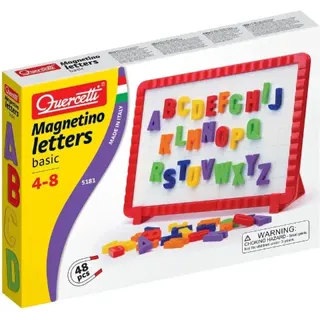 −48 %QuercettiMagnetic Numbers educational toy, 48 pieces, from 4 years – Quercetti83 DH
instead of 160 DHView product −48 %CayroPole-Pole wooden skittles game – Cayro114 DH
instead of 220 DHView product −48 %EurekakidsFantastic Adventure board game – Eurekakids138 DH
instead of 265 DHView product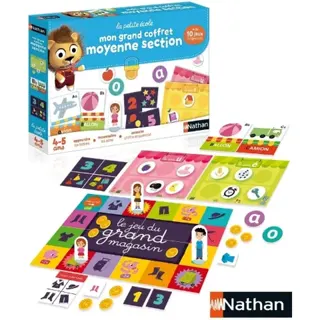 −48 %NathanPreschool (Moyenne Section) educational games box – Nathan140 DH
instead of 270 DHView product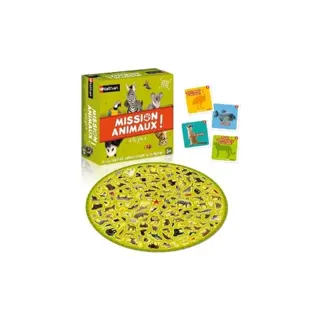 −48 %NathanMission Animaux board game – Nathan218 DH
instead of 420 DHView product- The whole aisle · Pretend play71 products online, delivered anywhere in Morocco.Open the aisle
Products sold by La Maison du Bébé, publisher of this magazine. Prices as of 12 October 2026; please check the product page.
Sleep and screens: the WHO benchmarks
Between 3 and 4 years, the WHO recommends 10 to 13 hours of sleep per 24 hours, nap included if your child still has one, with regular bed and wake times. Many children give up the nap around 4; a quiet time after lunch remains useful.
For screens, the same recommendation sets less than one hour a day, and less is better. Long summer evenings and screens in the bedroom quickly eat into sleep. If bedtime becomes a battle, our article on the child who refuses to sleep offers ideas, and our guidance on screens helps you set rules.
School at 4: what they learn there
In Morocco, 78.7% of 4 and 5-year-olds were enrolled in preschool in 2023-2024, according to Ministry of National Education figures reported by Hespress. At this age, preschool does not aim to teach reading. Programmes, such as the one described by Naître et grandir in Quebec, rely on play, independence (tidying their things, washing hands), life in a group and discovering letters and sounds.
At home, you help mostly by letting them dress themselves, apart from difficult fastenings, eat alone, and read with them every day. To choose a school, see our article on preschool in Morocco. The next stage is covered in the 5-year-old.
Frequently asked questions
My 4-year-old invents stories: are they lying?
Not in the adult sense. At 4, imagination is expanding fast: inventing and telling simple stories is among the skills described by the Canadian Paediatric Society. The line between what they wish for and what happened is still blurred. Welcome their tales (“what a lovely story!”), and when it is about mischief, help them say what really happened without punishing their imagination.
How many hours should a 4-year-old sleep?
The WHO recommends 10 to 13 hours of good-quality sleep per 24 hours between 3 and 4 years, nap included if your child still has one, with regular bed and wake times. Many children give up the nap at this age: keep a quiet time in the early afternoon, and bring bedtime forward a little on school days.
My 4-year-old cannot write their name yet: should I worry?
No. At 4, we mainly expect them to hold a pencil with their fingers, draw a person and copy a few letters. Writing their name is among the 5-year-old milestones according to the US CDC. Offer drawing, cutting, modelling and play with the letters of their name, without forced exercises: fine motor skills are built through play.
My 4-year-old only talks at home and is silent at school: what can I do?
Shyness is common at this age, especially at the start of the year or when the school language is not the one used at home. Talk to the teacher to find out whether your child communicates in other ways (gestures, play with a classmate). If the silence lasts several months and stops them taking part, ask the paediatrician, who can refer you.
Sources
- Milestones by 4 YearsCenters for Disease Control and Prevention (CDC), Learn the Signs. Act Early. · United States
- Le développement de votre enfant : à quoi vous attendreCanadian Paediatric Society, Caring for Kids · Canada
- Le développement de l'enfant de 4 à 7 ansCentre de services scolaire (Quebec), after F. Ferland, Éditions du CHU Sainte-Justine · Canada (Quebec)
- To grow up healthy, children need to sit less and play moreWorld Health Organization (WHO) · International
- Maternelle 4 ans et 5 ans : qu'est-ce que l'enfant y apprend ?Naître et grandir · Canada (Quebec)
- Éducation nationale : un taux de préscolaire de plus de 78 % en 2023-2024Hespress FR · Morocco