










Article contents
Key points
- Signs of control often appear between 18 and 24 months; interest in the potty, between 2 and 4 years.
- Dry for two hours, curious about the potty, wants to do it alone: they may be ready.
- No punishment or bargaining: a routine, praise and clothes that are easy to take off.
- Nights usually come well after days: keeping a night-time diaper is allowed.
- Not trained at 4, a setback after six dry months, painful stools: see a doctor.
Your mother-in-law swears all her children were clean at 18 months. The nursery asks how far along you are. And your child happily sits on the potty... fully dressed. Potty training is a stage where the pressure often comes from the people around you, while it depends mostly on how mature the body is and on the toddler's own wish.
Here are the ages paediatricians work with, the signs that show your child is ready, a gentle method in a few steps, the gear that helps, and what to know about nights and setbacks.
At what age is a child potty trained?
Most often between 2 and 4 years. The American Academy of Pediatrics (AAP) places the first signs of bladder and bowel control between 18 and 24 months. In the United States, training starts on average between 2 and 3 years, and most children are trained by 4.
The Canadian Paediatric Society (CPS) says the same thing differently: some children are ready at 18 months, but most take an interest in the potty between 2 and 4 years. The CDC, the US public health agency, warns that starting too early creates stress and setbacks.
Family memories are therefore not a benchmark: your child gives the signal. To place their other progress, see our milestones at 2 years and 3 years.

How do you know they are ready?
They stay dry for several hours and they are curious about the potty: those are two good signals. Here are the clues cited by the CPS and the AAP:
- the diaper stays dry for at least two hours, or after a nap;
- they show they are about to pee or poo: they freeze, push, squat;
- they dislike a wet diaper and ask to be changed;
- they are curious about the potty or the toilet, and want to wear “big kid” underwear;
- they can sit steadily and follow one or two simple instructions;
- they want to do it on their own.
It is better to wait during a time of big change, adds the AAP: a move, the birth of a baby brother or sister, family difficulties.
The gentle method, step by step
The CPS suggests a child-centred approach that comes down to a few steps:
- Set the stage: clothes your child can pull down alone, a potty within reach, and the real words for the body and for what it does.
- Build a routine: a few minutes on the potty, without a diaper, at set times: on waking, after meals and after a nap.
- Show the steps: wiping, then washing hands.
- Praise often, every time they try.
- Move to training pants once they have been succeeding for at least a week.
- Expect accidents, react calmly and keep spare clothes in the bag.
The AAP insists on one point: power struggles, pleading and punishment stop a child from taking charge of their own toilet habits. If the potty becomes a battlefield, take a break and start again when they show they are ready once more, as the CPS suggests.
Potty or toilet seat reducer?
Both work, and many families use both. The potty is low, stable and goes anywhere, including a home with a squat toilet. The reducer sits on the toilet seat and gets your child used to the “real” toilet; it needs a step stool so they can climb up alone and rest their feet. The CPS above all advises keeping the potty accessible, within your child's reach.
Our potties and toilet seat reducers and our selection of children's step stools bring these three items together.
From the shop
Potty, toilet seat and step stool: potty training gear
A stable potty to start anywhere, a toilet seat reducer and a step stool to move on to the toilet: no need to buy everything, choose according to your home and your child's wishes.
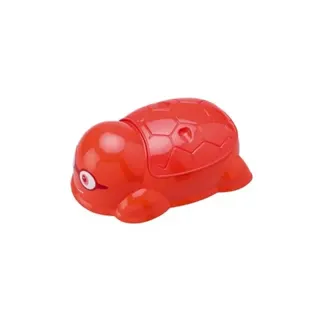 −48 %SaroTurtle potty with lid, orange – Saro62 DH
instead of 120 DHView product −48 %SaroAnatomical non-slip toilet seat reducer, green – Saro94 DH
instead of 180 DHView product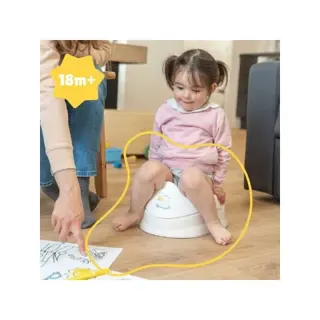 −9 %BadabulleMouette training potty with removable bowl – Badabulle123 DH
instead of 135 DHView product BadabulleNon-slip children’s step stool – Badabulle200 DHView product
 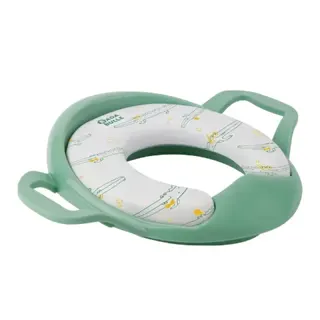 −9 %BadabulleToilet seat reducer with handle, green, from 2 years – Badabulle246 DH
instead of 270 DHView product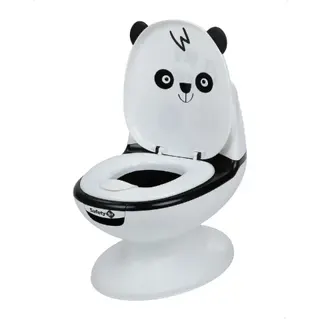 −26 %Safety 1stMini Toilette Panda baby potty, Black & White – Safety 1st481 DH
instead of 649 DHView product- The whole aisle · Baby potties and toilet seat reducers16 products online, delivered anywhere in Morocco.Open the aisle
Products sold by La Maison du Bébé, publisher of this magazine. Prices as of 12 October 2026; please check the product page.
Rewards, stickers, sweets: should you reward?
Opinions differ, and that is instructive. The CPS advises praising often but avoiding rewards. The AAP even lists rewarding among the things that stop a child managing their own toilet habits, along with pleading and punishment. The UK's NHS, for its part, suggests for bedwetting agreeing rewards with your child for positive actions.
The common ground is clear: you encourage effort, never an outcome the child does not control. A sincere compliment beats a sweet. And you never punish an accident.
What about nights?
Night-time dryness often comes well after daytime dryness. The CPS warns that it can take several months, even years, and that your child may keep a diaper or training pants at night. The NHS reminds us that many children under 5 wet the bed, and that it often runs in the family.
What helps, according to the NHS: making sure your child drinks well during the day, taking them to the toilet regularly, four to seven times a day, and protecting the mattress with a waterproof cover. What to avoid: caffeinated drinks (cola, tea, coffee), punishments, and waking them every night to take them to the toilet. With the heat of the Moroccan summer, drinking well during the day matters even more.
Accidents, setbacks, nursery: staying on course
A child who has been trained for weeks can start having accidents again, often during a stressful period such as a birth or a move, explains the CPS. This is not a failure: you can go back to diapers without drama and start again when the signs return. If a new baby is shaking up your older child, our advice on sibling jealousy may help.
Stools need special attention. A child who holds back quickly becomes constipated, and the pain feeds the fear of the potty. The CPS advises letting them go in a diaper if they refuse the potty, and treating the constipation: our advice is in the article on constipation.
At nursery or school, talk with the staff so you use the same words and a timetable close to the one at home, and slip a change of clothes into the bag. To prepare for this step, see our checklist for starting nursery or preschool.
When to see a doctor
Talk to the doctor if something worries you, even outside this list. The CPS and the NHS mention the following situations.
Frequently asked questions
Should I wake my child at night to take them to the toilet?
No, not on a regular basis. The UK's National Health Service (NHS) advises against waking or carrying your child to the toilet every night to prevent bedwetting. It is better to make sure they drink enough during the day, take them to the toilet regularly, four to seven times a day, and protect the mattress with a waterproof cover.
My child refuses to poo in the potty: what can I do?
Do not force it. The Canadian Paediatric Society advises letting your child go in a diaper if they refuse the potty, so they do not hold it in and become constipated: constipation makes stools painful, it warns. If your child holds back, has pain or you see blood in the stools, talk to the doctor: treating constipation helps the learning process.
Are training pants useful?
They work as a transition once your child is under way. The Canadian Paediatric Society suggests considering them once your child has used the potty successfully for at least a week. Before that, a regular diaper or underwear that is easy to pull down is enough. At night, a diaper or training pants can stay on as long as needed.
Can evening tea make bedwetting more likely?
Yes, if it contains caffeine. The NHS advises children who wet the bed to avoid caffeinated drinks such as cola, coffee and tea, which includes Moroccan mint tea, made with green tea, which contains caffeine. On the other hand, it advises giving your child enough water during the day, especially in hot weather.
Sources
- L'apprentissage de la propretéCaring for Kids, Canadian Paediatric Society · Canada
- The Right Age to Potty TrainAmerican Academy of Pediatrics (HealthyChildren.org) · United States
- Milestones by 2 YearsCenters for Disease Control and Prevention (CDC), Learn the Signs. Act Early. · United States
- Bedwetting in childrenNHS (UK national health service) · United Kingdom