








Article contents
Key points
- Never before 6 months, never with a sick baby, never during a big change.
- Trials of graduated methods show neither lasting stress nor a damaged bond.
- These methods are not essential: many babies end up sleeping well without them.
- Leaving a baby to scream for a long time, door shut, never returning, has not been validated.
- If anger rises, put your baby down safely in the cot and hand over to someone else.
Past midnight. Your baby has been crying in their cot for ten minutes, and you are standing behind the door, heart tight. An aunt told you that you have to let your baby cry it out so they learn to sleep. Your mother thinks the opposite. And you no longer know whom to believe.
The question divides parents, and professionals too. Recent studies, however, give more nuanced answers than the slogans. Here is what they show, what they do not say, and how to choose what suits your family.
Why you never leave a baby under 6 months to cry
A very young baby cries to express a need. Naître et grandir sums it up this way: they are not crying to manipulate you. Hunger, discomfort, need for contact, tiredness: at this age, they have no other way to call you.
Naître et grandir firmly advises against the 5-10-15 method before 6 months: a baby nobody answers may stop signalling hunger at night, with a risk of dehydration. Santé.fr agrees: before 3 to 4 months, you impose nothing. A newborn often wakes every 2 to 3 hours, and that is normal. If the evening crying wears you out, our article on infant crying helps you decode it.
5-10-15, Ferber, the chair: what are we talking about?
All these methods aim at self-soothing to sleep: your baby falls asleep alone in their cot and settles alone between sleep cycles. They differ mainly in how much crying they leave room for.
| Method | Principle | Crying |
|---|---|---|
| “Pure” extinction | You put your baby down and do not return | The longest; not tested in the trials cited here |
| 5-10-15 or Ferber (graduated extinction, controlled comforting) | You go back to reassure your baby briefly, at lengthening intervals: 5, then 10, then 15 minutes | Frequent in the first evenings |
| The chair (camping out) | The parent sits by the cot, then moves a little further away each evening until reaching the door | Less, but a slower method |
| Bedtime fading | You put your baby down later, when they are really sleepy, then gradually bring the time forward | Little crying |
The 5-10-15 method dates from the 1950s, Naître et grandir points out. It is also called the Ferber method, or graduated extinction.
What the studies show
Two Australian trials are often cited, and their results are rather reassuring for graduated methods.
The trial by Price and colleagues (Pediatrics, 2012) followed 326 children with sleep problems. Some of the parents learned controlled comforting or the chair method at around 8-10 months, with a nurse. At 6 years, there was no difference between the groups: the child’s mental health and behaviour, stress regulation, the parent-child relationship, mothers’ mental health.
The trial by Gradisar and colleagues (Pediatrics, 2016) compared graduated extinction, bedtime fading and simple advice in 43 babies aged 6 to 16 months. Both methods reduced the time to fall asleep; graduated extinction also reduced night wakings. Salivary cortisol, a stress hormone, did not rise. At 12 months, there was no difference in attachment or behaviour.
What these studies do not say
- They are small or incomplete. The 2016 trial counted only 43 babies. The 2012 one excluded children with developmental disorders, and some population groups were poorly represented in it.
- They do not measure stress in the moment. The cortisol samples did not capture stress during the crying itself. A 2012 American study, cited by CBC, had on the contrary found raised stress hormones in babies subjected to this technique.
- They do not validate the “hard” method. None of these trials evaluated shutting the door and never coming back.
- They do not prove a benefit for development. Naître et grandir stresses that no positive effect on a child’s development has been shown.
In short: these graduated methods, after 6 months, do not seem to cause harm. But they are not compulsory for a child to end up sleeping.
Why recommendations differ
The French-language sources do not say quite the same thing. Santé.fr advises that after 6 months you do not run at the first noise: many babies settle back alone within a few minutes, and stepping in too fast stops them. The same site nevertheless reminds us that “letting a baby scream is terribly distressing for them”.
Naître et grandir puts more emphasis on a quick, calm response, which helps your baby fall back asleep faster. It also reminds us that learning to fall asleep alone is not a condition for sleeping through the night. Both approaches agree on the essentials: not before 6 months, no prolonged crying, and a calm parent. They differ mainly on how long to wait.
Gentle methods, step by step
If you want to help your baby of at least 6 months fall asleep alone, start with the most progressive approach. The Flinders University team that ran the 2016 trial in fact advises trying bedtime fading first.
- A short, identical ritual every evening: bath, pyjamas, feed or meal, story, cuddle. Santé.fr advises keeping it to around fifteen minutes. Our article on the bedtime ritual gives examples.
- Put your baby down when they are really sleepy, at the first signs: rubbing their eyes, yawning, staring into space.
- Lay them down drowsy but still awake, with a little phrase that is always the same.
- Stay close, with a hand on them if needed, then move a little further away each evening.
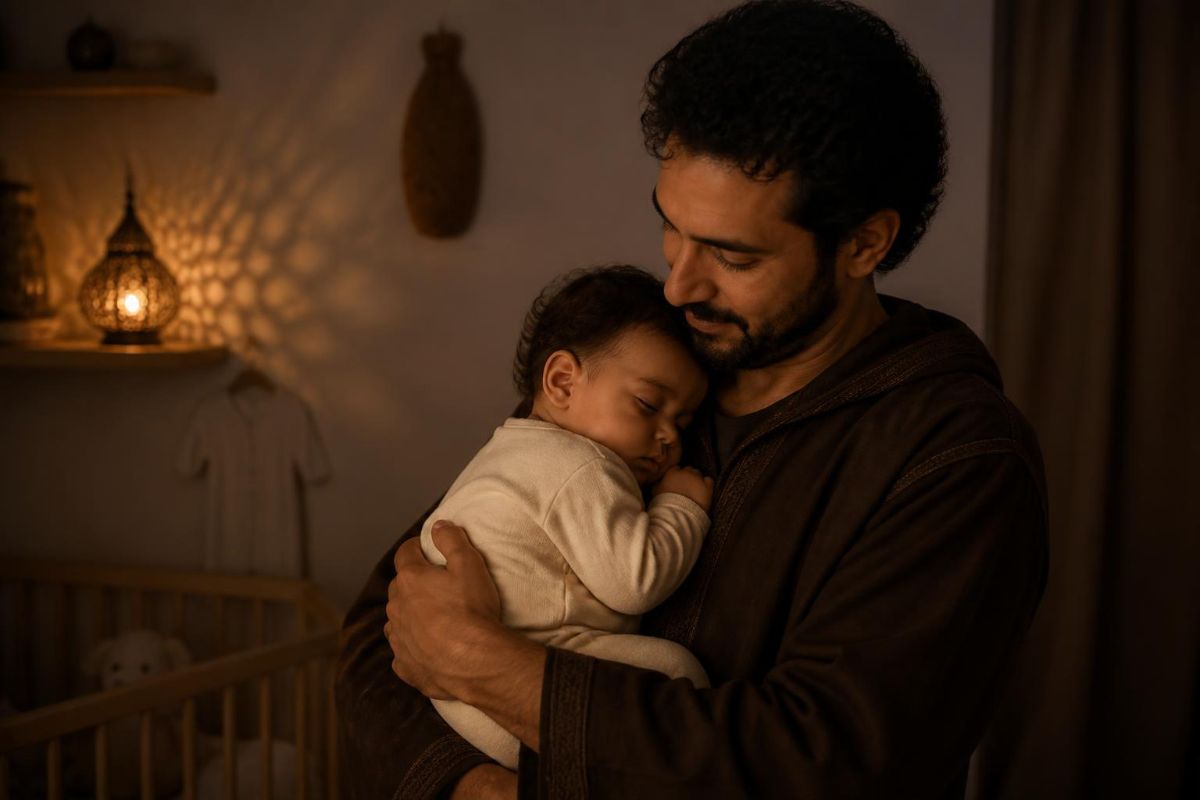
- Go back if they cry hard, reassure them in a low voice, in the half-light, without turning on the light or systematically lifting them out of the cot.
A soft-light night light lets you check that all is well without switching on the ceiling light.
From the shop
For a calmer bedtime
A soft night light helps you reassure without waking your baby, and a doudou becomes a bedtime landmark. Before age 1, the doudou joins the ritual but does not stay in the cot.
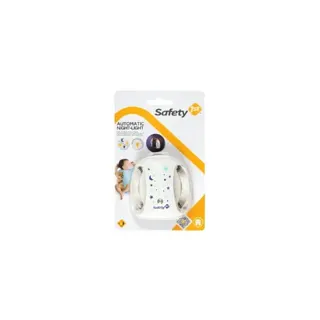 −35 %Safety 1stArctic automatic night light – Safety 1st150 DH
instead of 230 DHView product −48 %ChiccoFirst Dreams Petite Lune musical night light, pink – Chicco156 DH
instead of 300 DHView product −48 %ChiccoFirst Dreams musical projector night light teddy bear, pink – Chicco281 DH
instead of 540 DHView product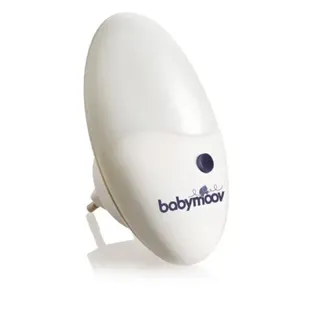 BabymoovWall night light – Babymoov150 DHView product
  −9 %DoomooYou&Me reversible comforter, Beige – Doomoo255 DH
instead of 280 DHView product −48 %Histoire d’OursSwan plush, white, 30 cm – Histoire d'Ours234 DH
instead of 450 DHView product- The whole aisle · Night lights and mobiles21 products online, delivered anywhere in Morocco.Open the aisle
Products sold by La Maison du Bébé, publisher of this magazine. Prices as of 12 October 2026; please check the product page.
What you never do
- Leave a newborn to cry, or any baby under 6 months.
- Leave a sick baby to cry, one with a fever, in pain or vomiting: they need you.
- Shut the door and never come back, for hours.
- Shake your baby. The NHS reminds us: however exasperated you are, you never shake a baby, because it can cause serious brain damage.
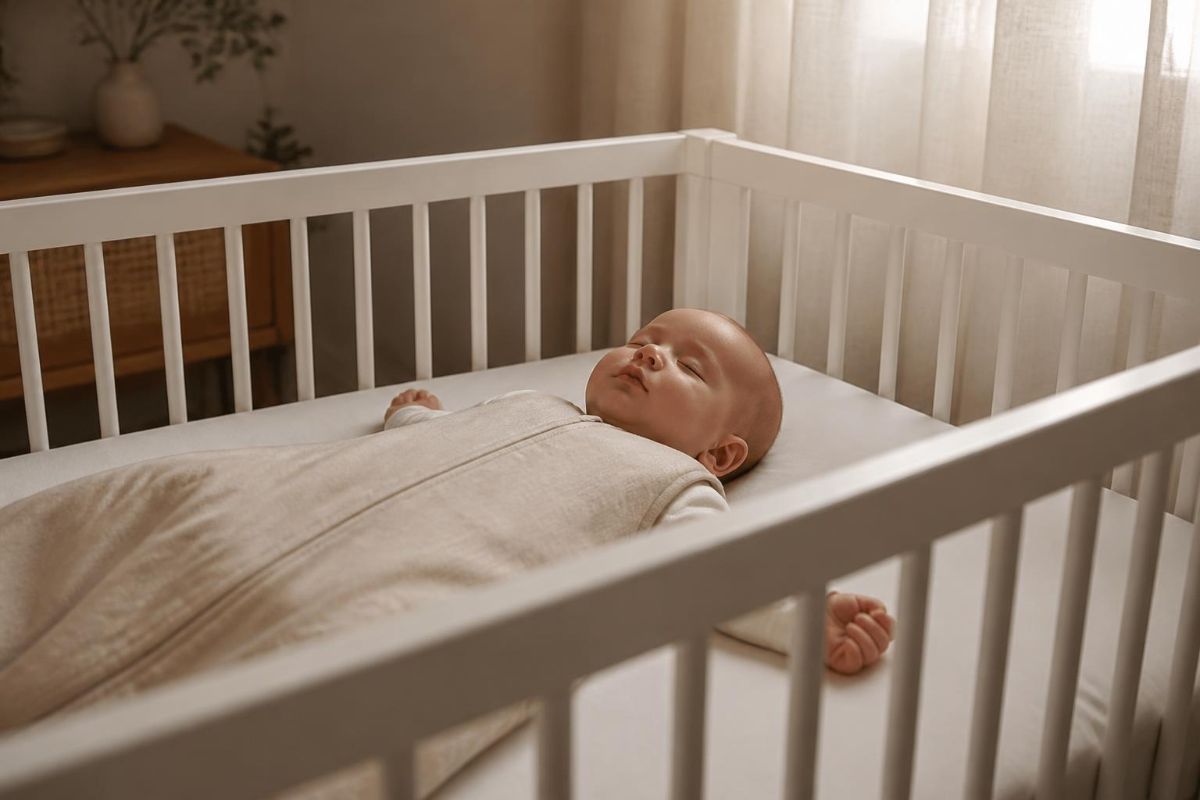
- Put a pillow, blanket or soft toys in the cot to comfort them: before age 1, the American Academy of Pediatrics recommends a cot free of soft objects, with your baby on their back. Our article on safe sleeping details these rules. The doudou joins the ritual, then goes into the cot after age 1.
Choosing according to your family
There is no single right answer. Some parents sleep with their baby in the bedroom, reassure them at every waking and do well. Others, exhausted, need nights to change. In Moroccan families, the decision is rarely made alone: grandma, mother-in-law, a shared flat or thin walls all count too.
The right criterion is what you can sustain: whether current nights are bearable or not, the energy to follow a method several evenings in a row, and an approach that fits your convictions. If you first want to understand why your baby wakes, our article on when baby doesn't sleep through the night is a good starting point. And if your child is older, see the child who refuses to go to bed.
Frequently asked questions
From what age can you let a baby cry for a few minutes?
Not before 6 months. Naître et grandir firmly advises against the 5-10-15 method any earlier, because a very young baby who gets no response may stop asking for feeds, with a risk of dehydration. After 6 months, the French site Santé.fr suggests not rushing in at the slightest noise, since many babies settle back to sleep alone after a few minutes. A baby who is screaming, though, needs to be reached and reassured.
Can letting a baby cry damage the bond with their parents?
The available trials do not show it. In Australia, a study published in Pediatrics in 2016 found no difference in attachment or behaviour at 12 months. Another, covering 326 children, found no difference at 6 years. These studies look at graduated methods, after 6 months, with parents who come back regularly to reassure the child, not at ignored crying.
What if my mother-in-law or the neighbours complain about the crying?
Explain your choice calmly, and if possible choose a progressive method, such as the chair, which involves less crying. In a flat with thin walls, warning the neighbours about a few difficult nights often eases tension. Nothing obliges you to use a method that does not suit you: holding your baby through it is an equally legitimate choice.
Does the 5-10-15 method really work?
It has shown short-term effects. In the Australian trial published in Pediatrics in 2016, covering 43 babies aged 6 to 16 months, it reduced the time to fall asleep and night wakings. Naître et grandir points out, however, that no positive effect on a child’s development has been shown. And it remains hard on parents.
Sources
- Le sommeil de bébéNaître et grandir · Canada (Quebec)
- Rythme veille-sommeil, quand va-t-il « faire ses nuits » ?Santé.fr, Service public d'information en santé · France
- Les bonnes pratiques pour préserver le sommeil du bébéRéseau Morphée, publié sur Santé.fr · France
- Behavioral Interventions for Infant Sleep Problems: A Randomized Controlled Trial (Gradisar et al., Pediatrics, 2016)Résumé publié par Nutrition Evidence (étude de l'université Flinders, Australie) · Australia
- Letting babies cry themselves to sleep not damaging, study finds (24 mai 2016)CBC News · Canada
- 'Controlled comforting' and 'camping out' are safe long-term techniques for babies with sleep problemsThe Mental Elf, National Elf Service (analyse de Price et al., Pediatrics, 2012) · United Kingdom
- Soothing a crying babyNHS · United Kingdom
- How to Keep Your Sleeping Baby Safe: AAP Policy ExplainedAmerican Academy of Pediatrics (HealthyChildren.org) · United States