




Article contents
Key points
- Before age 5, the WHO recommends at least 180 minutes of physical activity a day, spread through the day.
- A flat is big enough to get moving: obstacle courses, dancing, skittles, treasure hunts.
- Choose board games by the age on the box and keep the rules short.
- In extreme heat, keep active play indoors between 12 noon and 4 pm.
- Everyday objects are often better than new toys.
It has been raining for three days, or the chergui, the hot desert wind, has made the street unbearable. Your child is pacing round the living room, and the phone is within easy reach. Finding indoor games for kids without screens does not take a big flat or a cupboard full of toys: above all, it is about mixing games that let off steam, quiet games and moments when your child entertains themselves.
Here are ideas by age, active games that fit in a flat, pointers for choosing a board game and a few habits for very hot days.
Why keep moving, even indoors?
Because a young child's need for activity does not stop when it rains. The World Health Organization (WHO) recommends at least 180 minutes of physical activity a day, at varied intensities, for children aged 1 to 4. At 3 and 4, at least 60 of those minutes should be moderate to vigorous: running, jumping, dancing until slightly out of breath.
The WHO also advises not keeping a child restrained for more than an hour at a time, in a pushchair or high chair, or sitting for too long. For screens, the limit is one hour a day at most from age 2, and less is better. Our article on screens and young children explains these guidelines in detail.
The good news: those 3 hours add up over the whole day, in small chunks. Hopping up the stairs, dancing while you cook, racing to tidy up: it all counts.

Which indoor games for which age?
Ages are only a guide. A 4-year-old still loves games for 2-year-olds, and that is perfectly fine.
| Age | Active games | Quiet games |
|---|---|---|
| 1 - 2 years | Pushing a cardboard box, crawling under a table, peekaboo | Filling and emptying a box, stacking cups, board books |
| 2 - 3 years | Cushion obstacle course, freeze dance, throwing a fabric ball into a basket | Inset puzzles, play kitchen, dolls, dressing up in old scarves |
| 3 - 4 years | Skittles made from plastic bottles, treasure hunt, "Simon says" | Picture bingo, memory game, blanket fort, puppets |
| 4 - 6 years | Tape hopscotch on the floor, egg-and-spoon race with a lemon, animal yoga | Board games with simple rules, bigger puzzles, cardboard models |
For dressing up from age 2, the UK's NHS advises removing cords, strings and ribbons that could wrap around the neck or cause a trip. And before age 3, keep small parts that fit in the mouth out of reach.
Getting active in a flat without breaking everything
Ten minutes clearing the living room is enough for most of these games. Push the coffee table aside, put fragile things away and set a few clear rules: we jump on the cushions, not on the sofa.
- The obstacle course: cushions to step over, a chair to crawl under, a mat for a roly-poly, a line of tape to balance along.
- Freeze dance: when the music stops, everyone freezes. Variation: freeze in the pose of an animal.
- Homemade skittles: six plastic bottles with a little water or sand in them, and a soft ball.
- Treasure hunt: hide a cuddly toy and guide with "warmer, colder". From age 4, add drawn clues.
- The den: a blanket over two chairs. It becomes a tent, a cave or a boat, and soon turns into a reading nook.
When the weather allows, nothing beats going out: our ideas for outdoor play by age take over from there.
Board games: from what age, and which ones?
A board game teaches children to wait their turn, follow a rule and lose without a meltdown. That last one is hard before 5 or 6: that is normal.
To choose well:
- Check the age on the box: it takes into account the size of the pieces and how hard the rules are.
- Start with cooperative games: when everyone wins or loses together, little ones learn the rules without the stress of losing.
- Simplify: remove cards, shorten the game, make up a house rule.
- Keep games short: fifteen minutes at age 4 is already a good game.
Puzzles, matching games and pretend play remain safe bets for 2 to 4-year-olds. To find your way around the different types of toys, our guide to educational toys by age sorts them by stage.
From the shop
Games for days at home
A selection of games that fit in a flat: things to move, think and play together, from first puzzles to first games with rules.
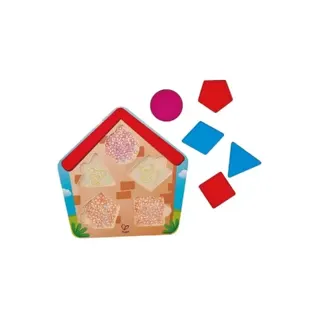 −48 %HapeWho’s in the House wooden peg puzzle – Hape65 DH
instead of 125 DHView product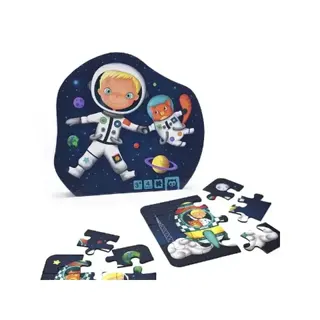 −48 %EurekakidsAstronaut 4-in-1 progressive puzzle, from 3 years – Eurekakids75 DH
instead of 145 DHView product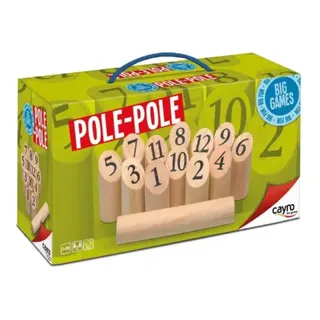 −48 %CayroPole-Pole wooden skittles game – Cayro114 DH
instead of 220 DHView product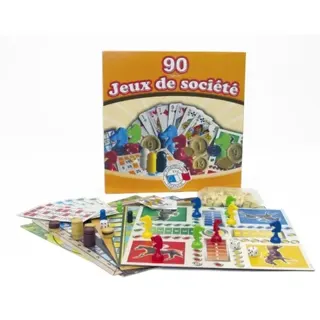 −48 %Ferriot Cric90-game compendium box – Ferriot Cric94 DH
instead of 180 DHView product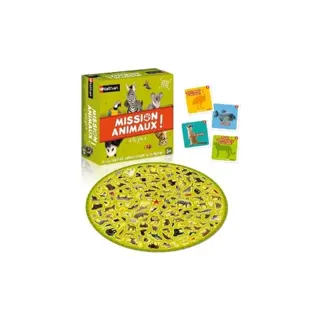 −48 %NathanMission Animaux board game – Nathan218 DH
instead of 420 DHView product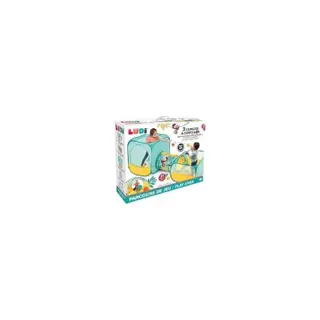 −42 %LudiPlay course – Ludi348 DH
instead of 595 DHView product- The whole aisle · Board games16 products online, delivered anywhere in Morocco.Open the aisle
Products sold by La Maison du Bébé, publisher of this magazine. Prices as of 12 October 2026; please check the product page.
Boredom, a useful phase
Your child does not need to be kept busy every minute. Unplanned moments, when they say "I'm bored", are often when they invent a game: a cardboard box becomes a car, clothes pegs become an army.
Rather than offering a solution straight away, give them two ideas and leave open-ended materials within reach: paper, crayons, blocks, fabric, toy cars, figurines. And accept that they play alone next to you while you prepare the ftour meal or fold the laundry. This free play, at their own pace, counts just as much as your organised activities.
If they ask for a screen, do not give in at once: first suggest an activity with you, even a short one. Our craft ideas using things from around the house help on days when inspiration runs dry.
Heat and chergui: adapting the day
The Moroccan summer and chergui spells change the plan. The Ministry of Health advises avoiding going out between 12 noon and 4 pm during heatwaves, Médias24 reported in July 2026. That makes it the time slot for indoor games, in the coolest room, with the shutters half closed.
- Quiet games during the hottest hours: puzzles, stories, board games, play dough.
- Water play on the balcony or in the bath, always with an adult beside them: the NHS points out that a young child can drown in less than 5 cm of water.
- Regular drinks of water, without waiting for them to ask.
- Let-off-steam games early in the morning or late in the day, when the temperature drops.
All the protective measures are in our article on heat and heatwaves in children.
A typical screen-free day
As an example, for a 3-year-old on a rainy day:
- Morning: breakfast, then a cushion course and dancing (30 minutes).
- Mid-morning: crafts or play dough, then tidying up together.
- Before lunch: they help set the table and wash vegetables in a bowl.
- After the nap: a den and stories, then a short board game.
- Late afternoon: treasure hunt, skittles, bath.
Nothing is set in stone: the idea is to alternate movement and calm. To see what a toddler can do at this age, our portrait of your child at 2 years gives some milestones. In our shop, the board games, pretend play and puzzles departments are sorted by age.
Frequently asked questions
How can I keep a 2-year-old busy at home?
At 2, children need to move and to imitate. Set up a small cushion course, a box to fill and empty, pots and a wooden spoon, a tub of water on the balcony under supervision, or child-sized jobs such as putting socks away. Switch activities every ten or fifteen minutes: their attention span is short, and that is normal.
At what age can children play board games?
First board games often suit children from 2 or 3 years old when they are based on matching pictures, such as picture bingo or a simplified memory game. Games with dice, taking turns and rules to follow tend to come around 4 or 5. Go by the age on the box, and simplify the rules at first.
My child keeps saying they are bored. What should I do?
Do not fill every minute for them. Suggest two or three ideas, leave simple materials within reach (cardboard, paper, a blanket, toy cars), then let them figure it out. Boredom often comes just before an invented game. If they are bored to the point of being sad or not wanting to do anything for weeks, talk to their doctor.
Do I need to play with my child all the time?
No. Shared play matters a lot, but children also need to play on their own, next to you, while you cook for example. A few moments of play entirely devoted to them, even fifteen minutes without your phone, are worth more than distracted company all day long.
Sources
- To grow up healthy, children need to sit less and play more (24 April 2019)World Health Organization (WHO) · International
- Baby and toddler play ideasNHS · United Kingdom
- 6 activités maison à faire avec votre enfant (20 February 2020)Naître et grandir · Canada (Quebec)
- Idées de jeux à fabriquer vous-mêmeNaître et grandir · Canada (Quebec)
- Vague de chaleur : les gestes à adopter pour protéger les plus vulnérables (2 July 2026)Médias24 · Morocco