




Article contents
Key points
- The Arabic alphabet has 28 letters, is written right to left and letters change shape by position.
- Reading stories in Standard Arabic and talking about them in Darija causes no confusion.
- Letters are learned through play: modelling dough, sand, letter hunts in the street.
- Children's books mark the short vowels: they are the easiest to start with.
- Apps: with an adult, and within one hour of screen time a day from age 2.
At home, you say lma for water. At school, your child will read mâ' (ماء), written in letters they don't know yet. In Morocco, teaching Arabic to kids is first of all about this: moving from the Darija (Moroccan Arabic) they speak to the Modern Standard Arabic they will read and write. And for families living abroad, it is about keeping alive a language the child hears almost only at home.
The good news is that most of the work happens long before handwriting books, through stories, songs and games. Here is how to go about it, age by age, without turning your living room into a classroom.
At what age should you start?
From birth for listening, around 3 or 4 for playing with letters, around 6 for learning to read. The Canadian Paediatric Society recommends reading, talking and singing to your baby from the first months, in whichever language or languages you feel comfortable with. A book in Standard Arabic read at bedtime, an alphabet song in the car: the ear gets used to the sounds specific to Arabic long before the child understands them.
For writing, there is no rush. Quebec's parenting resource Naître et grandir points out that play remains the most important activity until age 6, and that you should not force letter learning if the child isn't interested. The hand matures at its own pace: holding a pencil between thumb, index and middle finger develops around 3 to 4 years. Before that, children trace letters with a finger, in sand or semolina, rather than with a pen.
Darija or Standard Arabic: do you have to choose?
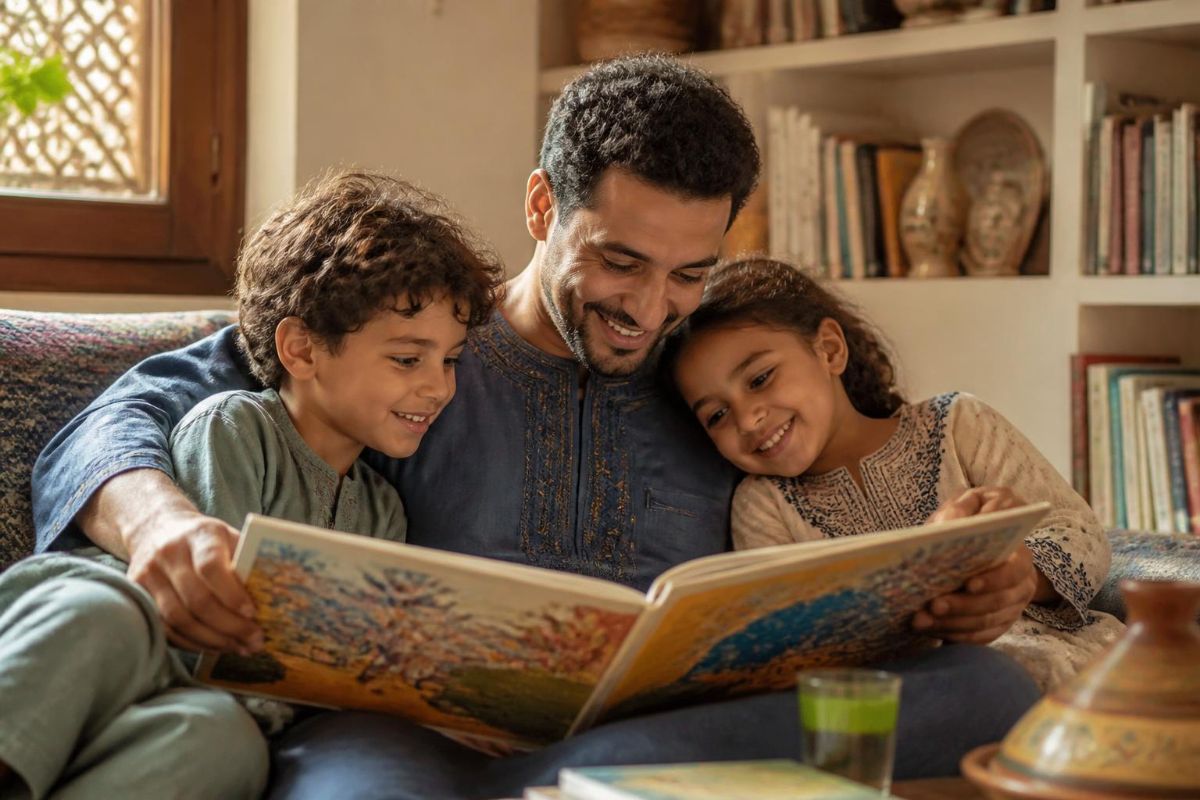
No, and it is actually an asset. Darija is the language of everyday life; Standard Arabic (fusha) is the language of writing, books, the news and school. Many children grow up with these two registers, often more if you add Amazigh, French or English.
The American Academy of Pediatrics is clear: learning several languages does not delay speech or cause any disorder, and mixing words is normal in young children. In practice, you can read a story in fusha and then talk about it in Darija, with no risk of confusion. Our article on raising a multilingual child in Morocco sets out these guidelines for all the family's languages.
The Arabic alphabet: what makes it special
A few features worth knowing to support your child:
- 28 basic letters, written from right to left.
- Letters that change shape depending on their position in the word (isolated, initial, medial, final). The ha (ه) is a good example.
- Six letters never join the next one: ا د ذ ر ز و. That is why some words seem broken up.
- Families of letters that share the same shape and differ only by their dots: ب, ت, ث.
- Short vowels are not written in everyday texts. They are marked with small signs (the harakat) in the Quran, dictionaries and children's textbooks.
This last feature guides your choice of books: for a beginner, always pick a vowelled text. And group letters by shape families: a child remembers ب, ت, ث more easily together than in alphabetical order.
Learning the letters through play
Letters are learned better with the body and hands than with a worksheet. A few simple ideas, to adapt to your child's age:
- The letters of their own name first, then those of family members. That is often where the interest begins.
- A tray of semolina or sand: trace the letter with a finger, shake, start again.
- Modelling dough: roll the letters into snakes, then add the dots with little balls. Our creative activity ideas for home include a homemade recipe.
- A letter hunt in the street: in Morocco, shop signs, street signs and packaging are often written in Arabic. The walk to nursery becomes a game.
- The letter of the week: look for objects around the house whose name starts with that sound.
- A homemade memory game: cards with the letter on one side and a picture on the other.
Numbers lend themselves to the same games. For vocabulary, a puzzle or picture book can be named in any language: the shop offers a selection of early learning games and educational games by age.
From the shop
To play with words and numbers
The choice of games entirely in Arabic is still limited: alongside a bilingual puzzle, these games can be played in the language of your choice, Darija, Arabic, French or English.
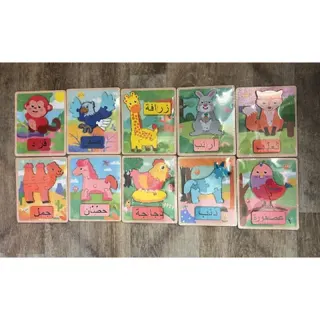 −19 %China Divers BrandWooden animal puzzle in Arabic21 DH
instead of 26 DHView product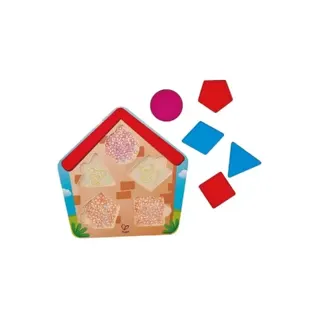 −48 %HapeWho’s in the House wooden peg puzzle – Hape65 DH
instead of 125 DHView product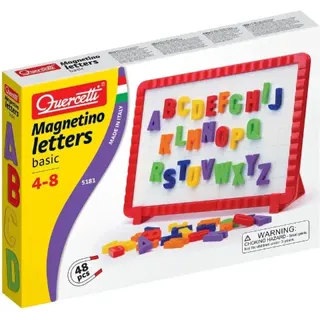 −48 %QuercettiMagnetic Numbers educational toy, 48 pieces, from 4 years – Quercetti83 DH
instead of 160 DHView product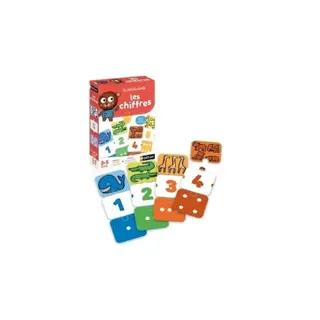 −48 %NathanNumbers educational game, 6 games, from 3 years – Nathan70 DH
instead of 135 DHView product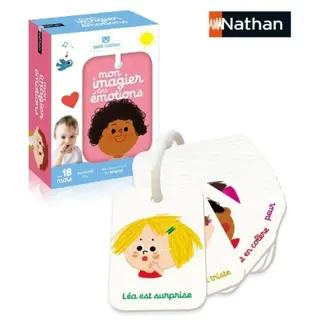 −48 %NathanTake-anywhere emotions picture book – Nathan75 DH
instead of 145 DHView product- The whole aisle · Educational games69 products online, delivered anywhere in Morocco.Open the aisle
Products sold by La Maison du Bébé, publisher of this magazine. Prices as of 12 October 2026; please check the product page.
Songs, stories and books in Arabic
Songs are the easiest way in. They fix the sounds, the rhythm of the language and a lot of vocabulary. The CPS suggests adding gestures and sometimes pausing to let the child fill in the next word. Our nursery rhymes and lullabies to sing with your baby offer ideas in several languages.
For books, a few pointers:
- Under 2: board books and picture dictionaries the child can handle. Talk about the pictures and ask simple questions ("chnou hada?", what's this?).
- From 2 to 4: short picture books, repetitive sentences, vowelled text.
- After 4: longer stories, folk tales, non-fiction books about animals or the body.
There is no need to read word for word if the text is too hard: put it in your own words. What matters, according to the Canadian Paediatric Society, is the exchange with the adult and the shared enjoyment. To make this a regular moment, see our tips for reading stories from birth.
Apps and cartoons: in moderation
Alphabet apps and cartoons in Standard Arabic can supplement, never replace. The WHO guidelines apply here as anywhere: no screens before age 2, then one hour a day at most, and less is better. The CPS reminds parents that interaction with an adult remains the best way to learn, and that a printed book allows what a screen does not: holding it, turning the pages, going back.
If you use an app, choose one without ads or in-app purchases, watch it with your child and then repeat the words with them, away from the screen.
And at school?
Moroccan state schools teach in Arabic, and that is where children really learn to read and write. Amazigh is also finding its place: it was taught in more than half of primary schools in 2025-2026 and is due to be extended to all of them in 2026-2027, according to the Ministry of National Education as quoted by Médias24. In private and foreign schools, the amount of Arabic varies a lot: ask how many hours a week are taught and which textbooks are used.
Your role is not to start school early, but to arrive at the start of the school year with a child who loves stories, recognises a few letters and wants to know more. For choosing a school, our guide to preschool in Morocco helps you ask the right questions.
Finally, if your child speaks little or late, in all their languages, Arabic is not the cause: the AAP points out that language disorders do not come from multilingualism. Talk to their paediatrician, and see the milestones for when first words appear.
Frequently asked questions
At what age can a child learn the Arabic alphabet?
There is no fixed age. Many children become interested in letters around 3 or 4, often by first recognising the ones in their own name. Before that, simply let them hear the language through stories and songs. Follow their curiosity without turning it into a lesson: until age 6, play remains their best way of learning.
Should we speak Standard Arabic at home so our child does well at school?
No. Speak the language you are most comfortable in, Darija, Amazigh or another: a rich home language helps a child learn others. Instead, bring Standard Arabic in at specific moments, such as books, songs or carefully chosen cartoons watched together, then explain in Darija whatever your child did not understand.
How can I teach Arabic to a child who lives abroad?
Create as many situations as possible where Arabic is genuinely useful: calls with grandparents, bedtime books, songs in the car, holidays in Morocco. Weekend or midweek classes run by associations or mosques help with reading. Aim for regular rather than intensive: a little every day is better than one long session a month.
Which Arabic books should I choose for a 3-year-old?
Choose short picture books with big illustrations, vowelled text (the small vowel marks above and below the letters) and repeated sentences. Picture dictionaries and touch-and-feel books suit the youngest. Your child will not read alone: what counts is your voice, your comments and the pleasure you share.
Sources
- Alphabet arabeFrench-language Wikipedia · International
- Lisez, parlez, chantez à votre bébé : comment les parents peuvent promouvoir l'alphabétisation dès la naissanceCaring for Kids, Canadian Paediatric Society · Canada
- Young Children Learning Multiple Languages: Parent FAQsAmerican Academy of Pediatrics (HealthyChildren.org) · United States
- Apprendre à utiliser crayons, pinceaux et ciseauxNaître et grandir · Canada (Quebec)
- Faciliter l'entrée à l'écoleNaître et grandir · Canada (Quebec)
- To grow up healthy, children need to sit less and play more (24 April 2019)World Health Organization (WHO) · International
- Éducation nationale : pour 2026, plus de 2.500 établissements pionniers et généralisation de l'amazighe (11 novembre 2025)Médias24 · Morocco