








Article contents
Key points
- Nightmare: second half of the night, the child wakes, seeks comfort and remembers it.
- Night terror: early in the night, the child is still asleep, does not recognise you and forgets everything.
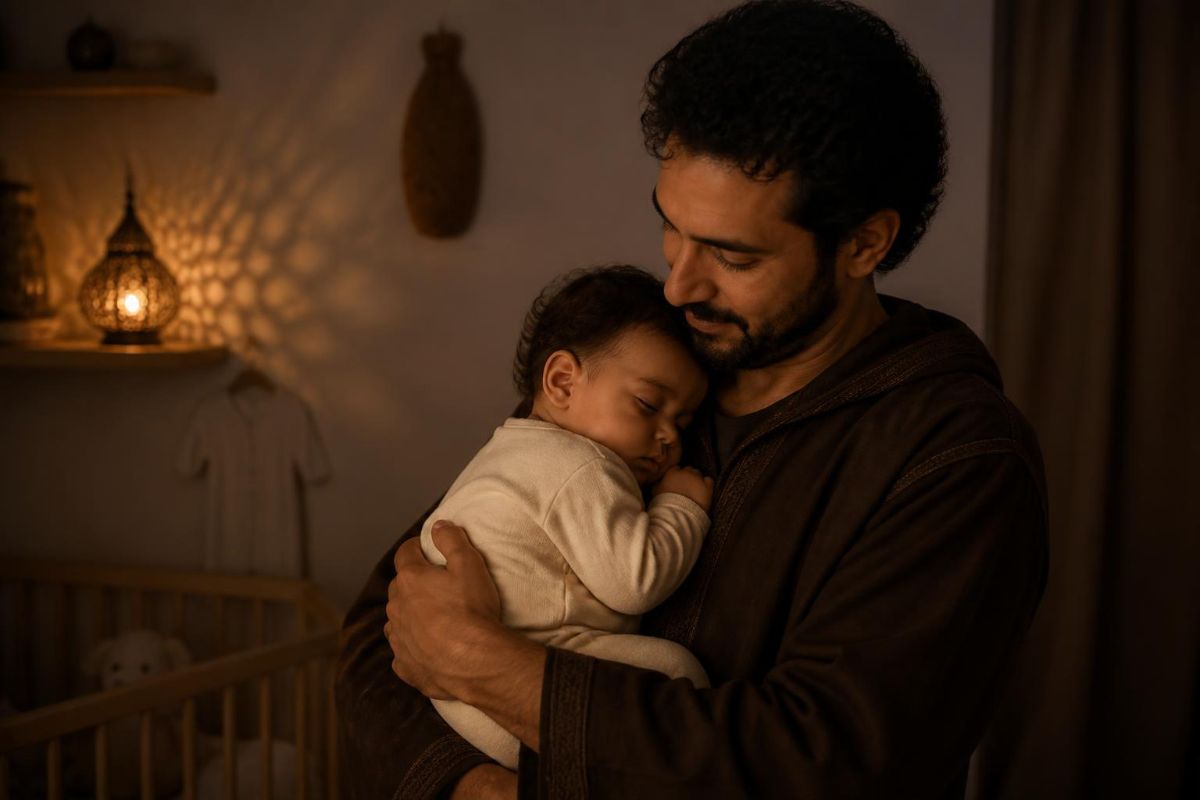
- During a terror, do not wake them: stay close and make sure they are safe.
- Extreme tiredness, illness, stress or sudden noises can set off a night terror.
- Terrors after age 12 or starting after age 5, or frequent nightmares: see a doctor.
It is 10:30 pm, and your 4-year-old daughter has been asleep for an hour. Suddenly, a scream. You find her sitting up in bed, eyes wide open, sweating, fighting you off when you try to pick her up. She does not even seem to see you. The next morning, she remembers nothing. That was a night terror, not a nightmare.
The difference is not just a matter of vocabulary: you respond differently in each case. Here is how to recognise them, what to do in the moment, how to soothe a fear of the dark and when to see a doctor.
Nightmare or night terror: how to tell the difference?
A nightmare is a bad dream that wakes the child. A night terror happens during deep sleep: the child screams and moves, but is asleep. According to the UK’s NHS, the American Academy of Pediatrics (AAP), the Canadian Paediatric Society (CPS) and the French site Santé.fr:
| Nightmare | Night terror | |
|---|---|---|
| Timing | More often in the second half of the night | Early in the night, in the first three hours of sleep (VIDAL) |
| Age | Possible from 6 months, peak between 3 and 12 years (AAP) | Mostly between 3 and 8 years (NHS); between 4 and 12 years, sometimes from 18 months (CPS) |
| What you see | The child wakes, cries, is frightened and calls for you | They scream, thrash, breathe fast, have their eyes open and look awake, without being so |
| Your presence | They recognise you and let you comfort them | They do not recognise you and may fight you off |
| Duration | Variable; they may struggle to fall back asleep | Up to 15 minutes according to the NHS; the AAP mentions up to 45 minutes, most being much shorter |
| The next day | They remember it | They remember nothing |
The sources do not quite agree on ages, then, but they all describe the same episodes. A night terror impresses parents far more than the child, who keeps no trace of it.
What to do during a night terror?
Almost nothing, and that is the hardest part. The advice is the same in the United Kingdom, France and the United States:
- Stay calm and wait for the episode to pass. The NHS advises not talking to your child and not trying to stop them moving, unless they might hurt themselves.
- Do not wake them. They might not recognise you and become more agitated (NHS). Santé.fr adds that waking them risks upsetting them.
- Keep them safe. If they try to get out of bed, the AAP advises gently holding them back. Move away anything that could hurt them.
- Let them fall back asleep. They usually calm down within a few minutes and return to peaceful sleep.
- Do not bring it up the next day, recommends Santé.fr: they will not remember it anyway.
Remember to tell grandma, the nanny or anyone who looks after your child in the evening: the AAP recommends explaining what a night terror is and how to respond.
And after a nightmare?
Here, on the contrary, your child needs you. Go to them quickly, pick them up and reassure them in simple words: it was a dream, they are safe, you are here. The AAP advises reminding them that dreams are not real and leaving a light on if that calms them.
The next day, VIDAL suggests talking about it again in simple words. You can also invite them to invent a happy ending to the dream together. And a comforter to cuddle on waking can help them fall back asleep.
Occasional nightmares are normal: according to Santé.fr, they help children let go of the tension built up during the day. When they become violent and keep coming back, however, they may reflect deeper anxiety.
Fear of the dark: reassuring without feeding the fear
Evening fears are common in little ones: Naître et grandir points out that many are afraid of the dark, but also of monsters and ghosts. It is not a whim.
- Listen to the fear without feeding it. Naître et grandir advises against offering to "chase" the monsters out of the bedroom. In the same spirit, avoid threats such as "the bouâou (the bogeyman) will come" to keep your child in bed.
- Look at the room from their height. The AAP advises finding what scares them, such as a shadow on the wall, and making it disappear.
- Leave a soft light. A table night light or a wall night light, set to a low glow, is enough.
- Keep a calm routine. The same steps every evening, a story with a happy ending: for more ideas, see the bedtime ritual.
- Switch off screens at least an hour before bed, advises Naître et grandir. Scary cartoons and phone videos have no place in the evening: see our guidelines on screens.
From the shop
To tame the night
A soft night light helps a child who is afraid of the dark, and a comforter soothes after a bad dream. No object, however, prevents night terrors.
 BabymoovWall night light – Babymoov150 DHView product
  −9 %BadabulleBlue drops wall night light – Badabulle200 DH
instead of 220 DHView product −48 %ChiccoFirst Dreams Petite Lune musical night light, pink – Chicco156 DH
instead of 300 DHView product −48 %ChiccoFirst Dreams musical projector night light teddy bear, pink – Chicco281 DH
instead of 540 DHView product −33 %Tiny LoveTiny Dreamer 3-in-1 musical projector night light, Boho Chic – Tiny Love460 DH
instead of 690 DHView product −9 %DoomooYou&Me reversible comforter, Beige – Doomoo255 DH
instead of 280 DHView product −48 %Histoire d’OursPigloo plush, pink, 30 cm – Histoire d'Ours182 DH
instead of 350 DHView product- The whole aisle · Night lights and projectors5 products online, delivered anywhere in Morocco.Open the aisle
Products sold by La Maison du Bébé, publisher of this magazine. Prices as of 12 October 2026; please check the product page.
Sleepwalking: making the house safe
Sleepwalking, like night terrors, happens during deep sleep. A child may sit up, repeat gestures or walk around the house with a blank gaze, not answering when spoken to (CPS, AAP). Most often, they go back to bed on their own and remember nothing. The AAP stresses that it often runs in families.
What to do? Do not wake them and gently guide them back to bed (CPS, AAP). Above all, make the place safe, as the AAP recommends:
- clear the bedroom of anything they could trip over;
- lock the doors that lead outside, to the terrace or the roof;
- block access to stairs, with a gate at the top and bottom.
Also check that the windows cannot open wide. Other useful protections are in our checklist for childproofing the home.
Why do these episodes happen, and how to prevent them?
Night terrors do not reflect anxiety, states Santé.fr. The NHS lists several triggers:
- extreme tiredness or illness, a fever for example;
- sudden noises at night, or a need to pee that disturbs deep sleep;
- a recent fright or stress, such as a scary film;
- a family history of night terrors or sleepwalking.
The CPS adds that a nightmare can follow a stressful event or be brought on by fever.
Prevention starts with enough regular sleep, without pushing bedtime later every evening. Long summer evenings, wedding celebrations or Achoura firecrackers often add tiredness to noise: on those nights, bring bedtime forward a little and shield the bedroom from noise as much as you can. Have your child use the toilet just before sleeping. Sleep needs by age are covered in our article on sleep for children aged 0 to 3.
Frequently asked questions
At what age do nightmares start?
Earlier than you might think. The American Academy of Pediatrics says nightmares can appear from 6 months and peak between ages 3 and 12. The Canadian Paediatric Society points out that almost every child has them at some point. Occasional nightmares are normal: they would help a child release the pressure of the day, according to the French site Santé.fr.
Should I wake a child in the middle of a night terror?
No. The UK’s NHS explains that your child may not recognise you and may become even more agitated if you try to comfort them. Stay calm beside them and step in only if they risk hurting themselves. The one exception, away from the episode itself: if terrors happen every night at the same time, the NHS suggests waking them 15 minutes beforehand, for 2 weeks.
Are night terrors a sign of anxiety?
Not in themselves: Santé.fr states that they reflect no anxiety. The stress of a difficult day can trigger them, though, according to the NHS. Intense, repeated nightmares are different: they can point to deeper anxiety and are worth raising with the paediatrician, especially after an event that frightened your child.
My child talks in their sleep: should I worry?
Generally not. Like sleepwalking and night terrors, sleep talking happens during deep sleep, explains the American Academy of Pediatrics, which advises not waking the child. There is nothing else to do. If these episodes come with loud snoring or great tiredness in the daytime, talk to your doctor.
Sources
- Night terrors and nightmaresNHS · United Kingdom
- Nightmares, Night Terrors & Sleepwalking in Children: How Parents Can HelpHealthyChildren.org, American Academy of Pediatrics (AAP) · United States
- De saines habitudes de sommeil pour votre bébé et votre enfantSoins de nos enfants, Société canadienne de pédiatrie · Canada
- Le sommeil: aider son enfant à s'endormirNaître et grandir · Canada (Quebec)
- Troubles du sommeil chez l'enfantSanté.fr, Service public d'information en santé · France
- Comment réagir quand un enfant dort mal ?VIDAL · France