







Article contents
Key points
- A baby who cries straight away, then calms down and plays, is generally reassuring.
- Under 3 months, loss of consciousness, a seizure or repeated vomiting: go to emergency care without waiting.
- A fall of more than a metre or five stairs: get urgent medical advice, even if your baby seems fine.
- Sleep is allowed, but wake your baby every 2 to 3 hours for the first 6 hours.
- Never leave a baby alone on a changing table, an adult bed or a sofa, even for a second.
A dull thud, a second of silence, then screaming. Your baby has just rolled off the bed, slipped off the changing table or tumbled off the living-room sofa. When a baby falls on their head, the fear is huge, and that is normal: an infant's head is heavy compared with the rest of the body, and it is often the first thing to hit the floor.
Most of these falls end with a bump and a lot of tears. But some skull injuries do not show right away. Here is what to do in the first few minutes, the signs that mean you should call 141, and how to monitor your child over the following hours and days.
What should you do right after the fall?
Start by observing before you move your child. If they cry loudly straight away, that is generally a good sign: they are conscious and responding.
- Go to them calmly and check that they move their arms and legs normally.
- If they are unconscious, or fell from a height, do not move them unless there is immediate danger, and call 141. The Quebec guide Mieux vivre recommends avoiding moving a child who may have hurt their head, neck or back.
- If they are conscious, pick them up and comfort them. A baby who calms down within a few minutes, looks for the breast or bottle, looks at you and starts babbling again is reassuring.
- For the bump, apply a cold pack wrapped in a cloth from time to time, never directly on the skin. The NHS suggests short, repeated applications; the American Academy of Pediatrics mentions about 20 minutes at a time.
- Note the time of the fall, the approximate height and the surface they landed on (tiles, rug). The doctor will ask you these questions.
One reflex to ban: shaking your child to "wake them up" or check they are okay. Shaking a baby can, on its own, cause serious brain injury, as the French Haute Autorité de santé reminds us.

Which signs mean calling 141 or going to the emergency room?
Some signs leave no room for waiting. Putting together the guidance of the British NHS, Quebec's INSPQ and the American Academy of Pediatrics, they all point to the same list.
Call 141 or head to the emergency room if your child:
- lost consciousness, even for a few seconds;
- has a seizure, trembles or is unusually agitated;
- vomits several times;
- is drowsy, hard to wake, does not look at you or behaves strangely (very irritable, vacant);
- has trouble moving an arm or a leg, or walks unsteadily;
- has clear or pinkish fluid coming from the nose or ear, or bleeding from the ear;
- has bruising behind the ear or around the eyes without having bumped that spot;
- has pupils of different sizes;
- has a bump, dip or deformity on the top, back or sides of the skull.
Also get urgent medical advice, even if your child seems fine:
- if they fell from more than about a metre, or tumbled down more than five stairs: the NHS puts the threshold at 1 metre, the INSPQ at 0.9 metres;
- if they took a violent blow or were hit by an object thrown at speed;
- if they are very young (see the next section).
If you are unsure where to go, our article on the signs that should lead you to the paediatric emergency room will help you decide.
Why does your baby's age change everything?
The younger they are, the lower the bar for seeing a doctor. An infant cannot tell you that their head hurts or that their vision is blurry, and their warning signs are subtler.
Thresholds differ between countries. In Quebec, the INSPQ asks you to seek prompt medical advice after any knock to the head in a baby under 3 months, even with no symptoms at all. In the United Kingdom, the NHS says to call for help for a baby under one year old who has a bump, bruise or significant wound on the head. The two rules complement each other: before 3 months, always get checked; before one year, as soon as there is a visible mark.
There is also a more delicate reason. A baby of a few weeks cannot yet roll over alone, so a fall "on their own" at that age is rare. Doctors therefore ask a lot of questions. It is not suspicion against you; it is their way of making sure they miss nothing.
How do you monitor them over the next 24 to 72 hours?
An adult should stay with them for at least 24 hours, recommend the NHS and the American Academy of Pediatrics. The INSPQ adds that complications can appear immediately or up to 72 hours after the knock.
In practice:
- They can sleep. For the first 6 hours, wake them every 2 to 3 hours: they should open their eyes, recognise you, move normally and go back to sleep. After 6 hours, if they respond well, they sleep as usual.
- Watch their feeds. A baby who drinks a little less or spits up a little more that day is not unusual. Vomiting that keeps repeating is not.
- Watch their behaviour. Inconsolable crying, a different cry, a vacant stare, a baby who is "not themselves": these are your most reliable cues.
- Keep things calm for a few days with an older child: no rough play and no climbing.
- For pain, ask the doctor or pharmacist which pain reliever to give and at what dose for their weight; the American Academy of Pediatrics advises against giving any other medicine without advice.
If a warning sign appears during this period, even the next day, call 141 or see a doctor.
Bump, bruise, small cut: how do you deal with them?
The bump (a bruise under the skin) appears quickly because the scalp has a rich blood supply. On the forehead it can look dramatic without being serious in a walking child. A wrapped cold pack limits the swelling; it then takes several days to fade, sometimes turning blue or yellow.
A small scalp cut bleeds a lot. Press with a clean gauze pad for several minutes. If the cut is long, gaping or keeps bleeding, it needs to be seen the same day: it may need stitches or skin glue. Keep what you need for this in your baby's medicine kit.
How can you prevent the most common falls?
Falls follow your child's development: every new skill creates a new risk, often overnight.
| Stage | Typical fall | The right reflex |
|---|---|---|
| Wriggling, starting to roll | Changing table, adult bed, living-room sofa | Keep one hand on them at all times; otherwise put them on a rug on the floor |
| In a bouncer or seat | Bouncer placed on a table or bed | Bouncer always on the floor, harness fastened |
| Crawling, pulling up to stand | Stairs, furniture they climb | Gate at the top and bottom of the stairs, furniture fixed to the wall |
| Moving to a big bed | Falling out of bed at night | Bed rail suited to their age, mattress not too high |
| Climbing everything | Windows, balconies, terraces | No furniture or plant pots under windows, window locks |
For stairs, a screw-fixed safety gate at the top of the steps holds better than a pressure-fit model. When your child moves to a big bed, a bed rail prevents falls at night; these rails are designed for children who have already left the cot, not for infants. For a baby, the only safe sleeping place remains a cot or crib that meets safety standards, with a firm mattress and nothing else inside, as our guide to safe sleeping explains.
The full room-by-room list is in making your home safe before your baby walks, and other household accidents are covered in our guide to preventing accidents at home.
From the shop
Gates and guards to help prevent falls
A stair gate as soon as your baby gets mobile, then a bed rail when they move to a big bed: this equipment reduces the most common falls, but it never replaces supervision.
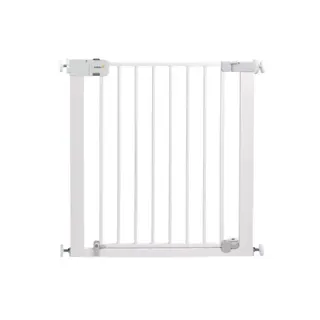 −31 %Safety 1stAuto-close safety gate, white – Safety 1st475 DH
instead of 690 DHView product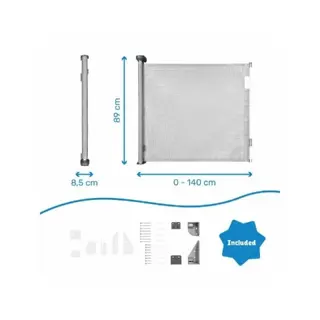 −9 %BadabulleSafe & Roll retractable safety gate – Badabulle628 DH
instead of 690 DHView product −9 %BadabulleSafe & Lock metal safety gate – Badabulle901 DH
instead of 990 DHView product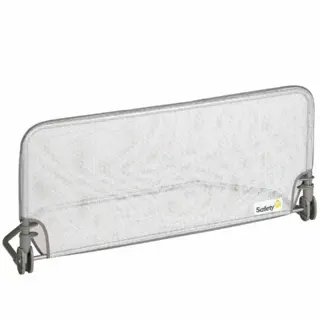 −9 %Safety 1stBed rail for child’s bed, 90 cm, grey – Safety 1st410 DH
instead of 450 DHView product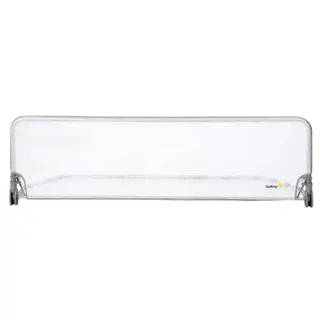 −9 %Safety 1stExtra-wide bed rail, 150 cm, grey – Safety 1st537 DH
instead of 590 DHView product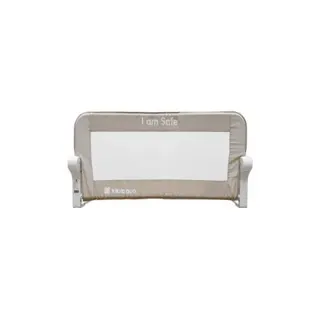 −9 %Safety 1stPortable foldable bed rail, 18 months to 5 years – Safety 1st546 DH
instead of 600 DHView product- The whole aisle · Safety gates13 products online, delivered anywhere in Morocco.Open the aisle
Products sold by La Maison du Bébé, publisher of this magazine. Prices as of 12 October 2026; please check the product page.
What if your baby's crying is wearing you out?
It is a question people rarely ask, and yet it matters. According to the Haute Autorité de santé, most shaken babies are under one year old, and about two in three under 6 months; inconsolable crying is one of the risk factors. If you feel anger or exhaustion rising, put your baby down in their cot on their back, step out of the room for a few minutes and call someone. A baby crying alone and safe is in no danger. Ideas for soothing them are in our article on baby crying.
Frequently asked questions
My baby fell asleep right after the fall. Should I keep them awake?
No, they can sleep: crying is tiring, and a nap does not make a bump worse. The Quebec guide Mieux vivre does advise waking your baby every 2 to 3 hours for the first 6 hours, to check that they respond normally, recognise you and move well. If they are hard to wake or unusually floppy, call 141 straight away.
Is a big bump on the forehead serious?
A bump on the forehead is common and often harmless in a child who walks. The benchmark changes for a baby: the NHS asks for urgent advice for any baby under one year old with a bump, bruise or significant wound on the head. A bump or dip on the top, back or sides of the skull also deserves a quick medical visit, at any age.
My baby vomited once after falling. What should I do?
A single vomit right after crying can happen, but get medical advice quickly, as the NHS recommends. Repeated vomiting, however, is a warning sign: from two vomits, or if your baby vomits and seems drowsy, pale or not themselves, go to the emergency room or call 141.
How long should I monitor a child after a knock to the head?
An adult should stay with them for at least the first 24 hours, according to the NHS and the American Academy of Pediatrics. Complications can still appear up to 72 hours after the knock, the INSPQ reminds us: for three days, keep an eye on behaviour, sleep, vomiting and movement, and see a doctor at the first new sign.
Sources
- Choc et coup à la tête : que faire?Mieux vivre avec notre enfant, INSPQ · Canada (Quebec)
- Head injury and concussionNHS · United Kingdom
- Head Injury in Children: How to Know If It's Minor or SeriousAmerican Academy of Pediatrics (HealthyChildren.org) · United States
- Syndrome du bébé secoué ou traumatisme crânien non accidentel par secouement : démarche diagnostique (fiche de synthèse, 2017)Haute Autorité de santé (HAS) · France