








Article contents
Key points
- Install the gate before your baby crawls, at around 6 months.
- At the top of the stairs: only a screw-fit gate.
- Pressure-fit: at the bottom of the stairs or between two rooms.
- Measure the opening and check for the EN 1930 standard.
- Remove it as soon as your child can open or climb it, often at around 2 years.
Is your baby starting to crawl towards the stairs? In Morocco, many families live in a duplex, a villa or a house with stairs up to the roof terrace, often in marble or tiles. A fall happens quickly: between 0 and 6 years, falls are the most common accident in the home, the French Ministry of Health's prevention guide points out.
A safety gate keeps your baby away from danger, but each model has its place. Top or bottom of the stairs, kitchen door, wide living-room opening: here is how to choose the right type and the right width, install it properly, maintain it and avoid the most common mistakes.
At what age should you install a safety gate?
Before your baby gets around on their own. Nationwide Children's Hospital (United States) advises fitting gates at the top and bottom of every staircase, and between risky rooms, before the age of 6 months. The American Academy of Pediatrics (AAP) recommends installing them when your child is learning to crawl and walk.
- For what age? The European standard EN 1930 covers gates intended for children up to 24 months. Nemours KidsHealth talks of 6 months to 2 years.
- Until when? Remove the gate as soon as your child can open or climb it, ideally at around 2 years.
- And after that? Teach them to go up and down holding the handrail, and do not let them use the stairs alone until they are able to.
A gate never replaces your watchful eye: it gives you time to react while your baby explores. To follow their progress, read our article on first steps.

What are the different types of safety gate?
The right model depends first of all on where you put it. This table sums up the main families:
| Type | Fixing | Where to put it | Strengths | Limits |
|---|---|---|---|---|
| Screw-fit | Screwed into the wall or door frame | Top of stairs, any opening | Very stable once fitted | Drilling required |
| Pressure-fit | Wedged between two walls, no drilling | Bottom of stairs, doorway, hallway | Quick to fit, handy if you rent | Never at the top of stairs; often a bar across the floor |
| Self-closing | Pressure-fit or screw-fit depending on the model | Kitchen, living room, busy passages | The gate swings shut on its own | Check it closes every time you go through |
| Retractable | Roll-up mesh, brackets fixed to the wall | Wide openings, between two rooms | Disappears when not in use | Read the instructions before using at the top of stairs |
| Extendable or modular | Extensions or panels added | Wide or irregular openings | Adapts to the width | Bulkier |
As for materials, metal is slim and sturdy, while wood blends in with the living room. Both are fine, provided the gate meets the standard and suits where it is fitted. A bed guard is a completely different product: we cover it further down.
Screw-fit or pressure-fit gate: which should you choose?
- At the top of the stairs: screw-fit only. The AAP recommends gates securely fixed to the wall structure, and Nationwide Children's Hospital advises using only screw-fit models. A pressure-fit gate can tip over if a child pushes hard, and the floor bar on some models can trip an adult.
- At the bottom of the stairs and between two rooms: a pressure-fit gate is suitable, according to Nemours KidsHealth.
- Moroccan walls: concrete, brick, plaster and marble are not drilled in the same way. Use the right wall plugs and, on marble or zellige tiles, call in a tradesperson.
- If you rent: pressure-fit is enough at the bottom of the stairs; for the top, ask your landlord for permission to drill.
How do you choose the right gate width?
Measure before you buy, Nemours KidsHealth advises, so that the gate covers the whole opening. Measure from wall to wall, or from the wall to the banister post, at floor level and at hand height: walls are not always straight.
- Width range: each model states a minimum and maximum width.
- Extensions: they add a few centimetres (7, 14 or 18 cm depending on the brand). Never exceed the number of extensions allowed by the instructions.
- Wide openings: a retractable gate such as the Badabulle Safe & Roll covers a passage up to 140 cm.
- Height: at least three-quarters of your child's height (KidsHealth).
- Gaps: no more than 5 cm between the floor and the bottom of the gate, and no more than 6 cm between two bars (KidsHealth).
Bring your measurements to the showroom in Maârif, Casablanca, to compare fixing systems, or browse all our safety gates, delivered anywhere in Morocco.
From the shop
Gates and extensions for stairs and doorways
Self-closing and retractable models, in metal or wood, and extensions to adjust the width.
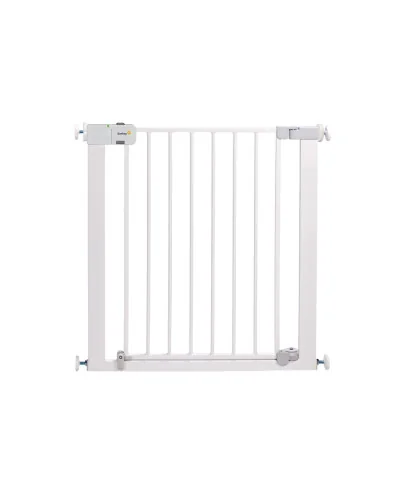 Safety 1stAuto-close safety gate white Safety 1stView product
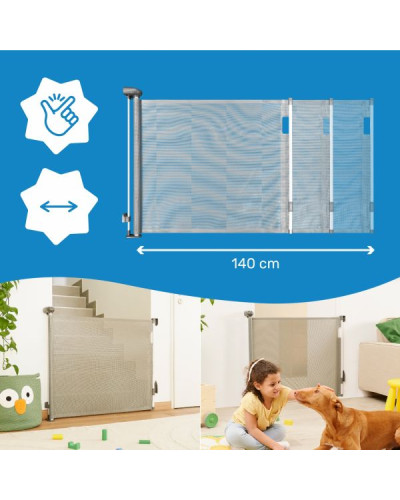 BadabulleSafe & Roll retractable safety gate BadabulleView product
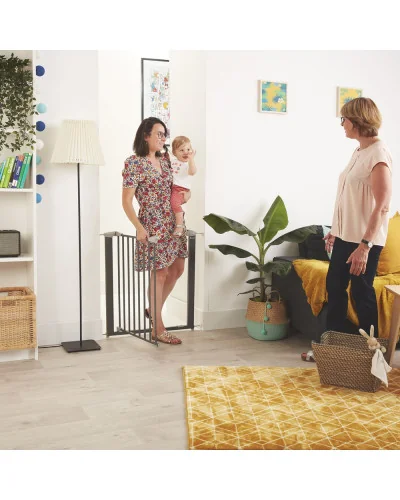 BadabulleSafe & Lock safety gate metal BadabulleView product
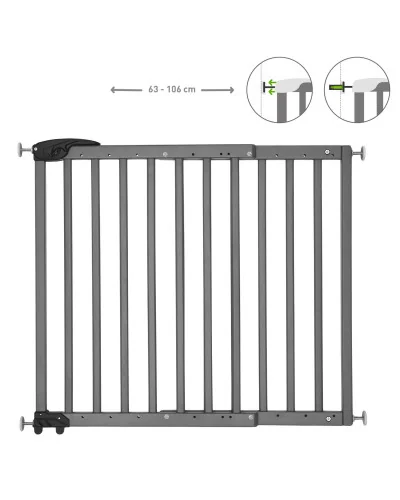 BadabulleDeco Pop wooden safety gate grey BadabulleView product
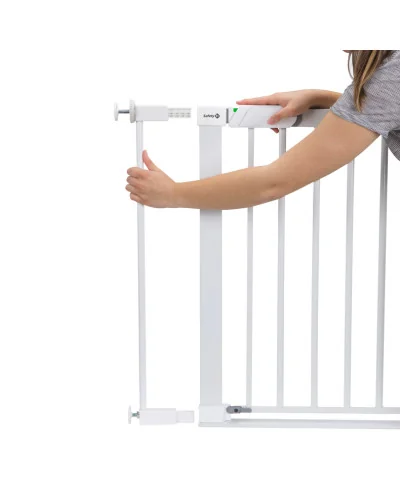 Safety 1st7 cm safety gate extension White Safety 1stView product
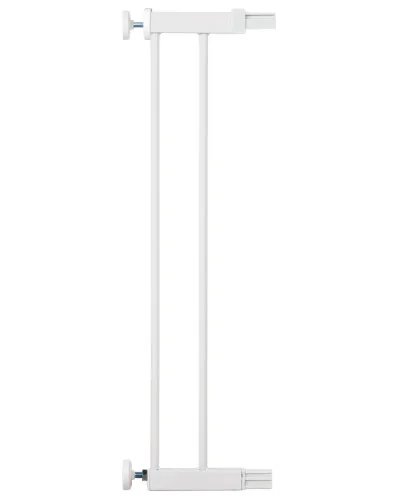 Safety 1st14 cm safety gate extension White Safety 1stView product
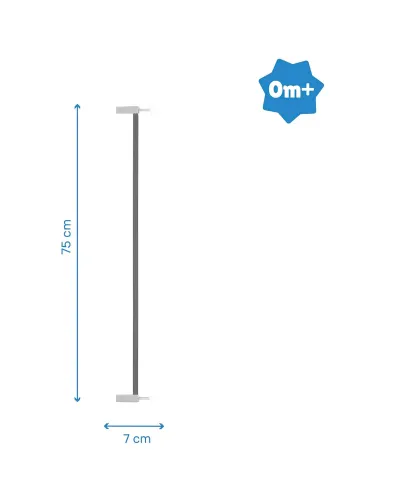 BadabulleSafe and Lock 7 cm safety gate extension BadabulleView product
 BadabulleSafe and Lock 18 cm safety gate extension BadabulleView product
- The whole aisle · All safety gatesDelivered anywhere in Morocco, free from 300 DH.Open the aisle
Products sold by La Maison du Bébé, publisher of this magazine. Please check price and availability on the product page.
What should you check before buying a safety gate?
- The EN 1930 standard (NF EN 1930 in France) on the packaging or instructions: this is the European standard for child safety gates.
- Where it may be used: the instructions state whether the model can go at the top of stairs.
- The locking system: a two-step opening, easy for an adult, hard for a toddler.
- The opening direction: at the top of stairs, the gate must never open out over the steps.
- Self-closing if you go through often with your hands full.
- Nothing to climb on: avoid horizontal bars that act as a ladder and old accordion-style gates, whose V-shaped openings can trap an arm or the neck (AAP, KidsHealth).
- A complete gate: be wary of second-hand models without instructions or original parts.
How do you install a stair gate properly?
- Read the instructions in full and stick to the location intended by the manufacturer.
- At the top: screw the gate in at landing level, never on a step, with the gate opening towards the landing.
- At the bottom: fit it at the foot of the first step, so your baby cannot start climbing.
- Shake the gate firmly: it should neither move nor tip.
- Check that no gap lets a head, arm or foot through.
- Move large toys and other objects, such as a toy box or small piece of furniture, away: a child can use them to climb over (KidsHealth).
Maintenance: good habits
- Every week, check the screws, and the tension on pressure-fit models, which can loosen.
- Test the closing: the gate should lock every time.
- Clean with a damp cloth and mild soap, with no abrasive product on wood.
- Keep the instructions and spare parts.
What mistakes should you avoid with a safety gate?
If your child falls despite everything, watch for the warning signs described in our article my baby has fallen on their head.
Bed guards: what are they for and from what age?
A bed guard has nothing to do with a stair gate. It slides under the mattress of a big bed to stop your child rolling onto the floor at night, when they move to a big-kid bed.
- From age 2: the US Consumer Product Safety Commission (CPSC) intends bed rails for children aged 2 to 5 who can get in and out of an adult bed on their own, and asks that they never be used before age 2. Some packaging says "from 18 months": to be on the safe side, follow the 2-year guideline.
- No gaps: gaps around bed rails have already trapped young children and caused the deaths of infants. The guard must sit flush against the mattress.
- Never for a baby: before age 2, your baby sleeps on their back, in their own empty cot. Go over the rules for safe sleep.
For a child over 2, choose the length to suit the bed: for example the Safety 1st 150 cm bed guard for a wide bed, or a 90 cm model for a child's bed.
How do you make the rest of the home safe?
A gate deals with stairs and doorways. For the rest, a few simple accessories complete the protection:
- socket covers on all sockets at child height;
- cupboard and drawer locks for cupboards with household products;
- corner protectors for coffee tables and marble furniture;
- a door stopper against pinched fingers;
- locked windows and balconies, with no furniture underneath to climb on (DGCCRF).
Find them in our home safety aisle. To put your baby in a safe space for a few minutes, a playpen can also help: see our guide to choosing a playpen.
From the shop
To make the rest of the home safe
Socket covers, drawer locks, corner protectors and a door stopper for the rooms your baby moves around in.
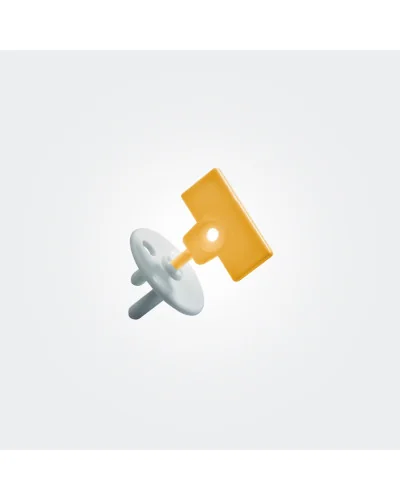 Safety 1stSocket covers 12 pieces with 4 keys Safety 1stView product
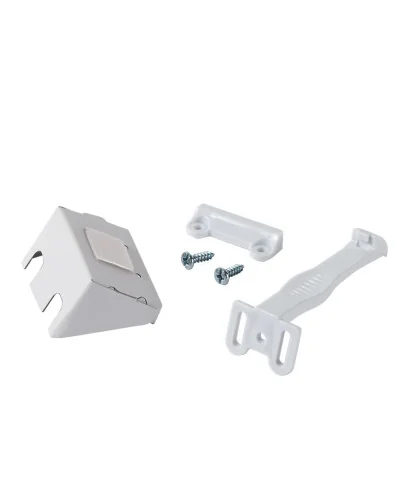 Safety 1stDrawer locks set of 7 Safety 1stView product
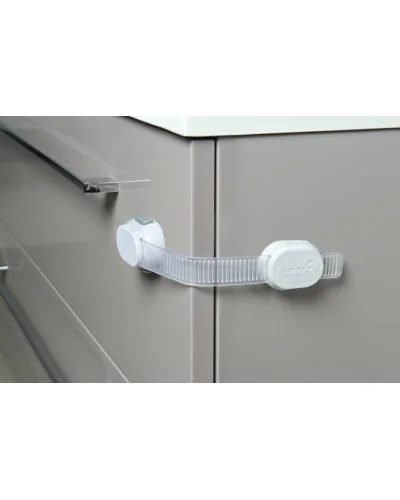 Safety 1stMulti-purpose lock Safety 1stView product
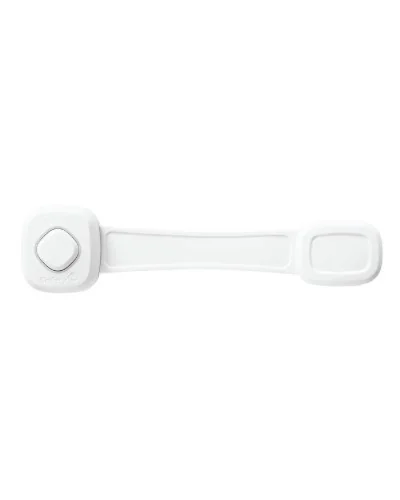 Safety 1stMulti-purpose lock white Safety 1stView product
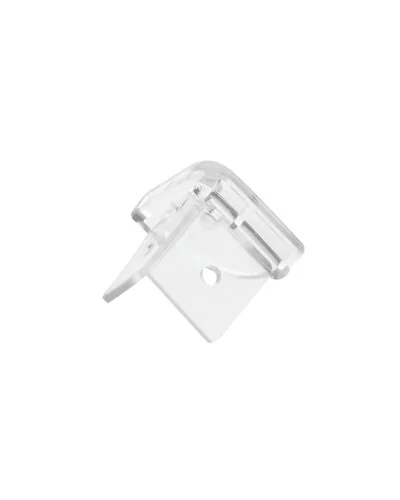 Safety 1stGel corner protectors x4 Safety 1stView product
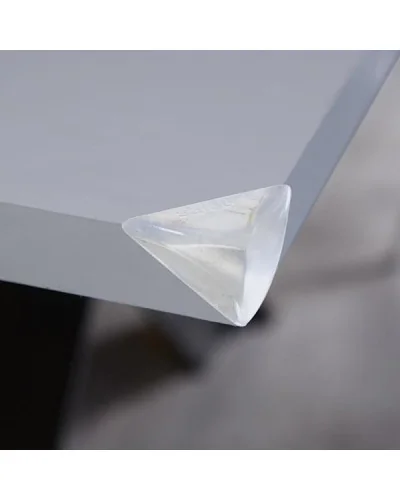 Safety 1stSoft corner protectors x4 Safety 1stView product
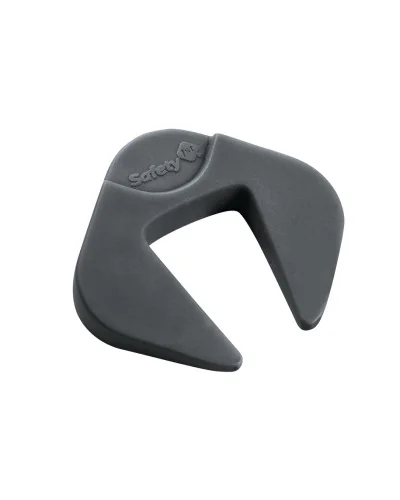 Safety 1st2-in-1 door stopper Safety 1stView product
 SaroCabinet handle lock SaroView product
- The whole aisle · All home safetyDelivered anywhere in Morocco, free from 300 DH.Open the aisle
Products sold by La Maison du Bébé, publisher of this magazine. Please check price and availability on the product page.
Frequently asked questions
Can you put a pressure-fit gate at the top of the stairs?
No. At the top of the stairs, use only a screw-fit gate, as the AAP and Nationwide Children's Hospital recommend. A pressure-fit gate can tip over if your child pushes hard, and the floor bar on some models can trip an adult. Keep pressure-fit models for the bottom of the stairs, doorways and hallways.
How do you install a safety gate without drilling?
Choose a pressure-fit gate, which wedges between two walls or two door frames. It is suitable at the bottom of the stairs, in a hallway or at the kitchen entrance. However, the top of the stairs always requires a screw fixing: if you rent, ask your landlord for permission, then fill the holes when you leave.
Until what age should you keep a safety gate?
Generally until about 2 years. The EN 1930 standard covers children up to 24 months, and Nemours KidsHealth advises removing the gate as soon as your child can open or climb it: it then becomes more dangerous than useful. Then teach your child to use the stairs holding the handrail, always under your supervision.
Do you need a gate at the top and the bottom of the stairs?
Yes, both are recommended. At the top, the gate prevents a fall down the stairs; at the bottom, it stops your baby climbing the first steps and then falling. The French Ministry of Health's prevention guide and the AAP both advise fitting gates at the top and bottom of stairs as soon as your child starts moving around.
How do you choose the width of a stair gate?
Measure the opening from wall to wall, at floor level and at hand height, then choose a model whose width range includes it. If the opening is wider, add extensions from the same brand, without exceeding the number allowed by the instructions. For a very wide passage, a retractable or modular gate is often more suitable.
Retractable gate or swing gate: which should you choose?
It depends on the location. A retractable gate, with a roll-up mesh, suits wide openings and disappears when you do not need it. A swing gate, especially a self-closing one, is practical for busy passages. At the top of the stairs, always check in the instructions that the model is approved for this use and fix it with screws.
Sources
- NF EN 1930 – Child use and care articles – Safety barriers – Safety requirements and test methodsAFNOR
- Home Safety: Tips for Families With Young ChildrenAAP (HealthyChildren)
- Baby GatesNationwide Children's Hospital
- Choosing Safe Baby Products: GatesNemours KidsHealth
- CPSC Adopts New Federal Standard for Portable Bed RailsCPSC
- Protect your child from accidents at home (0-6 years) (in French)French Ministry of Health (INPES)
- Baby Walkers: A Dangerous ChoiceAAP (HealthyChildren)
- Infant walkers still pose significant injury risk for young children (summary of Sims et al., Pediatrics, 2018)Healio (based on the AAP journal Pediatrics)
- Accidents at home: how to protect children (in French)DGCCRF (French consumer protection authority)