





Article contents
Key points
- Around 8 in 10 pregnant women get them, according to the NHS: it is not your fault.
- No cream or oil has been proven to prevent them; massage may help a little.
- Gradual weight gain lowers the risk, but never diet during pregnancy.
- No retinoid creams (tretinoin) while you are pregnant.
- Recent, still-red stretch marks respond better to treatment than older ones.
You catch sight of yourself in the mirror around the sixth month, and there they are: fine pinkish lines across your lower belly. Stretch marks are one of the most widely shared worries of pregnancy, and one of the best-stocked shelves in any pharmacy, lined with creams, oils and serums that all claim to fight them.
So can you really prevent them? The honest answer is: only a little. Here is what dermatologists and health authorities say, what makes sense day to day, and what you can do once your baby has arrived.
What is a stretch mark, and why does it appear?
A stretch mark is a small scar inside the skin. When the body changes quickly, the deep layer of the skin, the dermis, stretches so much that it tears in places, the NHS explains. The elastic fibres break up, and the skin keeps a trace of that tear.
Stretch marks go through two phases, described in the French reference textbook Dermatologie esthétique (Elsevier Masson):
- the red phase: pink, red or purplish streaks, sometimes brown or darker on olive or dark skin, which may itch or sting slightly;
- the white phase: over time they fade, sink a little and look like a scar.
In pregnancy they mostly appear in the second half, according to Quebec’s Mieux vivre guide. They show up on the belly, breasts and thighs, but also on the buttocks, lower back, arms or under the armpits. The first sign is often itching where the skin is thinning.

Who gets them, and why not everyone?
Most pregnant women, in fact. The NHS estimates that around 8 in 10 pregnant women get them, and the studies cited by Elsevier range from 50 to 90%. Stretch marks are therefore not a sign of neglect: they are simply part of pregnancy for most of us.
The factors involved, according to the NHS:
- pregnancy hormones, which make the skin more vulnerable;
- skin type, which is more or less elastic from one person to the next;
- genetics: if your mother or sister has stretch marks, your risk is higher;
- above-average or rapid weight gain.
You do not choose your skin. That is why two women following exactly the same routine will not necessarily have the same belly after the birth.
Creams and oils: what the science really says
This is the most important point, and the one you rarely hear in the shop: no cream and no oil has been proven to prevent stretch marks. The NHS describes the evidence for prevention as “limited”, and says there is no reliable evidence that any product makes them disappear. The Quebec guide agrees: no method is recognised as effective, and while massaging with a moisturising cream may help a little, the cream itself probably has little effect.
The details of the studies, as summarised by Elsevier:
| Ingredient | What studies show |
|---|---|
| Centella asiatica | May reduce how often they appear and how severe they are |
| Sweet almond oil | Slightly more effect with massage than without |
| Hyaluronic acid | Weak evidence |
| Cocoa butter, olive oil | No effect compared with using nothing |
The author concludes that effective preventive treatments are rare and that rigorous studies are lacking. The price of a bottle tells you nothing about how well it works.
And argan oil, so widely used in Morocco? It moisturises and smells lovely, but none of the medical sources consulted credit it with a proven preventive effect. The same goes for shea butter.
The habits that make sense
Gain weight gradually. Because rapid weight gain increases the risk, steady gain remains the most useful lever. The Quebec guide gives some benchmarks: 500 g to 2 kg by the end of the first trimester, then roughly 225 to 500 g a week after that, depending on your starting weight. The NHS is firm: no dieting during pregnancy, but a balanced diet. You will find our guidelines in eating well during pregnancy.
Keep moving. Physical activity helps avoid excessive weight gain: see which sports are safe while pregnant.
Moisturise skin that feels tight. A cream or oil will not prevent stretch marks, but it makes the skin more comfortable when it itches. The Quebec guide notes that creams without a medicinal ingredient are safe during pregnancy.
Avoid retinoids. Retinoid creams such as tretinoin, sometimes sold for stretch marks, must not be used while pregnant: they can harm the baby, the NHS warns. Read labels, and ask your pharmacist about any medicated product.
You will find skincare for mums in our mum’s hygiene and care section, including an affordable body care oil.
From the shop
For a daily massage, with no false promises
No oil prevents stretch marks. If massage feels good, a simple oil or lotion is enough: there is no need to pay more for a promise.
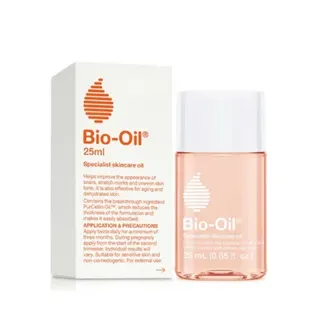 −48 %Bio-OilFace and body skincare oil, 25 ml – Bio-Oil26 DH
instead of 50 DHView product −48 %Bio-OilFace and body skincare oil, 60 ml – Bio-Oil31 DH
instead of 60 DHView product −48 %Laboratoires GilbertSweet almond baby massage oil, 60 ml – Gilbert21 DH
instead of 40 DHView product- The whole aisle · Mum’s hygiene8 products online, delivered anywhere in Morocco.Open the aisle
Products sold by La Maison du Bébé, publisher of this magazine. Prices as of 12 October 2026; please check the product page.
After the birth: can you get rid of them?
Not completely. According to the NHS, stretch marks gradually fade into paler, less visible scars, but they will probably never disappear altogether.
If they bother you, a dermatologist can suggest treatments, with one key point: recent stretch marks that are still red respond better than older ones. That is why it is worth seeing someone early, in the months after the birth.
- Retinoid creams (tretinoin) reduce the length and width of red stretch marks after several months of use, but have no proven effect on white ones. They are forbidden during pregnancy and need medical advice if you are breastfeeding.
- Lasers, intense pulsed light, microdermabrasion or microneedling can improve their appearance, often with limited evidence. These are cosmetic treatments: in the UK the NHS does not offer them, and you have to pay for them yourself.
- On olive or dark skin, common in Morocco, some lasers can only be used with caution: talk this through openly with the dermatologist before committing.
For the rest of your body after the baby, from your belly to diastasis and getting back to exercise, read getting your tummy back after giving birth. And if your hair starts falling out in handfuls a few months after the birth, that is another passing change: see postpartum hair loss.
Frequently asked questions
Does argan oil work against stretch marks?
It moisturises and makes massage pleasant, but none of the medical sources we consulted credit it with a proven preventive effect. It is in the same boat as other oils: the NHS sees only limited evidence for prevention, and studies have found that cocoa butter or olive oil did no better than nothing at all. Use it because you enjoy it, and do not feel guilty if stretch marks appear anyway.
Which creams are safe to use during pregnancy?
According to Quebec’s Mieux vivre guide, face, hand and body creams without a medicinal ingredient are safe during pregnancy. For any medicated cream, ask your doctor or pharmacist. One clear exception: retinoid creams such as tretinoin must be avoided during pregnancy because they can harm the baby, the NHS warns.
Are pregnancy stretch marks dangerous?
No. The NHS points out that they are harmless, and there is no specific treatment for them during pregnancy anyway. They can itch as the skin stretches, which is common. Very intense itching, however, especially on the palms of the hands or the soles of the feet and worse at night, is a sign to report to your maternity unit the same day.
Does gaining a lot of weight always cause stretch marks?
Not always, but it increases the risk. The NHS lists above-average weight gain among the factors, alongside pregnancy hormones and skin type, which can be more or less elastic. Some women gain a lot of weight without any stretch marks, while others get them with moderate gain. The aim is not to lose weight but to gain it gradually.
Sources
- Stretch marks in pregnancyNHS · United Kingdom
- Stretch marksNHS · United Kingdom
- Itching in pregnancyNHS · United Kingdom
- Changements physiques pendant la grossesseMieux vivre avec notre enfant, INSPQ · Canada (Quebec)
- Sécurité des soins personnels pendant la grossesseMieux vivre avec notre enfant, INSPQ · Canada (Quebec)
- Vergetures (extrait de l'ouvrage Dermatologie esthétique, A.-C. Nonnotte, 2020)Elsevier Masson (Elsevier Connect) · France