





Article contents
Key points
- From 28 weeks, go to sleep on your side, at night and for naps.
- Left side or right side: for your baby's safety, both are fine.
- Woke up on your back? Simply turn onto your side, without worrying.
- A pillow between the knees and under the bump eases your back and steadies the position.
- No sleeping pills or “sleep” herbal teas without advice from a pharmacist or doctor.
It's past midnight. You have already tried your right side, your left side, two pillows, then a third. An urgent need to pee gets you up, and the baby picks that moment to start wriggling. Finding the right sleeping position in pregnancy becomes a small puzzle as your bump grows.
Yet there is one simple, well-established rule, and a few habits that really change your nights. Here they are, along with how to get the most out of a pregnancy pillow.
Why is sleep so hard when you are pregnant?
Because everything gets in the way, and differently from one trimester to the next. Early on, hormonal changes make you extremely tired: according to the NHS, it is common to feel exhausted during the first 12 weeks. Tiredness often comes back in the third trimester, with the weight of the bump.
Quebec's guide Mieux vivre lists what spoils your nights:
- waking up often to pass urine;
- back pain;
- heartburn;
- leg cramps, which affect more than one pregnancy in two, especially at night;
- difficulty finding a comfortable position;
- anxiety.
Add to that strange dreams, which are common and normal according to the NHS. The good news: tiredness itself does not harm you or your baby. Ways to deal with cramps, reflux or heavy legs are set out in our article on common pregnancy discomforts.

What is the best sleeping position in pregnancy?
On your side. It is the safest position to fall asleep in, as both the NHS and the Australian Sleep on Side campaign stress. From 28 weeks, going to sleep on your back is linked to a higher risk of stillbirth. The NHS speaks of a risk that can double. The Australian campaign points out that this tragedy affects about one baby in 500 after 28 weeks in Australia, and that sleeping on your side halves that risk.
The explanation: when you lie on your back, the womb presses on large blood vessels, which reduces the blood flow to the womb and the oxygen reaching the baby. The advice applies to naps as well as to the night.
And if you wake up on your back? It is common and nothing to worry about, these same sources insist: turn onto your side and go back to sleep. What matters is the position you fall asleep in.
Left side or right side?
The left side has a reputation for being “the right one”. For your baby's safety, the NHS and the Sleep on Side campaign are clear: left or right, both are fine. So there is no need to force yourself to stay on your left all night.
The left side still has an advantage for some women. Quebec's guide suggests it if you have varicose veins or swollen legs. Changing sides during the night is normal, and even good for your back and hips.
How do you use a pregnancy pillow?
The principle is the same whatever the shape: support the bump and keep your knees apart at hip height. The NHS advises propping up your bump with pillows and placing one between your knees, and the INSPQ recommends a pillow between the knees for back pain.
By shape:
- The long bolster (C- or J-shaped): the top under your head or against your chest, the curve under your bump, the bottom between your knees. The most versatile, and it later becomes a nursing pillow.
- The U-shaped pillow: it surrounds your body, supporting your back and bump at the same time. Handy if you change sides often, since it stays in place, but it takes up a lot of room in the bed.
- The small wedge: a compact cushion slipped under the bump, combined with a pillow between the knees. Ideal for travel.
If heartburn wakes you up, also raise your head and upper back, as the INSPQ advises, and avoid eating just before bed. A mattress that is too soft makes back pain worse: the INSPQ suggests slipping a board underneath.
From the shop
Pillows and supports for side sleeping
A simple pillow between your knees may be enough. If you want more comfort, here are pregnancy pillows in several shapes and sizes, which will later serve for breastfeeding, and a sleep belt.
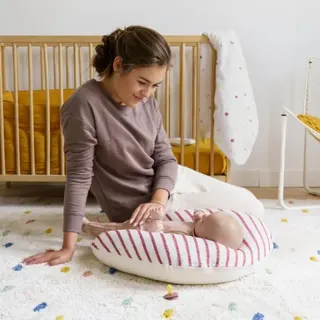 −19 %DoomooSofty nursing and maternity pillow, Ruby Stripes – Doomoo501 DH
instead of 620 DHView product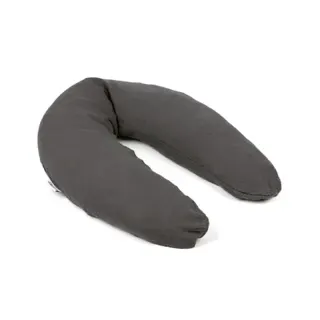 −9 %DoomooComfy Big nursing and maternity pillow, Tetra Grey – Doomoo619 DH
instead of 680 DHView product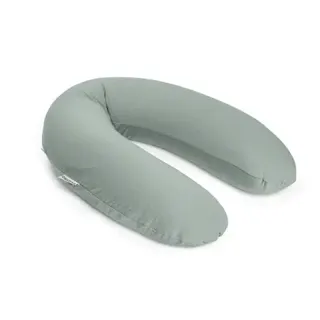 −9 %DoomooBuddy nursing and pregnancy pillow, Tetra Jersey Green – Doomoo810 DH
instead of 890 DHView product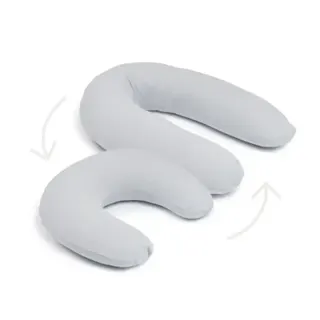 −9 %DoomooTwisty 2-in-1 pregnancy pillow, Pearl Grey, pearl grey cover – Doomoo901 DH
instead of 990 DHView product −9 %DoomooMaxxy XXL pregnancy pillow, Mini Leaves Green, small green leaf print – Doomoo901 DH
instead of 990 DHView product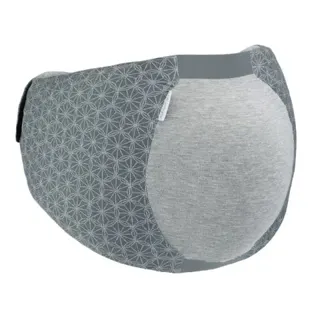 −22 %BabymoovDream Belt sleep belt, Smokey – Babymoov491 DH
instead of 630 DHView product- The whole aisle · Pregnancy and nursing pillows20 products online, delivered anywhere in Morocco.Open the aisle
Products sold by La Maison du Bébé, publisher of this magazine. Prices as of 12 October 2026; please check the product page.
An evening routine that really helps
A few habits recommended by the NHS and the INSPQ:
- Unwind before bed: slow breathing, relaxation, a warm shower. Your midwife can show you some exercises.
- Cut out caffeine in the evening: coffee, tea, cola. Evening mint tea contains it too. Our caffeine guidelines are in eating well during pregnancy.
- Don't eat or drink just before sleeping, to limit reflux. Drink well during the day instead.
- Move during the day: a walk or a swim helps you feel less tired, the NHS notes. See our pointers on exercise during pregnancy.
- Get help with everyday tasks, and put your feet up during the day.
Opinions differ on naps. Quebec's guide suggests them to make up for short nights. The NHS advises avoiding afternoon or evening naps, which can delay falling asleep. It's up to you: if a late-afternoon nap keeps you awake at night, take it earlier or make it shorter. And whatever the time, fall asleep on your side.
Insomnia and anxiety: when to talk about it
If lack of sleep is weighing on you, talk to your midwife, doctor or gynaecologist. The NHS points out that insomnia, when it comes with other signs such as feeling hopeless or losing interest in things you used to enjoy, can be a sign of depression. There are treatments that help.
Do not take any sleeping pill, herbal tea, essential oil or “sleep” supplement without advice. Quebec's guide asks you to treat natural health products with as much caution as medicines, because some can be dangerous during pregnancy. Your pharmacist will tell you what is possible.
Your baby's movements are also part of your nights. Knowing them helps you spot a change: everything is explained in our article when do you feel your baby move.
Frequently asked questions
Can I sleep on my stomach while pregnant?
In early pregnancy, nothing in the sources we consulted rules it out: the guidance concerns late pregnancy. As your bump grows, this position becomes uncomfortable and you naturally move onto your side. A pillow slipped under your bump and between your knees gives an almost flat position that feels more pleasant.
Is sleeping on my back before 28 weeks dangerous?
The recommendations of the UK's NHS and of the Australian Sleep on Side campaign concern the period from 28 weeks: that is when going to sleep on your back is linked to a higher risk. Before then, sleep however you are most comfortable. Getting used to your side a little earlier simply makes the switch easier.
How many hours of sleep do you need when pregnant?
There is no single official figure. Quebec's guide Mieux vivre suggests aiming for longer nights, of 8 to 10 hours, or adding naps when tiredness is strong, in the first trimester and again in the third. Listen to your body, and accept help from those around you with everyday tasks.
I have nightmares about giving birth. Is that normal?
Yes. The NHS says strange dreams or nightmares about the baby or the birth are normal during pregnancy. Talking about them with your partner or midwife often helps, as do relaxation techniques. If the anxiety follows you through the day and stops you living normally, mention it at your next appointment.
Sources
- Tiredness and sleep problems in pregnancyNHS · United Kingdom
- Stillbirth: preventing stillbirthNHS · United Kingdom
- Sleep on Side (Safer Baby campaign flyer)Stillbirth Centre of Research Excellence (Stillbirth CRE) · Australia
- Malaises de grossesseMieux vivre avec notre enfant, INSPQ · Canada (Québec)
- Médicaments et produits de santé naturels pendant la grossesseMieux vivre avec notre enfant, INSPQ · Canada (Québec)
- Itching in pregnancyNHS · United Kingdom