





Article contents
Key points
- About 50% of pregnant women have back pain, according to Quebec's INSPQ.
- Bend your knees to lift, turn with your feet and spread loads evenly.
- Regular physical activity reduces lower back and pelvic pain, according to France's HAS.
- A support belt mainly helps pelvic pain, ideally on a physiotherapist's advice.
- Rhythmic pain, fever, burning when you pee or pain below the ribs: get checked quickly.
In the morning, you have to roll onto your side to get out of bed. In the evening, after a day on your feet or in front of a screen, your lower back aches. Back pain in pregnancy is so common that you end up thinking you just have to put up with it. According to Quebec's public health institute (INSPQ), it affects about one pregnancy in two.
It is not dangerous for baby, and it can be eased far better than you might think: through the way you move, carry, sleep, and through suitable physical activity. You also need to recognise the back pain that is not mechanical, the kind that signals contractions or an infection.
Why do you get back pain when pregnant?
Two things add up. First, hormones: they soften the ligaments to prepare the pelvis for the birth, which puts the joints of the lower back and pelvis under strain. Then mechanics: the weight of the bump pulls your body forward and increases the curve of your lower back, which doctors call lordosis.
The UK's NHS notes that back pain can start early, from the first trimester. It often increases with the size of your bump, tiredness and days spent standing still.

Lower back, pelvis, sciatica: which pain is it?
Not all back pain is the same, and recognising each kind helps you ease it better.
| Type of pain | Where it hurts | What makes it worse |
|---|---|---|
| Lower back pain | Lower back, in the middle or on either side of the spine | Standing for a long time, carrying, bending |
| Pelvic girdle pain (including the pubic symphysis) | Pubic bone, one or both sides of the lower back, the perineum, sometimes the thighs | Walking, climbing stairs, turning over in bed, parting your legs |
| Pain that runs down the leg (sciatica-type) | Buttock, back of the thigh, sometimes down to the foot | Certain sitting or lying positions |
Pelvic girdle pain affects up to one pregnant woman in five to varying degrees, according to the NHS. Some women even feel a clicking in the pelvis. It is more common after pelvic pain in a previous pregnancy, in physical jobs or with excess weight.
Pain that runs down the leg deserves a medical opinion: the INSPQ advises seeing a doctor if pain persists, gets worse or spreads to the legs.
Everyday moves that protect your back
The NHS and INSPQ advice comes down to a few easy habits:
- Lifting: bend your knees, keep your back straight and avoid heavy loads. The bucket of water for cleaning, the shopping from the souk and the older child begging to be carried can wait until someone helps you.
- Turning: move your feet rather than twisting at the waist.
- Carrying: share bags between both hands.
- Shoes: flat, with good support for the foot.
- Sitting: back straight and supported, with a cushion in the small of your back if the chair is low or soft. Get up regularly if you work sitting down.
- Getting out of bed: roll onto your side, knees together, then push up with your arms to sit.
- Getting dressed: sit down, especially to put on trousers and shoes if your pelvis hurts.
- Resting properly, especially late in pregnancy. A warm bath or a gentle massage can bring relief.
How to sleep with back pain when pregnant
On your side, knees slightly bent, with a pillow between your knees: that is the position recommended by both the INSPQ and the NHS. It lines up the pelvis and takes pressure off the lower back. Late in pregnancy, a second pillow under your bump helps even more.
If your mattress is too soft, the INSPQ and the NHS suggest sliding a board underneath to firm it up. To turn over in bed when your pelvis hurts, keep your knees together and turn your whole body in one movement. All our position tips are gathered in the article on sleeping while pregnant with a pregnancy pillow.
From the shop
Pillows to ease your back at night
The NHS and the INSPQ advise sleeping on your side with a pillow between your knees. A long pregnancy pillow does that job while supporting your bump and back, then comes in handy for breastfeeding.
 −35 %DoomooSofty nursing pillow, Flower Yellow – Doomoo403 DH
instead of 620 DHView product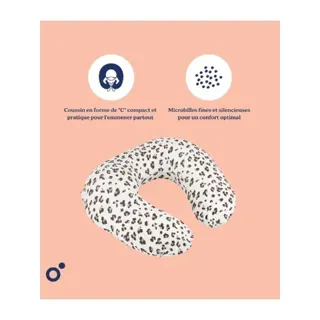 −9 %DoomooSofty nursing pillow, Leopard Cream – Doomoo564 DH
instead of 620 DHView product −9 %BabymoovB.Love XXL pillow, Wind Blue – Babymoov683 DH
instead of 750 DHView product −9 %DoomooComfy Big nursing and maternity pillow, Tetra Blue – Doomoo619 DH
instead of 680 DHView product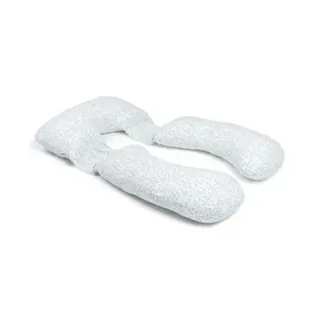 −9 %DoomooMaxxy XXL pregnancy pillow, Mini Leaves Green, small green leaf print – Doomoo901 DH
instead of 990 DHView product DoomooBuddy maternity and nursing pillow, Flower Pink – Doomoo890 DHView product
 - The whole aisle · Pregnancy and nursing pillows20 products online, delivered anywhere in Morocco.Open the aisle
Products sold by La Maison du Bébé, publisher of this magazine. Prices as of 12 October 2026; please check the product page.
Which exercises help back pain in pregnancy?
Moving remains the best treatment. France's National Authority for Health (HAS) states that physical activity during pregnancy reduces lower back and pelvic pain, although it does not prevent it. For an uncomplicated pregnancy, it recommends 150 to 180 minutes of endurance activity a week, spread over at least three sessions. Walking, swimming, aquanatal classes and prenatal yoga are safe choices, detailed in our article on exercise during pregnancy.
The NHS suggests a simple exercise to do every day:
- Get down on all fours, knees under your hips, hands under your shoulders, back flat.
- Pull in your tummy and round your back up towards the ceiling, letting your head and bottom relax gently.
- Hold for a few seconds, then slowly return to a flat back, without letting it sag.
- Repeat 10 times, slowly and rhythmically.
Stop if the exercise brings the pain back. After 24 weeks of pregnancy, the HAS advises avoiding exercises lying flat on your back.
Physio and pregnancy support belts: what to expect
When the pain is strong or makes walking difficult, talk to your midwife or gynaecologist. They can refer you to a physiotherapist trained in pregnancy care. According to the NHS, physiotherapy aims to ease pain, strengthen the muscles of the tummy, back, hips and pelvic floor, and stabilise the pelvis. The earlier it starts, the better.
A pelvic support belt is among the aids a physiotherapist may recommend, especially for pain in the pelvis and pubic symphysis. It helps some women and not others. It is better to choose one with a professional, who will check its size and position, than to buy one at random. It does not replace physical activity or the right everyday moves.
As for medicines, the NHS says paracetamol can be used unless you are told otherwise. Even so, no painkiller should be taken without asking: the dose is set by your doctor or pharmacist, and some common painkillers are not suitable in pregnancy.
When should back pain worry you?
Mechanical pain changes with movement and settles with rest. The pain that should alert you looks different. The INSPQ points out that late in pregnancy, back pain that spreads to the tummy or comes back at regular intervals can signal the start of labour. Before 37 weeks, that is a reason to be seen immediately: the signs are detailed in our article on threatened preterm labour.
Pain on one side only, high up below the ribs, with fever or burning when you pee, is among the signs the NHS asks you to report quickly: it may point to a urinary or kidney problem that needs checking without delay. To tell other tummy pains apart, see also lower abdominal pain during pregnancy.
Back pain is easier to manage as a team: your partner and family can take over the carrying, the bending and the cooking on your feet. It is not a whim; it is prevention.
Frequently asked questions
Is back pain a sign that labour is starting?
Sometimes. According to the INSPQ, late in pregnancy, pain in the lower back that spreads to the tummy or comes back at regular intervals can signal the start of labour. If this happens before 37 weeks, contact your maternity unit without waiting: it may be preterm labour contractions. Constant pain that changes with your movements is usually mechanical.
Can I see an osteopath or a massage therapist while pregnant?
A gentle massage by someone trained in pregnancy care can bring relief, and the NHS lists massage among the helpful measures. For osteopathy or manipulation, talk to your doctor or midwife first and choose a practitioner used to treating pregnant women. If the pain is severe, the first port of call is still a physiotherapist specialising in pregnancy and birth.
Which painkiller can I take for back pain while pregnant?
None without advice. The NHS says paracetamol can be used for back pain during pregnancy unless your doctor or midwife says otherwise. Some other painkillers, including anti-inflammatories sold without a prescription, are not suitable in pregnancy. Always ask your doctor or pharmacist which product and dose are right for you, telling them how many weeks pregnant you are.
Does back pain go away after the birth?
Most often it eases in the weeks that follow, but pelvic pain can last a little longer. The NHS says it usually only disappears completely after the birth. Afterwards, take care with carrying baby and with your breastfeeding positions: if the pain persists, postnatal rehabilitation with a physiotherapist is helpful.
Sources
- Back pain in pregnancyNHS · United Kingdom
- Pelvic pain in pregnancy (pelvic girdle pain)NHS · United Kingdom
- Malaises de grossesseMieux vivre avec notre enfant, INSPQ (Quebec public health institute) · Canada (Quebec)
- Signaux d'alarme pendant la grossesseMieux vivre avec notre enfant, INSPQ (Quebec public health institute) · Canada (Quebec)
- Prescription d'activité physique. Grossesse et post-partum (synthèse, 2022)French National Authority for Health (HAS) · France