





Article contents
Key points
- Most common after 12 weeks, it usually goes away after the birth.
- Five or six small meals beat three big ones, and nothing in the 3 hours before bed.
- Raise your head and shoulders at night; sleeping on your left side may help.
- Antacids only on advice, at least 2 hours apart from iron or folic acid.
- Band-like pain below the ribs, headache, blurred vision: get checked immediately.
A burning that rises behind your breastbone just after f'tour (the meal that breaks the Ramadan fast), a sour taste in your throat as soon as you lie down, nights spent half sitting up. Heartburn in pregnancy is one of the most common minor complaints, especially from the second trimester. Doctors call it pyrosis, or gastro-oesophageal reflux.
It is not dangerous for baby. It is, however, thoroughly unpleasant, and it can ruin your sleep for weeks. The good news: a few well-targeted changes are often enough, and there are medicines compatible with pregnancy when they are not. You just need to know how to recognise the pain that is not simple reflux at all.
Why do you get heartburn when pregnant?
Two mechanisms add up. First, hormones: they slow digestion and relax the small muscle that closes the top of the stomach, which lets acid rise into the oesophagus. Then mechanics: as it grows, the womb pushes the stomach upwards and squeezes it.
According to the UK's NHS, these problems can happen at any time but become more common from 12 weeks. They are more likely if you already had them before pregnancy, if this is not your first baby, and late in pregnancy.
The most common symptoms:
- a burning feeling or pain behind the breastbone;
- a feeling of heaviness or bloating after meals;
- burping, sometimes food or acid fluid coming back up into the mouth;
- discomfort that gets worse when lying down or bending forward.
They usually appear soon after eating or drinking.

What to eat for heartburn in pregnancy
There is no miracle food, but there is a way of eating that makes a big difference. French, Quebec and British recommendations agree on the essentials:
- Split your meals. Five or six small meals are better than three big ones. Santé publique France suggests, for example, keeping dessert for an afternoon snack.
- Eat slowly, sitting down, and chew well. Stay upright during the meal and just after.
- Drink between meals rather than while eating, so as not to fill your stomach all at once.
- Have dinner early. The NHS advises eating nothing in the 3 hours before bed.
- Spot your triggers. The most often mentioned are fatty or fried food, strong spices, citrus fruit, tomato, chocolate, mint, coffee and fizzy drinks.
On this last point, the Swiss Society for Nutrition is honest: these foods are often blamed, but studies do not clearly prove it. So there is no need to cut everything out. Drop whatever seems to disagree with you as a trial, then bring it back if nothing changes.
For balanced meals that do not weigh on your stomach, our guide to eating well during pregnancy offers practical ideas.
How to sleep when acid comes up at night
Position matters as much as the menu. The NHS recommends raising your head and shoulders to stop acid coming up during the night, and adds that sleeping on your left side may also help. Quebec's INSPQ likewise advises sleeping with your head raised and not lying down right after eating.
In practice:
- Raise your upper body with one or two extra pillows, or a pregnancy pillow tucked under your back and shoulders. Another option is to slide sturdy blocks under the legs at the head of the bed to tilt the whole mattress.
- Avoid folding in two: a single pillow under your head bends your neck without raising your stomach.
- Lie on your left side late in pregnancy, a position also recommended for circulation.
- Wear clothes that are loose at the waist, day and night.
All our tips for finding the right position are in the article on sleeping well while pregnant with a pregnancy pillow.
From the shop
For sleeping with your upper body supported
A long pregnancy pillow helps keep your upper body slightly raised and stay on your side. It does not treat reflux, but it makes nights more comfortable, and it will be useful again for breastfeeding.
 −35 %DoomooSofty nursing pillow, Flower Yellow – Doomoo403 DH
instead of 620 DHView product −19 %DoomooSofty nursing and maternity pillow, Ruby Stripes – Doomoo501 DH
instead of 620 DHView product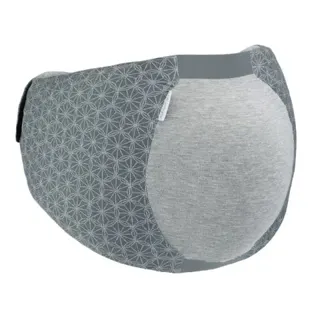 −22 %BabymoovDream Belt sleep belt, Smokey – Babymoov491 DH
instead of 630 DHView product −9 %DoomooComfy Big nursing and maternity pillow, Tetra Grey – Doomoo619 DH
instead of 680 DHView product −9 %DoomooBuddy nursing and pregnancy pillow, Tetra Jersey Green – Doomoo810 DH
instead of 890 DHView product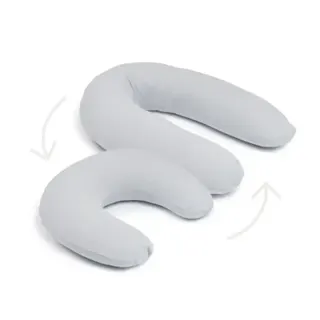 −9 %DoomooTwisty 2-in-1 pregnancy pillow, Pearl Grey, pearl grey cover – Doomoo901 DH
instead of 990 DHView product- The whole aisle · Pregnancy and nursing pillows20 products online, delivered anywhere in Morocco.Open the aisle
Products sold by La Maison du Bébé, publisher of this magazine. Prices as of 12 October 2026; please check the product page.
Which medicines for reflux during pregnancy?
When lifestyle measures are not enough, treatment is possible, but never on your own initiative. The NHS distinguishes two families available at the pharmacy:
- antacids, which neutralise stomach acid;
- alginates, which form a kind of barrier that stops acid rising.
Not all of them are suitable during pregnancy: always tell the pharmacist you are pregnant. The product, the dose and when to take it are set by your doctor, midwife or pharmacist. If that is not enough, the doctor can prescribe a medicine that reduces acid production.
Two precautions matter a great deal:
- Iron and folic acid. According to the NHS, an antacid taken within 2 hours either side of these supplements reduces their absorption. Space them out, especially if you are being treated for anaemia during pregnancy.
- Home remedies. Bicarbonate of soda, "digestive" herbal teas or essential oils are not harmless when you are pregnant. Ask first.
If you take another long-term treatment that seems to make reflux worse, do not stop anything on your own: talk to your doctor, who can suggest an alternative.
Heartburn or pre-eclampsia: the pain not to confuse
This is the most important point of all. In the second half of pregnancy, pain in the upper tummy, just below the ribs, can feel like severe heartburn when it is in fact a sign of pre-eclampsia, a serious form of high blood pressure in pregnancy. The NHS lists among its signs pain just below the ribs, severe headaches, vision problems and sudden swelling of the face, hands or feet.
A few clues should alert you:
- the pain appears after 20 weeks, often late in pregnancy;
- it is band-like, below the ribs or on the right, and does not go away with an antacid;
- it comes with headaches, vomiting, spots before your eyes or sudden swelling.
The INSPQ also advises seeing a doctor when heartburn comes with fever, vomiting or bad headaches. If in doubt, have your blood pressure taken: it is a simple test. Everything is explained in our article on pre-eclampsia and its signs.
How long does heartburn last?
Often until the end of pregnancy, sometimes easing when baby drops into the pelvis a few weeks before the due date. After the birth, the stomach is no longer squashed and hormones fall: reflux usually disappears quickly.
In the meantime, the goal is realistic: calmer nights and meals that do not end in burning. For a week, note what you eat, at what time, and when the burning comes on. This little diary helps you spot your own triggers, and it will be useful to your midwife or doctor if you need treatment.
Frequently asked questions
Does heartburn mean my baby will have lots of hair?
It is a very common belief, in Morocco as elsewhere, but it changes nothing about your care. Heartburn is explained by pregnancy hormones, which relax the muscle between the stomach and the oesophagus, and by the womb squeezing the stomach. It affects many women, however much hair their baby has at birth.
Does milk help heartburn when you are pregnant?
A glass of milk sometimes soothes in the moment, but the effect is short-lived and varies from one woman to another. Public health sources do not list it as a treatment. Rely instead on smaller meals, an early dinner and sleeping with your upper body raised. If the heartburn persists, ask your pharmacist or midwife for advice.
Can I take bicarbonate of soda for acidity during pregnancy?
It is better to avoid this old home remedy without medical advice: it is not among the solutions health authorities suggest during pregnancy. If you need something for acidity, ask the pharmacist for an antacid suitable in pregnancy, making clear that you are pregnant: they will tell you which one and how to take it.
Does heartburn stop after the birth?
Yes, in the vast majority of cases. Once baby is born, the stomach is no longer squashed and pregnancy hormones fall: reflux usually disappears in the days or weeks that follow. If heartburn persists several weeks after the birth, mention it to your doctor at your postnatal check.
Sources
- Indigestion and heartburn in pregnancyNHS · United Kingdom
- Symptoms of pre-eclampsiaNHS · United Kingdom
- Prise de poids, appétit et problèmes digestifs pendant la grossesseSanté publique France, Manger Bouger (published on Santé.fr) · France
- Malaises de grossesseMieux vivre avec notre enfant, INSPQ (Quebec public health institute) · Canada (Quebec)
- Alimentation et aigreurs d'estomac (feuille d'info, 2016)Swiss Society for Nutrition (SSN) · Switzerland