





Article contents
Key points
- Mild pain that eases with rest, a change of position or a bowel movement is usually harmless.
- One-sided pain with bleeding between 4 and 12 weeks: think of ectopic pregnancy.
- Regular contractions before 37 weeks: call the maternity unit immediately.
- Strong pain that does not ease after 30 to 60 minutes of rest: get checked.
- Fever, burning when peeing or cloudy urine: a urinary infection is treated quickly.
A sharp pull in your side when you stand up too quickly, a cramp that feels like a period, a bump that tightens at the end of the day. Lower abdominal pain in pregnancy is common, and most of it is nothing to worry about: the womb is growing, the ligaments are stretching, digestion is slowing down.
But the belly is also where the complications you must not miss make themselves felt. The idea is not to watch every sensation anxiously, but to know the few signs that should make you pick up the phone. Here are the landmarks, trimester by trimester.
Why does your lower belly hurt when you are pregnant?
Because everything is shifting. The womb takes up more room and presses on the bladder and the bowel. Under the effect of hormones, the ligaments, especially those of the pelvis, gradually loosen. Quebec's INSPQ notes that this loosening can cause pain, during physical activity and even at rest.
The UK's NHS lists among the usually harmless causes:
- ligament pain, often a sharp cramp on one side of the lower belly;
- constipation, very common in pregnancy;
- wind.
Its rule of thumb is simple: mild pain that goes away when you change position, rest, open your bowels or pass wind is probably not a cause for concern.

Common pains, trimester by trimester
| Period | Common, usually harmless pain | What should prompt a check |
|---|---|---|
| 1st trimester | Mild cramps or pulling, bloating, constipation | One-sided pain, shoulder-tip pain, bleeding, feeling faint |
| 2nd trimester | Sharp ligament pain on one side with a sudden movement, constipation | Cramps with bleeding before 24 weeks, repeated contractions, fever |
| 3rd trimester | Braxton Hicks contractions, heaviness in the pelvis, pubic pain | Regular contractions before 37 weeks, constant pain with bleeding, pain under the ribs |
Ligament pain
It often comes with a change of position: getting up suddenly, turning over in bed, coughing or sneezing. The pain is sharp, on one side or both, and passes within moments or with rest. To avoid it, get up by rolling onto your side first, move more slowly, and hold a hand under your bump when you cough.
Constipation and wind
Hormones slow the gut down, and iron tablets do not help. Santé publique France advises against taking a laxative without medical advice; our practical tips (fibre, water, walking) are gathered in the article on the minor discomforts of pregnancy.
Braxton Hicks contractions
These are practice contractions: the bump tightens, then relaxes. According to Naître et grandir, they can occur throughout pregnancy but are more frequent in the third trimester. They are uncomfortable rather than painful, and irregular. A full bladder, physical activity, sex or not drinking enough can trigger them. Rest, a big glass of water, a change of position or a warm bath calm them down.
Pubic and pelvic pain
In late pregnancy, pain over the pubic bone that gets worse when walking or turning over in bed suggests pelvic girdle pain. The NHS says it affects up to one pregnant woman in five. A physiotherapist trained in pregnancy care can relieve it: our article on back pain during pregnancy details the useful movements.
From the shop
To ease your belly and ligaments at night
Lying on your side, a cushion slipped under your bump and between your knees supports the womb and relaxes the ligaments. One long cushion is enough, and it will come in handy again for breastfeeding.
 −35 %DoomooSofty nursing pillow, Flower Yellow – Doomoo403 DH
instead of 620 DHView product −19 %DoomooSofty nursing and maternity pillow, Ruby Stripes – Doomoo501 DH
instead of 620 DHView product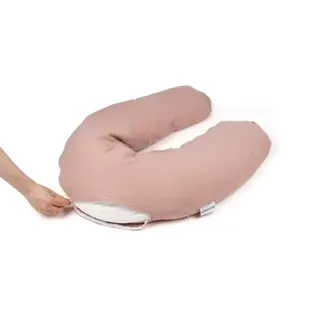 −9 %DoomooComfy Big nursing and maternity pillow, Tetra Pink – Doomoo619 DH
instead of 680 DHView product DoomooComfy Big nursing and maternity pillow, Tetra Almond – Doomoo680 DHView product
  −9 %DoomooBuddy nursing and pregnancy pillow, Tetra Jersey Green – Doomoo810 DH
instead of 890 DHView product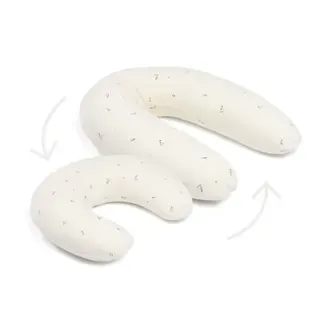 −9 %DoomooTwisty 2-in-1 maternity pillow, Sweety Cream, cream organic cotton cover – Doomoo901 DH
instead of 990 DHView product- The whole aisle · Pregnancy and nursing pillows20 products online, delivered anywhere in Morocco.Open the aisle
Products sold by La Maison du Bébé, publisher of this magazine. Prices as of 12 October 2026; please check the product page.
Practice contractions or the real thing?
The difference lies in regularity. Naître et grandir sums it up like this:
- Braxton Hicks contractions stay irregular, do not get stronger or closer together, and ease with rest or a drink;
- real contractions are regular, last at least 30 seconds, become more intense, longer and closer together, and are often felt in the lower belly and lower back.
Before 37 weeks, regular cramps or tightenings of the bump mean you should call the maternity unit immediately, the NHS insists. The INSPQ advises getting checked if contractions are regular or number more than seven a day, especially with heavier discharge. The tests and rest that may be offered are explained in our article on threatened preterm labour.
At term, the NHS advises calling the maternity unit when contractions come every 5 minutes or more often.
Pains that should never wait
Some lower abdominal pains signal a complication. The NHS describes several:
- Ectopic pregnancy, when the embryo implants outside the womb, most often in a fallopian tube. Symptoms usually appear between 4 and 12 weeks: tummy pain, often on one side, bleeding, pain at the tip of the shoulder, discomfort when peeing or opening your bowels. It is an emergency: everything is explained in our article on ectopic pregnancy.
- Miscarriage or threatened miscarriage, with cramps and bleeding before 24 weeks. See our article on bleeding during pregnancy.
- Placental abruption, in the second half of pregnancy: bleeding with pain that is constant, or that comes and goes like a contraction.
- Pre-eclampsia, after 20 weeks: pain higher up, under the ribs on the right, with headaches, vision problems or sudden swelling.
- Urinary tract infection, common in pregnancy: lower abdominal pain, sometimes burning when peeing, cloudy or discoloured urine. It is easy to treat, but should not be left to drag on.
What relieves harmless pain
When the cause has been identified and is not serious, a few simple steps are often enough:
- stop and lie down on your side for a while;
- drink a big glass of water and empty your bladder;
- have a warm bath or shower, not a hot one, which relaxes the belly;
- change position slowly, rolling onto your side;
- tackle constipation day to day.
No painkiller should be taken without advice: the dose is set by the doctor or pharmacist, and a medicine can mask an important sign. And if something feels different from usual, even if you cannot explain it, call: maternity teams would rather check for nothing than see a complication arrive too late.
Frequently asked questions
Is it normal to have period-like pain in early pregnancy?
Mild discomfort that feels like a period and eases with rest is common and usually nothing serious. However, cramps with bleeding before 24 weeks can signal a miscarriage, and one-sided pain with bleeding between 4 and 12 weeks can point to an ectopic pregnancy, according to the NHS. In those cases, get seen the same day.
Lower abdominal pain after sex in pregnancy: should I worry?
A few contractions or a slight pulling feeling after sex are common: Naître et grandir lists sex among the triggers of Braxton Hicks contractions. They settle with rest. Get checked if the pain persists, if the contractions become regular, or if there is any bleeding or leaking of fluid.
Can I take a painkiller for lower abdominal pain while pregnant?
Not before you know where the pain is coming from. A painkiller can mask an important sign, such as contractions or an infection. If the pain is mild and the cause is known, ask your doctor, midwife or pharmacist which product and which dose are suitable in pregnancy. Some common painkillers are not appropriate.
Why does my pubic bone hurt in late pregnancy?
In late pregnancy, the baby moves down and presses on the pelvis, while the ligaments loosen under the effect of hormones. Pain over the pubic bone that gets worse when walking, climbing stairs or turning over in bed suggests pelvic girdle pain. A physiotherapist trained in pregnancy care can help.
Sources
- Stomach pain in pregnancyNHS · United Kingdom
- Signs that labour has begunNHS · United Kingdom
- S'agit-il de vraies contractions ?Naître et grandir · Canada (Quebec)
- Signaux d'alarme pendant la grossesseMieux vivre avec notre enfant, INSPQ · Canada (Quebec)
- Changements physiques pendant la grossesseMieux vivre avec notre enfant, INSPQ · Canada (Quebec)
- Prise de poids, appétit et problèmes digestifs pendant la grossesseSanté publique France, Manger Bouger (published on Santé.fr) · France
- Pelvic pain in pregnancy (pelvic girdle pain)NHS · United Kingdom