









Article contents
Key points
- Parenting with kindness means setting limits: few rules, clear, explained and kept.
- Before age 2, you adapt the space, distract and redirect; consequences come around 2 to 3.
- Smacking, shouting and humiliation teach nothing lasting and damage the relationship.
- A good consequence is linked to the act, short, announced, and often lets the child put things right.
- Parents and grandparents do well to agree on a few shared rules, discussed away from the child.
Seven in the evening. Dinner is getting cold, and your 3-year-old daughter refuses to put down the tablet. You have heard of positive parenting, but at this very moment only one question counts: how do you get listened to without shouting or giving in?
The answer lies in two words that are often wrongly set against each other: affection and authority. Positive parenting, also called gentle parenting, does not mean letting everything go. It means setting clear limits and keeping them, with no hitting and no humiliation. Here is what paediatricians and psychologists say about it, and how to apply it at home, even when grandma disagrees.
Positive parenting: what are we really talking about?
Positive parenting combines a lot of warmth with a firm framework. The term covers varied movements, some more rigorous than others, but the foundation validated by research is simple.
Psychologists describe several parenting styles. The authoritarian parent imposes without explaining and punishes harshly: the child risks becoming fearful and lacking self-esteem. The permissive parent avoids limits for fear of conflict: too free, the child may feel lost and anxious. The so-called democratic style combines affection, clear rules and expectations suited to the child's age. That is the one studies link to better social skills and fewer behaviour problems, notes the Quebec site Naître et grandir.
Most parents mix these styles depending on the day. What counts is the overall tendency, not the disastrous evening.

What gentle parenting is not
It is not permissiveness. Saying no, frustrating, enforcing a rule: all of this is part of a parent's job. American paediatricians and Quebec child-development specialists agree: giving up violence does not mean giving up rules or consequences. A consequence remains educational when it makes the child put things right, gives responsibility and sets a limit.
It is not a perfection contest. You will shout, sometimes. What matters is knowing how to repair things afterwards.
Why give up smacks, shouting and humiliation?
Because they do not work, and they do harm. The World Health Organization estimates that around 1.2 billion children are subjected to corporal punishment at home each year. Its finding is clear: these punishments have no positive effect and even worsen behaviour problems over time. They are linked to more anxiety, depression and aggression, and to damaged family relationships.
The American Academy of Pediatrics (AAP) points the same way: parents should not hit or spank. Spanking feeds a vicious circle, because the child becomes more aggressive, and the risk of injury is higher before 18 months. Shouting and humiliating words are no better. The "hchouma" (shame on you) thrown out in front of everyone, the mocking nickname, the comparison with the well-behaved cousin: the AAP judges this kind of verbal discipline ineffective, and links it to depressive symptoms in adolescence.
In Morocco, the subject remains sensitive. According to a 2019 UNICEF report cited by Human Rights Watch, around 9 children in 10 aged 2 to 14 were subjected to violent discipline by their parents or caregivers at least once a month. In 2021, Human Rights Watch noted that no Moroccan law yet explicitly banned corporal punishment within the family. These figures do not say that parents love their children less, but that the smack remains a habit, often received from our own parents. You can leave it behind without disowning those who raised you.
How many rules, and how do you say them?
Few, clear, and always the same. Naître et grandir advises choosing no more than 4 to 6 family rules, non-negotiable: speaking softly, being gentle with others, tidying toys away, for example. The rest can be discussed.
How you word them matters as much as the rule itself:
| Age | What the child can follow | Example |
|---|---|---|
| Under 2 | One instruction at a time | "The pencil is for drawing." |
| 2 to 3 years | A two-step instruction | "Put the car away, then come to the table." |
| From 3 | Up to three steps | "Take off your shoes, wash your hands and come and sit down." |
Day to day:
- Get their attention before speaking: move close, get down to their level, wait until they look at you.
- Say what to do rather than what not to do: "We walk in the house" rather than "Don't run".
- Keep the "no" for what matters, safety first, and offer an alternative when you refuse.
- Offer limited choices: "The blue pyjamas or the red ones?" The child decides, within the limits you have set.
- Be consistent: the same rule whichever parent is present and whatever your mood.
- Expect to repeat yourself: a toddler forgets, especially during the phase of opposition described in our article on the 2-year-old.
Which tools for which age?
Cross-checked guidance from the AAP, Naître et grandir and the British Columbia guide:
| Age | What helps | What does not work yet |
|---|---|---|
| 6-12 months | Routines, a baby-proofed home, distraction, a comfort object | Consequences, explanations |
| 12-24 months | Supervision, simple choices, redirecting to another activity | Isolation, which can heighten separation anxiety |
| 2-3 years | Routines, choices, patience, calming down beside the adult, naming emotions | Long speeches |
| 3-6 years | Logical consequences, repair, small tasks, family rules | Threats you do not carry out |
Recommendations differ on consequences before age 2. The British Columbia guide considers very simple ones useful from 12 months; Naître et grandir advises waiting until 2 to 3 years, when the child makes sentences. In practice, before 2, the only sensible consequence is immediate and concrete: the soap bubbles stop when the bottle is knocked over.
At every age, time spent together remains the foundation. The AAP recommends a "special time" of 5 minutes of play a day, where the child chooses the activity and leads the game while you comment on what they do, without directing them. From age 3, board games add learning to take turns and to lose, and a book of emotions helps put words on what they feel. Our guide to toys by age helps you choose.
From the shop
Games to share a real moment
Positive attention is the first lever of gentle parenting. These simple games, to choose according to the age on the box, also teach waiting your turn, losing and naming emotions.
 −48 %NathanTake-anywhere emotions picture book – Nathan75 DH
instead of 145 DHView product −48 %CayroPole-Pole wooden skittles game – Cayro114 DH
instead of 220 DHView product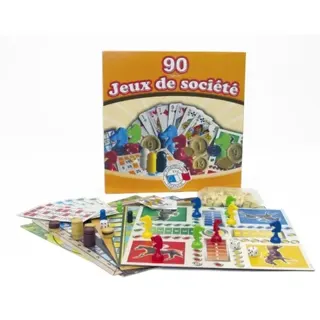 −48 %Ferriot Cric90-game compendium box – Ferriot Cric94 DH
instead of 180 DHView product −48 %EurekakidsFantastic Adventure board game – Eurekakids138 DH
instead of 265 DHView product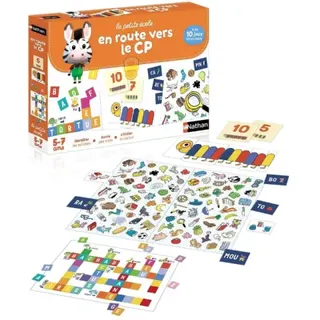 −48 %NathanEn route vers le CP (Ready for first grade) board game – Nathan140 DH
instead of 270 DHView product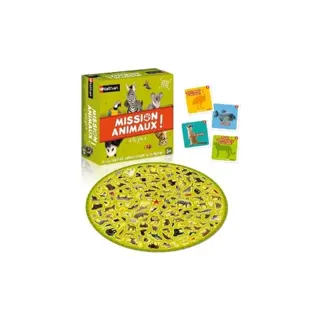 −48 %NathanMission Animaux board game – Nathan218 DH
instead of 420 DHView product- The whole aisle · Board games16 products online, delivered anywhere in Morocco.Open the aisle
Products sold by La Maison du Bébé, publisher of this magazine. Prices as of 12 October 2026; please check the product page.
Consequence, repair, time-out: punishing differently
A consequence follows from the act and helps the child understand or put things right. According to Naître et grandir, it is linked to the behaviour, realistic, short, applied without delay and announced in advance. A few examples:
- they throw their toys: they pick them up, and the toys stay put away for five minutes;
- they push their little sister: they fetch a comfort blanket to console her (the jealousy between siblings often explains this act);
- they refuse to switch off the tablet: the next screen time will be shorter (see our guidelines on screens);
- they tip over their plate on purpose: they help clean up.
Progression matters: reminder of the rule, warning, then consequence. And, the AAP reminds us, you never deprive a child of something they need, such as a meal.
Time-out divides experts more. The AAP accepts it as a last resort, announced, without anger, for about one minute per year of age. Naître et grandir reserves it for 3 to 6-year-olds, because a younger child may experience it as abandonment, and speaks rather of 2 to 5 minutes, in a place where the child is not frightened, with the adult nearby. All agree on the essentials: the pause is for calming down, never for humiliating, and it ends with making up. For the big storms, see our article on children's tantrums.
Grandparents, dad, nanny: how to stay on course together?
In Morocco, a child rarely grows up with just their parents. The grandmother who gives in to everything, the uncle who threatens, the nanny who leaves the television on: everyone has their method, often with a lot of love. The AAP recommends agreeing on basic rules with everyone who looks after the child, and Naître et grandir advises discussing disagreements away from them. In practice:
- Choose your battles. The few non-negotiable rules (safety, no hitting, bedtime) are the same everywhere. For the rest, accept some flexibility from the grandparents.
- Explain without lecturing. "Paediatricians say today that smacking makes children more aggressive" goes down better than "We don't do it like that any more".
- Do not undermine the other adult in front of the child. Pick the discussion up later.
And when you crack?
There will be evenings when you shout. When you lose your footing, the AAP advises making sure the child is safe, then taking a short break. Afterwards, you repair: you apologise, explain how you will do it next time, and keep your word. Your child learns that a mistake can be put right.
Tiredness wears patience thin, and sharing the load helps as much as any technique: see our article on the mental load of new mums. If you are afraid of hurting your child, or if their behaviour worries you, talk to your paediatrician or a psychologist. Asking for help is part of a parent's job.
Frequently asked questions
Is a small smack on the hand really so bad?
A single smack does not make you a bad parent, but it does not teach what you hope. The WHO defines corporal punishment as any punishment that uses force to cause pain, however light, and concludes it brings no benefit to behaviour. The American Academy of Pediatrics notes that it tends to make a child more aggressive. It is better to stop the act, move the object away and calmly repeat the rule.
Won't positive parenting raise spoilt children?
Not if it is properly understood. Psychologists distinguish the permissive style, where the adult avoids limits, from the so-called democratic style, both warm and firm. It is the second that is linked to better social skills and fewer behaviour problems. Positive parenting therefore means knowing how to say no, keeping the rules and accepting that the child will be frustrated.
Is the corner or time-out compatible with gentle parenting?
Opinions differ. The American Academy of Pediatrics accepts a short, announced time-out, about one minute per year of age, as a last resort. The Quebec site Naître et grandir advises against it before age 3, because a toddler may experience it as abandonment. In practice: before 3, stay close while they calm down; after that, a brief pause in a reassuring place, without humiliation, followed by making up.
At what age can you say no to a baby?
As soon as they get around, at about 9 to 11 months, a few safety rules have their place. The "no" is then kept for danger, said in a firm voice and followed by an action: you move baby or the object away, then offer something else. Long explanations are no use yet, repetition is. Real consequences come later, around 2 to 3 years.
I shouted at my child: how do I make it right?
It happens to every parent. The American Academy of Pediatrics advises apologising simply, explaining how you will act next time, then keeping your word. Your child sees how a mistake is put right. If you feel anger rising, first make sure the child is safe and give yourself a few minutes to breathe before going back to them.
Sources
- Corporal punishment of children and healthWorld Health Organization (WHO) · International
- What's the Best Way to Discipline My Child?American Academy of Pediatrics (HealthyChildren.org) · United States
- How to Shape & Manage Your Young Child's BehaviorAmerican Academy of Pediatrics (HealthyChildren.org) · United States
- Discipline : quand et comment définir des règlesNaître et grandir · Canada (Quebec)
- Quand et comment utiliser les conséquencesNaître et grandir · Canada (Quebec)
- Discipline : le retraitNaître et grandir · Canada (Quebec)
- Votre rôle parental envers votre enfant : la discipline positiveHealthLink BC, Government of British Columbia · Canada
- Corporal Punishment of Children: Human Rights Watch's Middle East and North Africa Index - MoroccoHuman Rights Watch (document republished by ecoi.net) · Morocco