








Article contents
Key points
- 400 µg of folic acid a day: this is the recommended dose for most women.
- Start as soon as you plan a baby, before conception.
- Continue until 12 weeks of pregnancy (12 weeks counted from your last period).
- A higher dose is taken only on prescription.
- Folate-rich foods complement the supplement, without replacing it.
Thinking of growing your family? Even before the pregnancy test, one simple step counts: taking folic acid. This B vitamin plays a part in closing the neural tube, the early form of your future baby's brain and spinal cord. And this stage happens in the very first weeks, often before you know you are pregnant.
Why it matters, when to start, how much, until when, which foods at our markets contain it, which supplement to choose: here are the answers from health authorities (WHO, HAS, NHS, CDC). They do not replace the advice of your doctor, your midwife or your pharmacist.
Why is folic acid important before and during pregnancy?
Folates, or vitamin B9, play a role in the development of the embryo's nervous system, particularly in the closure of the neural tube (Santé publique France). When this tube does not close properly, the child can be born with a serious malformation of the brain (anencephaly) or of the spinal cord (spina bifida), points out ANSES, the French food safety agency.
Timing explains everything. According to the US CDC, these defects occur in the first weeks of pregnancy, often before a woman knows she is pregnant. ANSES insists: adequate intake is needed from the very first day of pregnancy, whether it was planned or not.
Folate or folic acid: what is the difference?
- Folates are the natural form of vitamin B9, found in food.
- Folic acid is the form used in supplements and fortified foods (CDC).
- The recommended doses (400 µg a day) apply to folic acid taken as a supplement.

When should you start taking folic acid?
As early as possible, as soon as you plan a baby. Health authorities agree on the principle:
- WHO: as soon as you start trying to conceive.
- HAS (France): as soon as you wish to become pregnant, with a prescription at the pre-conception appointment.
- ACOG (United States): at least one month before conception.
- NHS (United Kingdom): if you did not take it before, start as soon as you find out you are pregnant.
Why so early? You never know exactly when conception will happen. Starting from the first attempts means you have adequate intake at the precise moment the neural tube forms, without waiting for a missed period.
In practice, the right moment is often when you stop your contraception. Take the opportunity to have a pre-pregnancy check-up with your doctor: vaccines, current treatments, blood test. If you track your cycle, our article on ovulation and fertile days will help you spot the right window.
From the shop
To track your cycle and confirm a pregnancy
Clearblue ovulation tests and pregnancy tests, to support you while you are trying.
 ClearblueClearblue Test d'ovulation Digital, 10 testsView product
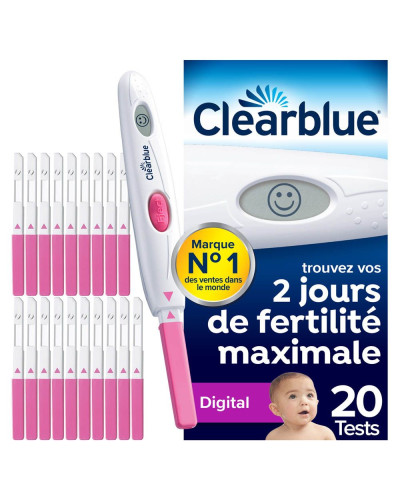 ClearblueClearblue Digital Ovulation Test (20 tests)View product
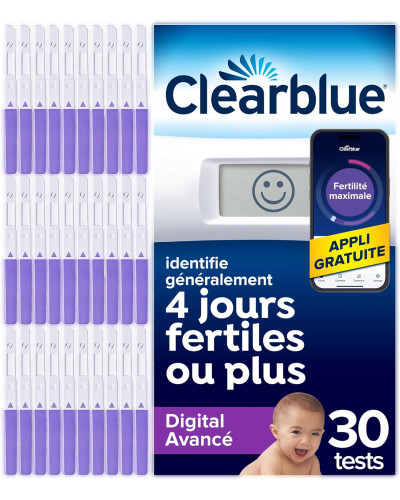 ClearblueClearblue Test d'ovulation Advanced Digital, 10 testsView product
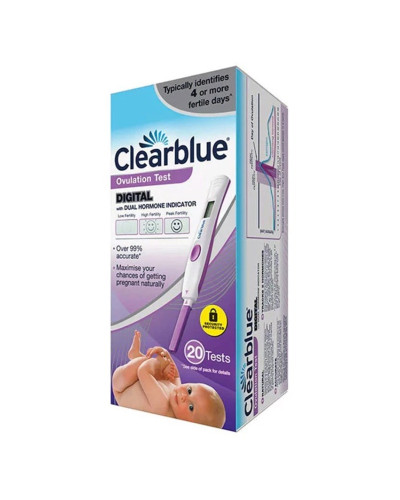 ClearblueClearblue Advanced Digital Ovulation Test Dual Hormone (20 tests)View product
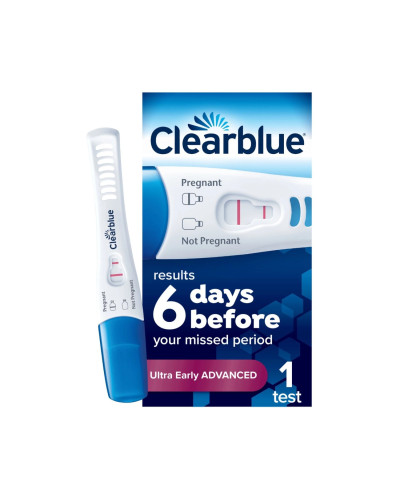 ClearblueClearblue Ultra Early Pregnancy Test Advanced (1 test)View product
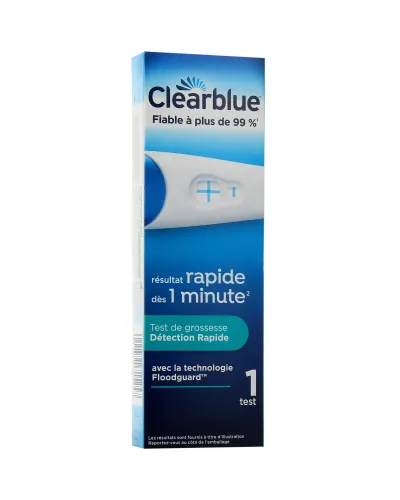 ClearblueClearblue Test de grossesse Rapid Detection, 3 testsView product
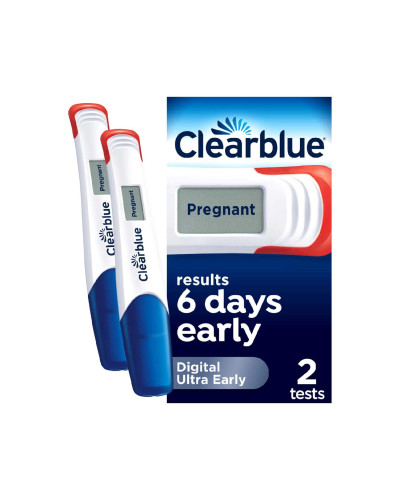 ClearblueClearblue Test de grossesse Digital Ultra Early, 1 testView product
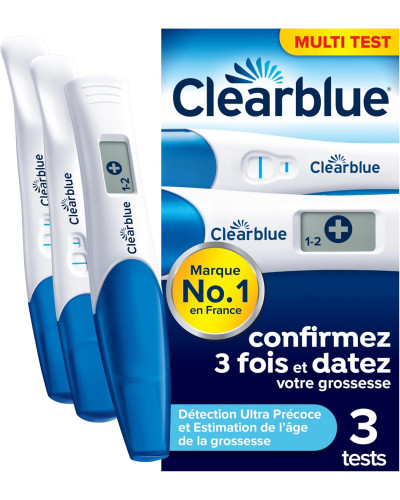 ClearblueClearblue Test de grossesse Triple-Check & Date, 3 testsView product
- The whole aisle · Everything to prepare for pregnancyDelivered anywhere in Morocco, free from 300 DH.Open the aisle
Products sold by La Maison du Bébé, publisher of this magazine. Please check price and availability on the product page.
How much folic acid should you take?
The recommended dose for the vast majority of women is 400 micrograms (µg) a day, or 0.4 mg. The same figure comes up everywhere:
| Organisation | Daily dose | Start | End |
|---|---|---|---|
| WHO | 400 µg | From the first attempts | 12 weeks of pregnancy |
| HAS (France) | 400 µg | As soon as you wish to become pregnant | 12 weeks of amenorrhoea (from the last period) |
| NHS (United Kingdom) | 400 µg | Before pregnancy | 12 weeks of pregnancy |
| CDC (United States) | 400 µg | Every woman who could become pregnant | Every day, for as long as that is the case |
When is a higher dose needed?
Some women have a higher risk of a neural tube defect. Their doctor then prescribes a much higher dose, to be started before conception. According to the NHS, this applies if:
- you or the baby's biological father have a neural tube defect, or there is a case in your family;
- a previous pregnancy was affected by a neural tube defect;
- you have diabetes;
- you take medicine for epilepsy;
- you take antiretroviral medicine for HIV.
The HAS also mentions a history of spina bifida, diabetes and anti-epileptic treatments. This dose is taken only on prescription. If you are in one of these situations, talk to your doctor as soon as you plan a pregnancy, without stopping or changing your treatments yourself.
Until when should you take folic acid?
Supplementation continues until 12 weeks of pregnancy according to the WHO and the NHS, that is, the 12th week of amenorrhoea (counted from the first day of your last period) according to the HAS. In practice, this covers roughly the first three months of pregnancy. Note the start date in your pregnancy record: at the first-trimester appointment, your doctor will tell you whether to stop or continue, and in what form.
And after that? Advice differs from country to country. The WHO recommends a daily supplement combining iron and folic acid for all pregnant women, to prevent anaemia in the mother, infection after the birth, low birth weight and premature birth. The British NHS, on the other hand, only advises iron if your blood iron level becomes low. In Morocco, follow your doctor's advice, as they decide based on your test results: see our article on anaemia in pregnancy.
If pregnancy is taking a while, carry on every day for as long as you are trying: the CDC recommends 400 µg a day for all women who could become pregnant.
Which foods are rich in folate in Morocco?
Good news: our cooking is rich in folate. ANSES puts pulses and leafy green vegetables at the top of the list; Santé publique France adds, among others, citrus fruit, bananas, melon, avocado, nuts and eggs.
| Food group | Examples at the market | Everyday ideas |
|---|---|---|
| Pulses | Lentils, chickpeas, white beans | Harira, lentils with vegetables, loubia |
| Green vegetables | Spinach, lettuce, broccoli, peas, green beans, courgettes | Pea tagine, a well-washed green salad |
| Fruit | Oranges, clementines, melon, banana, avocado | An orange as an afternoon snack, juice squeezed at home |
| Nuts | Almonds, walnuts, hazelnuts, pistachios | A small handful as a snack |
| Eggs and wholegrains | Eggs, wholemeal bread, barley bread | A well-cooked omelette for breakfast |
Two precautions. Liver is rich in folate, but not advised during pregnancy because it provides too much vitamin A (NHS). And carefully wash raw vegetables, salads and fresh herbs such as parsley or coriander. More ideas in our article on eating well during pregnancy.
A folate-rich day, Moroccan style
- Breakfast: barley bread, a well-cooked egg, an orange.
- Lunch: lentils with vegetables or pea tagine, green salad.
- Afternoon snack: a few almonds and a banana.
- Dinner: harira with chickpeas and lentils, sautéed spinach.
These foods are valuable, but health authorities recommend the supplement in addition to a varied diet: one does not replace the other during this key period.
Which folic acid supplement should you choose?
There are two options, to choose with your doctor or pharmacist:
- A folic acid-only tablet, often prescribed when you are planning a pregnancy.
- A pregnancy multivitamin that provides 400 µg of folic acid, along with other vitamins and minerals.
Our pregnancy and breastfeeding supplements aisle offers the Pregnacare range. According to the manufacturer, Pregnacare Conception is aimed at the time when you are trying for a baby, and Pregnacare Original at pregnancy. According to the formulations published by the manufacturer (vitabiotics.com), each provides 400 µg of folic acid per tablet, with beta-carotene and no retinol. They also contain iron, iodine and vitamin D, in amounts that differ from one product to another: check the label and show the box to your doctor or pharmacist before you start, especially if you have already been prescribed another treatment.
Before buying, check:
- the amount of folic acid: 400 µg a day, unless prescribed otherwise;
- that it contains no retinol, which the NHS advises against during pregnancy;
- that you are not combining two products that provide the same vitamins;
- the leaflet: when to take it and how many tablets a day.
For vitamin D, iron or iodine, read our full guide: which vitamins to take during pregnancy.
From the shop
Supplements from conception to breastfeeding
The Pregnacare range, to take after advice from your doctor or pharmacist.
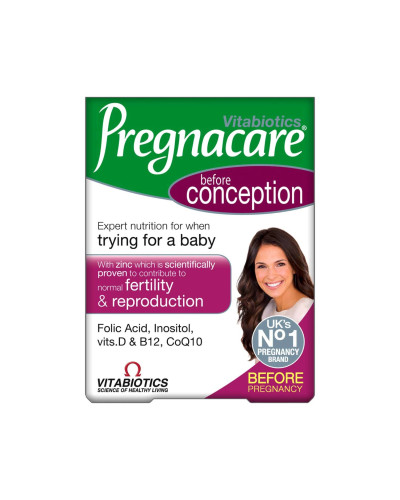 VitabioticsVitabiotics Pregnacare Conception 30 comprimésView product
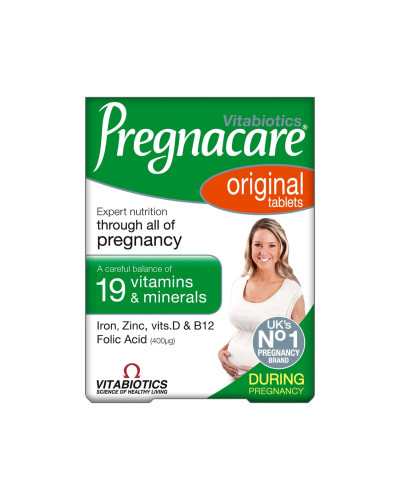 VitabioticsVitabiotics Pregnacare Original vitamines grossesse 30 comprimésView product
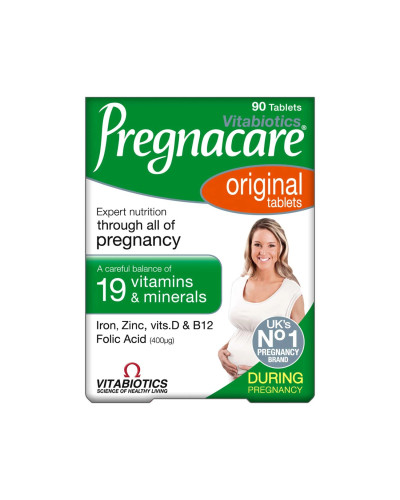 VitabioticsVitabiotics Pregnacare Original (90 tablets)View product
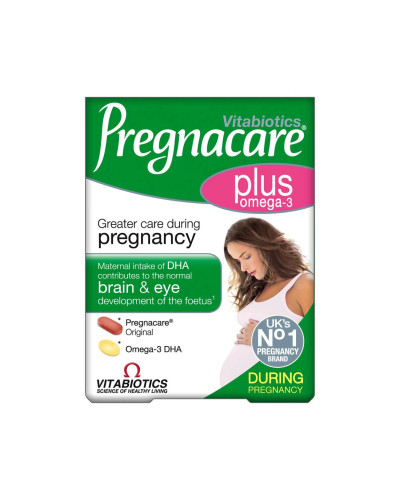 VitabioticsVitabiotics Pregnacare Plus Oméga-3 DHA 28 comprimés + 28 capsulesView product
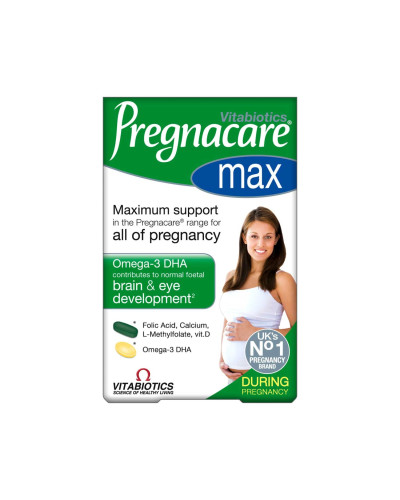 VitabioticsVitabiotics Pregnacare Max 56 comprimés + 28 capsules oméga-3View product
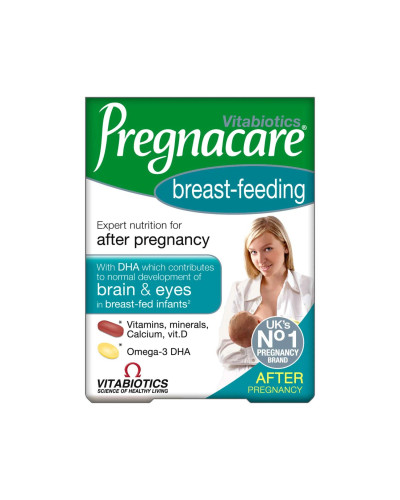 VitabioticsVitabiotics Pregnacare Breast-feeding allaitement 56 comprimés + 28 capsulesView product
- The whole aisle · All pregnancy and breastfeeding supplementsDelivered anywhere in Morocco, free from 300 DH.Open the aisle
Products sold by La Maison du Bébé, publisher of this magazine. Please check price and availability on the product page.
Frequently asked questions
Can I take folic acid if I'm not pregnant?
Yes, and it is even recommended if a pregnancy is possible. The US CDC advises 400 µg of folic acid a day for all women who could become pregnant, because the neural tube closes in the first weeks, often before a positive test. If you are planning a baby, ask your doctor for a prescription or your pharmacist for advice.
I found out I'm pregnant and haven't been taking folic acid: what should I do?
Start today, as the NHS advises, and continue until 12 weeks of pregnancy. There is no point doubling the dose to "catch up". Talk to your doctor at your first appointment: they will check whether you need a particular dose and arrange the usual pregnancy follow-up, scans included, to check that your baby is developing well.
Does folic acid help you get pregnant?
That is not why it is recommended. Health authorities advise it to protect the future baby from conception, not to boost fertility. To give yourself the best chance, focus on a varied diet, identify your fertile days and talk to your doctor if pregnancy is slow to come, even sooner if you are over 35.
Should I keep taking folic acid after 3 months of pregnancy?
The neural tube recommendation stops at 12 weeks, but your doctor may continue it. The WHO recommends a daily iron and folic acid supplement for all pregnant women; the NHS only advises iron if your level is low. In Morocco, follow your doctor's advice: depending on your blood test and your diet, they will decide to continue, stop or switch to a multivitamin suited to pregnancy.
What is the difference between folic acid and vitamin B9?
It is the same vitamin in two forms. Folates are the vitamin B9 naturally present in food: lentils, chickpeas, spinach, oranges. Folic acid is the form used in supplements and fortified foods. The 400 µg a day recommended by the WHO, the HAS and the NHS refers to folic acid taken as a supplement.
Pregnacare Conception or Pregnacare Original: which one should I choose?
According to the manufacturer, Pregnacare Conception is designed for the time when you are trying for a baby, and Pregnacare Original for pregnancy. Both provide 400 µg of folic acid per tablet, with other vitamins and minerals in different amounts: read the label. The right choice depends on your situation and your other treatments: ask your doctor or pharmacist for advice.
Sources
- Periconceptional folic acid supplementation to prevent neural tube defectsWHO
- Planning a pregnancy: information, prevention messages and tests to offer (evidence report, 2009) (in French)HAS (Haute Autorité de Santé)
- Vitamins, supplements and nutrition in pregnancyNHS
- Vitamin B9, the right reflex to prepare for pregnancy (in French)Santé publique France (Santé.fr)
- About Folic AcidCDC
- Vitamin B9ANSES (French Agency for Food, Environmental and Occupational Health & Safety)
- Dietary Supplements and Life Stages: Pregnancy (ACOG recommendations)NIH Office of Dietary Supplements
- Daily iron and folic acid supplementation during pregnancyWHO