










Article contents
Key points
- Fear of childbirth is common and has nothing to do with a lack of courage.
- Understanding how labour unfolds and what pain relief exists often reduces anxiety.
- A trusted person by your side during labour is recommended by the WHO.
- Tokophobia, an intense and overwhelming fear, can be treated, notably with cognitive therapy.
- Tell your gynaecologist about your fears early: they cannot guess what you keep quiet.
You are seven months pregnant, and at night you think about it. The pain, the hours of waiting, the moment when "it won't go well". The stories of an aunt, a neighbour, a cousin who "nearly didn't make it" go round and round. Fear of childbirth is one of the most widely shared worries of pregnancy. It has nothing to do with a lack of courage.
This fear can be a passing nuisance, or an anxiety that takes over everything. Either way, it deserves to be heard. Here is where it comes from, what really helps, how to recognise a fear that goes beyond the ordinary, and how to talk to your gynaecologist about it.
What exactly are we afraid of?
Rarely of just one thing. The worries that come back most often:
- pain, and fear of not coping with it;
- the unknown: not knowing when, for how long or how;
- loss of control over your body, or in front of the team;
- complications for yourself or for baby;
- medical procedures: episiotomy, instruments, needles;
- caesarean birth, whether you dread it or want it;
- being alone, or poorly supported, in the birth room.
In Morocco, family and friends often weigh heavily. In an opinion piece published by TelQuel in 2026, an obstetrician-gynaecologist observes that fear of vaginal birth, fed by relatives' stories, makes a caesarean seem more reassuring to many women. Those stories are real for the women who lived them. They do not necessarily tell you how yours will go.
What helps most: understanding what will happen
The unknown frightens more than what we know. The NHS stresses that antenatal classes and information about labour help you feel more in control and less frightened. Knowing what contractions feel like, how dilation progresses and when to head for the maternity unit removes a good part of the anxiety.
To begin, read our article on the stages of vaginal birth. Then, if you can, follow a preparation course with a midwife: breathing, positions, the companion's role. The methods and how to find a class in Morocco are in our guide to antenatal preparation.
Fear of pain: knowing your options
Labour pain is real, but it is not something with no remedy. The NHS advises asking your midwife or doctor, before the big day, to explain what is available where you will give birth.
First there is the epidural, which often relieves pain completely. How it works, its effects and the common myths are detailed in our article on the epidural. Ask in advance whether it is available at any hour in your maternity unit. There is also everything that does not involve medication: breathing slowly, moving, changing position, swaying, a massage, the warm water of a shower. For those who want to do without, our article on giving birth without an epidural presents these methods.
Not being alone: the companion and the birth plan
The World Health Organization recommends that every woman can have a person of her choice at her side throughout labour and birth. It also insists on the freedom to move, to choose a position and to take part in decisions. This feeling of staying in charge is one of the best antidotes to fear.
Your husband, your mother, a sister: choose someone who calms you, not someone who stresses you. Ask the maternity unit who may come into the birth room, and when. Writing down your wishes and fears on one page helps the team understand you: our guide to writing a simple birth plan gives you a template.
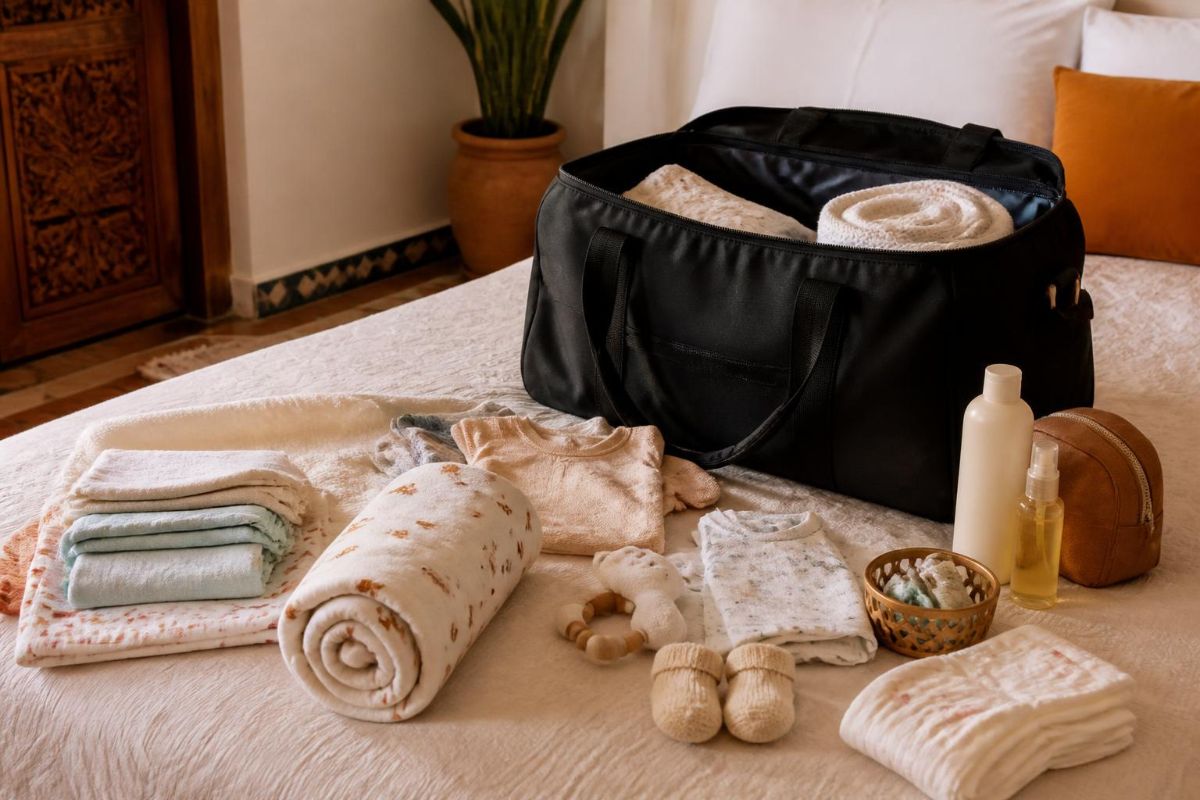
Preparing practical things also soothes some women: a bag packed, the route checked, papers gathered. Our maternity bag checklist saves you from thinking about it at the last minute.
When fear becomes tokophobia
When the fear never leaves you, it has a name: tokophobia, or phobia of childbirth. It differs from ordinary worry by its intensity. It can prevent you sleeping, from enjoying your pregnancy, push you to demand a caesarean at all costs, or even to put off having a child.
Doctors distinguish:
- primary tokophobia, in women who have never given birth, sometimes linked to old traumas such as sexual violence;
- secondary tokophobia, which follows a first birth experienced as traumatic.
According to a meta-analysis published in 2017 and cited by the Allodocteurs site, it affects around 14% of pregnant women, with wide variations between studies and countries. It increases the risk of insomnia, anxiety and depression during pregnancy. So you are neither alone nor "too sensitive".
How to get help
Tokophobia can be treated. Cognitive behavioural therapy (CBT) is the reference treatment for phobias, and a 2021 meta-analysis cited by Allodocteurs estimates that at least five sessions are needed to benefit. Support groups also help some women, as does clear, repeated information about how birth unfolds.
In the United Kingdom, NICE guidance provides that when a woman asks for a caesarean because of intense fear, she should be offered support from a perinatal mental health professional, who can even visit the maternity unit with her before the birth. If, after a full discussion, she maintains her request, NICE recommends supporting her choice. The details of a planned caesarean and its recovery are worth knowing before you decide.
In Morocco, start with your gynaecologist or midwife. Say it simply: "I am very afraid of giving birth, and it stops me living my pregnancy." They can refer you to a psychologist or psychiatrist. If you are not yet happy with your care, our article on choosing your gynaecologist will help you find a more attentive listener.
Frequently asked questions
Can fear slow down labour?
Strong anxiety can make labour harder to live through. According to the summary published by Allodocteurs, with tokophobia labour may be longer or need instruments. That is a reason to take fear seriously during pregnancy, not to feel guilty. On the day, the team is used to supporting anxious women: simply say you are afraid, and they will adapt their explanations and support.
Can I ask for a caesarean because I am afraid of giving birth?
You can raise the question, and it deserves a proper discussion. In the United Kingdom, NICE guidance first provides for offering support from a perinatal mental health professional, then, after full information, backing the woman's choice if she maintains her request. A caesarean remains an operation, with a longer recovery: talk to your gynaecologist early.
I had a traumatic first birth: how do I avoid living it again?
Start by talking about it, ideally before the new pregnancy or as soon as it begins. Ask to go through your file with your gynaecologist to understand what happened. The fear that follows a difficult birth has a name, secondary tokophobia, and it can be worked on with a psychologist. A precise birth plan on what hurt you also helps the team do things differently.
Does antenatal preparation really help against fear?
Yes, it helps many women. The NHS stresses that classes and information about labour help you feel more in control and less frightened. Breathing, positions, the companion's role, a visit to the maternity unit: knowing what to do with your body makes the unknown less threatening. It does not always remove pain, but it often changes how you experience it.
Sources
- Qu'est-ce que la tocophobie, cette peur de l'accouchement ? (updated 18 December 2024)Allodocteurs (France Télévisions), Dr Charlotte Tourmente · France
- Caesarean birth (NG192), recommendations 1.2.28 to 1.2.31National Institute for Health and Care Excellence (NICE) · United Kingdom
- Pain relief in labourNHS · United Kingdom
- Making childbirth a positive experience (15 February 2018)World Health Organization (WHO) · International
- [Tribune] Pourquoi pratique-t-on autant de césariennes au Maroc ? (13 August 2026)TelQuel (opinion piece by an obstetrician-gynaecologist) · Morocco