





Article contents
Key points
- The 7th month runs from 28 weeks and 1 day to 32 weeks and 2 days.
- Baby is fully formed and will gain about 1 kg of fat in the four weeks after week 32.
- A bump that tightens painlessly is common; regular contractions before 37 weeks mean seeing a doctor.
- Birth preparation classes often start this month.
- Go to sleep on your side and rest during the day.
Two flights of stairs leave you out of breath, your ankles swell as soon as the chergui (the hot, dry wind from the desert) blows, and baby kicks hard enough to make your T-shirt move. At 7 months pregnant, you are entering the third trimester. The countdown has begun, even though the birth is still two months away.
This month, the watchword is twofold: slow down and get ready. Here are the landmarks for baby, for you and for getting organised.
How many weeks is 7 months pregnant?
The 7th month runs from 28 weeks and 1 day to 32 weeks and 2 days, which is roughly 26 to 30 weeks after conception. The third trimester starts at 28 weeks and lasts until the birth.
Weeks of pregnancy are counted from the first day of your last period (Moroccan and French doctors write "SA"). To find your due date and the month-by-month equivalents, see our article on working out your weeks and due date.

What is happening to baby in the 7th month?
Baby is "perfectly formed but needs to put on weight", as the UK's NHS sums it up. According to its benchmarks:
- at 28 weeks, baby measures about 37.6 cm from head to heel; their heart beats around 140 times a minute;
- at 32 weeks, they reach about 42.4 cm. Over the next four weeks, they will gain nearly 1 kg of fat, which will help them stay warm after birth;
- their position: most babies are head down by around week 32, but nothing is set in stone.
Their movements remain just as frequent right up to the birth, even as space runs out: the NHS is firm on this point. A baby who moves less is never "tired because there is no room". The week-by-week milestones are in pregnancy week by week.
Symptoms at 7 months pregnant
- Tiredness comes back, with the weight of your bump. The NHS advises resting during the day.
- Your back aches, joints and ligaments loosen, and you start to waddle.
- Your ankles, feet and sometimes face swell, especially in hot weather.
- Heartburn, constipation, piles: baby is pressing on everything.
- Your bump tightens now and then: these are practice contractions, irregular and painless.
- Nights are short, between trips to the toilet and kicks.
From now on, go to sleep on your side, left or right, with a pillow between your knees. For positions and choosing a pillow, see sleeping well while pregnant.
Check-ups and appointments in the 7th month
Appointments become more frequent. In France, this is the 5th antenatal examination. In the United Kingdom, there is an appointment at 28 weeks (a blood test for iron, a preventive injection if you are rhesus negative) and another at 31 weeks for a first baby, devoted to preparing for the birth and the signs of labour. The WHO plans a contact at around 30 weeks.
The third scan, which checks baby's growth, position and where the placenta lies, takes place at around 32 weeks in the French schedule, straddling the 7th and 8th months. Ask your doctor whether it is planned in your care.
As for vaccines, the NHS advises having the whooping cough vaccine before 33 weeks if you have not already, and offers a vaccine against RSV, the virus behind bronchiolitis, at around 28 weeks. Check their availability in Morocco with your gynaecologist: our article on vaccines during pregnancy sets out the facts.
Preparing for the birth without wearing yourself out
In France, birth preparation classes often start in the 7th month. In Morocco, what is available varies (independent midwife, clinic, group classes): look into it now, there is just enough time. Our article on preparing for childbirth explains the methods and the birth plan.
On the work front, if you are employed in the private sector, your maternity leave in principle starts 7 weeks before your due date, so during the 8th month (Labour Code, article 152, the rule in force in October 2026). Confirm the due date with your doctor, then let your employer know in writing. In the meantime, avoid carrying heavy loads and ask for breaks.
In many Moroccan families, the 7th month is also the time of the khamoussa, a women-only celebration around the mother-to-be. If you are having one, keep it short and seated: our ideas are in baby showers in Morocco.
From the shop
Resting and starting the hospital bag
In the third trimester, two items really come into their own: a pillow for sleeping on your side and a maternity bag you can fill without rushing. Several price points.
 −9 %DoomooMaxxy XXL pregnancy pillow, Mini Leaves Green, small green leaf print – Doomoo901 DH
instead of 990 DHView product −35 %DoomooSofty nursing pillow, Flower Yellow – Doomoo403 DH
instead of 620 DHView product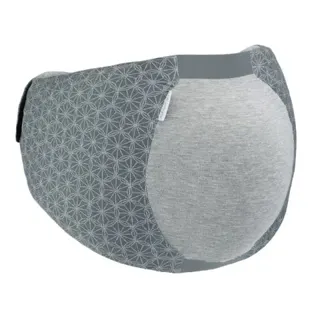 −22 %BabymoovDream Belt sleep belt, Smokey – Babymoov491 DH
instead of 630 DHView product −48 %Pasito a PasitoElodie maternity bag, blue – Pasito a Pasito676 DH
instead of 1 300 DHView product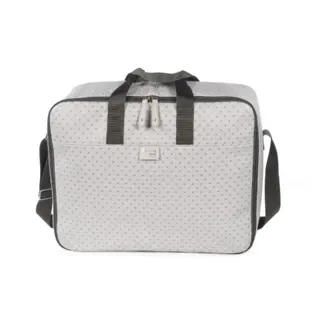 −41 %Walking MumArchie maternity bag – Walking Mum755 DH
instead of 1 290 DHView product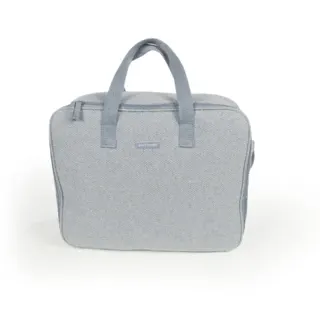 −48 %Pasito a PasitoBohemian maternity bag, blue – Pasito a Pasito780 DH
instead of 1 500 DHView product- The whole aisle · Pregnancy and nursing pillows20 products online, delivered anywhere in Morocco.Open the aisle
Products sold by La Maison du Bébé, publisher of this magazine. Prices as of 12 October 2026; please check the product page.
Frequently asked questions
Should baby already be head down at 7 months pregnant?
Not necessarily. According to the UK's NHS, most babies are head down by around week 32, but if yours is still breech, there is time to turn. The position is checked towards the end of pregnancy: if baby is still not head down at around 36 weeks, your doctor will talk to you about the options, including a manoeuvre to help them turn.
Should I eat more in the 7th month of pregnancy?
A little. The NHS estimates that in the third trimester your needs rise by about 200 calories a day, the equivalent of a snack: a yoghurt and a handful of almonds, or a slice of wholemeal bread with cheese. There is no need to eat for two. If you have gestational diabetes, follow the advice of your dietitian or doctor instead.
My bump goes hard several times a day: is that normal?
Often, yes: these are practice contractions, known as Braxton Hicks, which are irregular and painless. They settle with rest. What should prompt a visit before 37 weeks is contractions that become regular (roughly every 10 minutes), painful, or that come with bleeding, leaking fluid or fever, French Health Insurance points out.
Can we hold a khamoussa or baby shower in the 7th month?
Yes. It is even the traditional time in several regions of Morocco, and a good compromise: the mother-to-be is still well enough to enjoy it. Plan a short party, with comfortable seats, plenty of water and a pregnancy-friendly buffet. Our ideas for organising it are in our article on baby showers in Morocco.
Sources
- Week 28 (Your pregnancy week by week)NHS, Best Start in Life · United Kingdom
- Week 32 (Your pregnancy week by week)NHS, Best Start in Life · United Kingdom
- Week 36 (Your pregnancy week by week)NHS, Best Start in Life · United Kingdom
- Your antenatal appointmentsNHS · United Kingdom
- Guide maternité : l'arrivée de mon enfant (2023)MGEN, French Health Insurance follow-up schedule · France
- Vous attendez un bébé (guide maternité, édition 03/19)French Health Insurance (Assurance maladie), document published by Saint-Étienne University Hospital · France
- New guidelines on antenatal care for a positive pregnancy experience (7 November 2016)World Health Organization (WHO) · International
- Congé de maternité au Maroc : 98 jours, CNSS et droits (updated March 2026)ClicPaie · Morocco