





Article contents
Key points
- The 8th month runs from 32 weeks and 3 days to 36 weeks and 5 days.
- At 36 weeks, baby's lungs are probably ready to breathe without help.
- Maternity leave in Morocco: 14 weeks, in principle 7 of them before the birth.
- Anaesthetist visit, baby's position, placenta: this month's appointments.
- Hospital bag packed and maternity unit numbers to hand before 37 weeks.
The bag sits half-packed in a corner of the bedroom, the office is wishing you a happy maternity leave, and every time the phone rings, someone asks "so, when's it due?". At 8 months pregnant, the birth is getting close for real. Baby, meanwhile, is filling out.
This month, everything revolves around three things: the final check-ups, maternity leave and the hospital bag. Here are the landmarks to face the last few weeks calmly.
How many weeks is 8 months pregnant?
The 8th month runs from 32 weeks and 3 days to 36 weeks and 5 days, which is 30 to 34 and a half weeks after conception. It ends just before 37 weeks, the threshold from which a baby is considered born at full term.
Weeks of pregnancy are counted from the first day of your last period (written "SA" by Moroccan and French doctors). If your doctor has given you a due date, that is the one used to plan your leave: our article on calculating your due date explains why it can vary by a week.

What is happening to baby in the 8th month?
According to the UK's NHS:
- between 32 and 36 weeks, baby gains nearly 1 kg of fat, which will help them stay warm after birth;
- at 34 weeks, baby measures about 45 cm from head to heel and lies curled up, legs folded against the chest;
- at 36 weeks, they reach about 47.4 cm; their lungs are probably mature enough to breathe without help, and they can suck and digest breast milk.
Many babies drop into the pelvis during this month: the head is said to "engage". That does not mean labour is imminent; there may still be weeks to go. Despite the lack of space, you should keep feeling baby move as usual.
Symptoms at 8 months pregnant
- Breathing sometimes gets easier, and heartburn eases, when baby drops and frees up room higher up.
- In exchange, your bladder is squashed: frequent trips to the toilet, small leaks when you laugh or cough.
- Walking gets harder, your pelvis and back ache.
- Your bump often tightens, painlessly: practice contractions.
- Your breasts may leak drops of colostrum, a yellowish fluid.
- Weight gain speeds up: the NHS puts it at about 450 g a week between weeks 32 and 36.
At night, keep going to sleep on your side. For everything else, our solutions are in the article on common pregnancy complaints.
The final check-ups in the 8th month
In France, the 8th month brings three appointments: the 6th antenatal examination, the third scan (baby's position, where the placenta lies) and the anaesthetist's consultation, when the epidural is discussed. The WHO plans contacts at around 34 and 36 weeks. In the United Kingdom, the midwife checks baby's position at 36 weeks by feeling your tummy.
In Morocco, ask your gynaecologist:
- whether an anaesthetist's consultation is planned before your due date, and where it takes place;
- whether a vaginal swab for group B strep is done; the NHS points out that most newborn infections caused by this bacterium can be prevented;
- which maternity unit will take you, and which entrance to use at night.
Our article on the epidural helps you prepare for the anaesthetist's visit, and the one on choosing a maternity unit in Morocco lists the questions to ask the team.
Maternity leave in Morocco
If you are employed in the private sector, your maternity leave lasts 14 weeks (98 days), in principle 7 before and 7 after the birth (Labour Code, article 152). It therefore starts at around 33 or 34 weeks, depending on the due date set. During your leave, the CNSS (Morocco's national social security fund) pays 100% of your average salary, up to 6,000 dirhams a month, provided you have contributed for at least 54 days in the previous 10 months. These rules were in force in October 2026; check them with your CNSS office. The paperwork and steps are detailed in our article on maternity leave and CNSS benefit.
The hospital bag: time to close it
The NHS lists the bag among the things to do at 36 weeks, with one simple tip: write down the maternity unit's number and key contacts somewhere easy to grab. Pack these first:
- paperwork: pregnancy records, test results, scan reports, ID, health insurance card;
- for you: nightdress or loose clothing, maternity pads, comfortable knickers, toiletries;
- for baby: bodysuits, sleepsuits, a hat, socks, a blanket and the going-home outfit.
From the shop
The hospital bag and baby's first outfit
A bag with compartments so you are not hunting for anything on the big day, and a soft sleepsuit for going home: a selection at a range of prices, to adapt to the season.
 −48 %Pasito a PasitoElodie maternity bag, blue – Pasito a Pasito676 DH
instead of 1 300 DHView product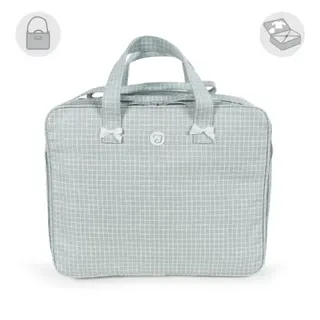 −48 %Pasito a PasitoMiel maternity bag, grey – Pasito a Pasito728 DH
instead of 1 400 DHView product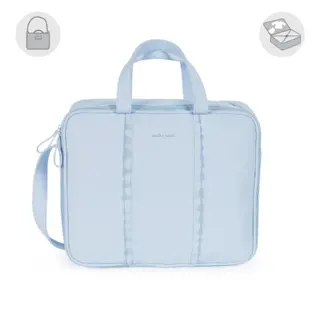 −48 %Pasito a PasitoNido Volante maternity bag, blue – Pasito a Pasito780 DH
instead of 1 500 DHView product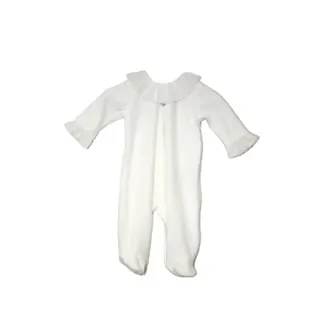 −74 %Pureté du bébéEssentials velvet sleepsuit, girl, 1 month, beige, model 216 – Pureté du bébé164 DH
instead of 630 DHView product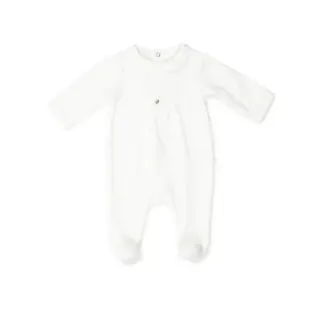 −74 %Pureté du bébéEssentials velvet sleepsuit, girl, 1 month, white – Pureté du bébé203 DH
instead of 780 DHView product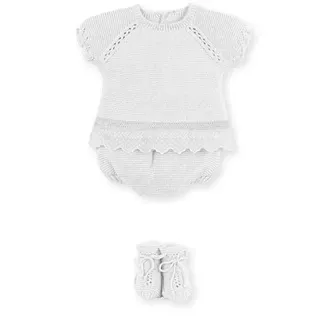 Mac IlusionTenderness 3-piece christening outfit, white, size 3 months – Mac Ilusion500 DHView product
 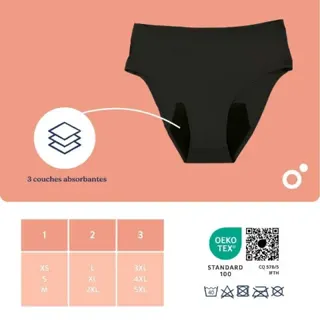 −21 %DoomooFlowly postpartum and period underwear, Black, L/XL/2XL – Doomoo355 DH
instead of 450 DHView product- The whole aisle · Maternity bags12 products online, delivered anywhere in Morocco.Open the aisle
Products sold by La Maison du Bébé, publisher of this magazine. Prices as of 12 October 2026; please check the product page.
A maternity bag with compartments lets you keep your things separate from baby's and find everything with one hand. Before the month is out, also reread the signs that labour is starting.
Frequently asked questions
Is baby ready to be born at 8 months pregnant?
Almost. The UK's NHS says that at 36 weeks, baby's lungs are probably mature enough to breathe without help, and that they can suck and digest breast milk. But a baby born before 37 weeks is still premature, and every week spent in the womb helps them build fat and strength. Regular contractions before 37 weeks are therefore a reason to go to the maternity unit.
When does maternity leave start in Morocco?
In the private sector, leave lasts 14 weeks, in principle 7 before and 7 after the birth (Labour Code, article 152, in force in October 2026). It therefore starts at around 33 or 34 weeks, depending on whether your doctor sets your due date at 40 or 41 weeks. If baby arrives early, the antenatal weeks not taken are added after the birth, ClicPaie explains.
I leak a little urine when I laugh or cough: is that normal?
Yes, it is common late in pregnancy. Baby's weight presses on the bladder and the pelvic floor muscles relax, the NHS explains. Squeeze them several times a day, as if holding in a wee, and wear a thin pad. If fluid trickles out continuously and you cannot hold it back, it may be your waters breaking: get checked.
What if baby is still breech in the 8th month?
Nothing for now: many babies turn on their own up to 36 weeks. If not, the NHS says you may be offered an external cephalic version: the doctor presses gently on your tummy to help baby turn. It works about half the time. The other options, including a caesarean, are explained in our article on breech babies.
Sources
- Week 32 (Your pregnancy week by week)NHS, Best Start in Life · United Kingdom
- Week 34 (Your pregnancy week by week)NHS, Best Start in Life · United Kingdom
- Week 36 (Your pregnancy week by week)NHS, Best Start in Life · United Kingdom
- Week 37 (Your pregnancy week by week)NHS, Best Start in Life · United Kingdom
- Week 39 (Your pregnancy week by week)NHS, Best Start in Life · United Kingdom
- Guide maternité : l'arrivée de mon enfant (2023)MGEN, French Health Insurance follow-up schedule · France
- New guidelines on antenatal care for a positive pregnancy experience (7 November 2016)World Health Organization (WHO) · International
- Congé de maternité au Maroc : 98 jours, CNSS et droits (updated March 2026)ClicPaie · Morocco