




Article contents
Key points
- Every name in this selection was cross-checked in at least two references.
- Moussa (Moses) is the prophet named most often in the Quran: 136 times according to counts of the text.
- In Morocco, titles such as Moulay or Sidi cannot be registered with the first name.
- A compound first name may combine no more than two names (Moroccan law 36-21).
- Rami, Fares, Nour and Adam are easy to pronounce in most languages.
Mohamed, Adam, Ibrahim: when it comes to Arabic boy names, some choices seem obvious. Then comes the moment you sit down together with a shortlist, and the questions start. What exactly does this name mean? How is it written in Arabic? Will it be easy to carry if part of the family lives in France, Spain, the UK or Canada?
This selection answers those three questions for 46 names. We only kept names whose Arabic spelling and meaning match in at least two references: etymological dictionaries of first names, lexicons and counts of the Quranic text. Names whose meaning varies too much from one source to another were left out.
The tables are grouped by family, from the names of prophets to short names that travel well. Expecting a girl? See our selection of Arabic girl names and their meanings.
Names of prophets: classics that have crossed the centuries
These are the names of the prophets and figures named in the Quran, given to Muslim boys for centuries. Most are the Arabic forms of biblical names, which gives them an equivalent in many languages (Ibrahim and Abraham, Moussa and Moses).
| Name | Arabic script | Meaning | Origin | Note |
|---|---|---|---|---|
| Adam | آدم | name of the first man | Hebrew | Mentioned 25 times in the Quran; identical in most languages. |
| Ibrahim | إبراهيم | Arabic form of Abraham | biblical | Brahim is the North African variant. |
| Ismaïl | إسماعيل | Arabic form of Ishmael, son of Ibrahim and Hajar | biblical | Mentioned 12 times in the Quran. |
| Moussa | موسى | Arabic form of Moses | biblical | The prophet named most often in the Quran (136 times). |
| Daoud | داود | Arabic form of David | biblical | Also spelled Dawoud. |
| Souleymane | سليمان | Arabic form of Solomon | biblical | Also spelled Sulayman. |
| Issa | عيسى | Arabic form of Jesus | biblical | Mentioned 25 times in the Quran; also spelled Eesa or Essa. |
| Ayoub | أيوب | Arabic form of Job | biblical | Also spelled Ayyub. |
| Mohamed | محمد | name of the Prophet of Islam | Arabic | Mentioned 4 times in the Quran; also spelled Mohammed or Muhammad. |
| Ahmed | أحمد | the most praiseworthy | Arabic | Another name of the Prophet, mentioned once in the Quran (61:6). |
| Imran | عمران | father of Maryam in Muslim tradition | biblical (Amram) | Sura 3 is called Al ʿImran, "the family of Imran". |
| Loqman | لقمان | wise man named in the Quran (31:12-13) | uncertain | Original meaning unknown; sounds good in English, French and Arabic. |
The Quran names other prophets whose names are also given to boys, such as Youssef (Joseph), Younes (Jonah) or Yahya (John the Baptist). We cover them, along with Nouh, Haroun, Zakaria and Choaïb, in our article on names mentioned in the Quran.
Names of virtues: justice, wisdom, generosity
This family expresses a quality parents wish for their son. Many of these names are everyday Arabic adjectives, so a child growing up with Arabic or Darija (Moroccan Arabic) understands what his name means very early on.
| Name | Arabic script | Meaning | Origin | Note |
|---|---|---|---|---|
| Adil | عادل | just, fair | Arabic | Also spelled Adel. |
| Adib | أديب | well-read, cultured | Arabic | Easy to pronounce in every language. |
| Afif | عفيف | virtuous, pure | Arabic | Starts with ع, a sound that English and French lack. |
| Fahim | فهيم | intelligent, quick-witted | Arabic | French speakers tend to drop the h: "Fa-im". |
| Fadel | فضيل | virtuous, honest | Arabic | Also spelled Fadil or Fodil. |
| Hakim | حكيم | wise | Arabic | The initial ح becomes a plain h abroad. |
| Rachid | رشيد | rightly guided, upright | Arabic | "Rachid" is the North African transliteration of Rashid. |
| Rachad | رشاد | integrity, good sense | Arabic | Close in meaning to Rachid. |
| Khalil | خليل | friend | Arabic | The kh sounds like the Spanish jota or the "ch" in Scottish "loch". |
| Habib | حبيب | beloved | Arabic | The initial ح softens into a plain h abroad. |
| Jamil | جميل | handsome | Arabic | In Morocco the j is soft, like the "s" in "measure". |
| Jawad | جواد | generous | Arabic | Jaouad in North African transliteration. |
| Majid | ماجد | glorious, great | Arabic | A related form is written مجيد. |
| Mahmoud | محمود | praised | Arabic | Also spelled Mahmud. |
| Hadi | هادي | guide | Arabic | Two syllables, easy everywhere. |
| Hafid | حفيظ | protector, guardian | Arabic | Also spelled Hafiz or Hafed. |
| Farid | فريد | unique | Arabic | Easy in every language. |
| Khalid | خالد | eternal | Arabic | Also spelled Khaled. |
| Mahdi | مهدي | guided | Arabic | Also spelled Mehdi. |
| Nasser | ناصر | helper, protector | Arabic | Also spelled Nasir or Naser. |
Nature, light, strength: names that paint a picture
Some parents prefer a name that evokes an image rather than a quality: rain after a drought, the eagle, light, the horseman. These names are often short and easy to remember.
| Name | Arabic script | Meaning | Origin | Note |
|---|---|---|---|---|
| Ghaith | غيث | rain, the rain that ends a drought | Arabic | The gh (غ) is close to a French r. |
| Haytham | هيثم | eagle, young eagle | Arabic | Also spelled Haitham. |
| Nour | نور | light | Arabic | Unisex: also given to girls. |
| Bassam | بسام | smiling | Arabic | Easy to pronounce everywhere. |
| Fares | فارس | horseman, knight | Arabic | Also spelled Faris. |
| Rami | رامي | archer | Arabic | Short, identical in most languages. |
| Ghassan | غسان | youth, the vigour of youth | Arabic | Same note on the gh. |
| Fouad | فؤاد | heart | Arabic | Also spelled Fuad. |
| Jamal | جمال | beauty | Arabic | Also spelled Djamel. |
Great names from the early days of Islam
These names recall figures from the history of Islam or ancient Arabia. They appeal to families who want a name rich in history without choosing a prophet's name.
| Name | Arabic script | Meaning | Origin | Note |
|---|---|---|---|---|
| Abbas | عبّاس | stern, austere | Arabic | Name of one of the Prophet's uncles. |
| Adnane | عدنان | ancestor of the northern Arabs in tradition | Arabic | Regarded as an ancestor of the Prophet. |
| Bilal | بلال | that which moistens, refreshes | Arabic | Name of the first muezzin of Islam. |
| Hachim | هاشم | the one who crumbles (bread) | Arabic | Also spelled Hashim. |
| Zayd | زيد | Zayd ibn Haritha, named in the Quran (33:37) | Arabic | Short and easy to say everywhere. |
Another large family brings together names beginning with Abd-, "servant of", followed by one of the names of God. Their North African transliterations are Abdellah, Abderrahmane, Abdeslam or Abdelkrim.
Timeless or on trend: how to choose?
We found no public official statistics on the names given to babies in Morocco. Rather than offer you a ranking nobody can check, here is a simple way to find your bearings.
- Timeless names: prophets' names and great names from history (Mohamed, Ibrahim, Bilal). They never go out of fashion, but your son may share his name with other children in his class.
- Names of virtues (Adil, Hakim, Khalil): they carry a clear message the whole family understands.
- Short, international names (Adam, Rami, Nour, Fares): a good choice if your son will grow up between several languages or countries.
If you want something more unusual, our selection of rare and unique baby names offers more ideas, along with the pitfalls to avoid.
Pronunciation and spelling: thinking of Morocco and abroad
Four Arabic sounds have no equivalent in English or French: the ح in Hakim, the ع in Afif, the خ in Khalil and the غ in Ghassan. Abroad, these letters are usually replaced by a nearby sound. Names that contain none of them, such as Adam, Rami, Fares or Moussa, sound the same everywhere.
Spelling in Latin letters matters too. The same Arabic name can be transliterated in several ways: Rachid or Rashid, Jaouad or Jawad, Khalid or Khaled. In Morocco, the birth certificate records the first name in Arabic, in Tifinagh (the Amazigh alphabet) and in Latin letters (article 19 of law 36-21). Pick one spelling and keep it on every document, especially if part of your son's life will be spent outside Morocco.
Compound names and titles: what Moroccan law allows
Law 36-21 on civil status, published in the Official Bulletin on 22 July 2021, sets the rules for choosing a first name in its article 34. For a boy, the key points are:
- no more than two names in a compound first name;
- no title such as Moulay or Sidi attached to the name, and no number after it;
- no family name, or name of a town, village or tribe;
- nothing mocking, or contrary to public decency or public order.
Since the implementing decree published in July 2023, a civil registrar can no longer refuse a name on their own: they record the declaration and refer the case to the High Commission for Civil Status. All the rules, including the situation of families living abroad, are explained in our guide to choosing a baby name under Moroccan law. For registration deadlines, see our article on registering a birth in Morocco.
From the shop
Keepsakes to go with his name
Handprint and footprint boxes and frames to remember his very first days, as a gift or for yourself once the name is chosen.
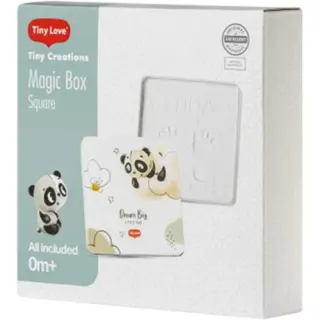 −9 %Tiny LoveTiny Creations Magic Box baby print kit, square metal box – Tiny Love146 DH
instead of 160 DHView product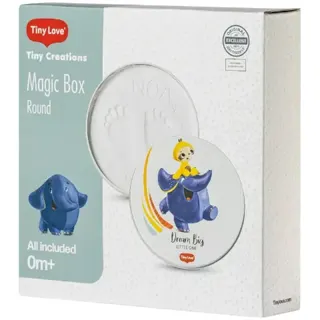 −9 %Tiny LoveTiny Creations Magic Box baby print kit, round metal box – Tiny Love146 DH
instead of 160 DHView product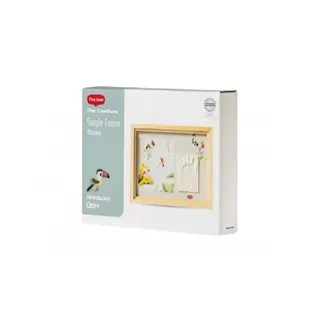 −9 %Tiny LoveTiny Creations Simple Frame baby print frame, wood – Tiny Love209 DH
instead of 230 DHView product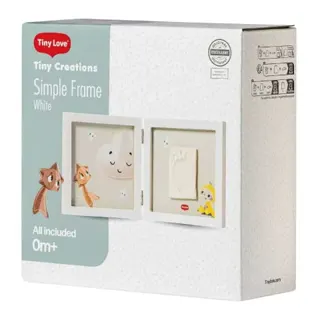 −9 %Tiny LoveTiny Creations Simple Frame baby print frame, white – Tiny Love209 DH
instead of 230 DHView product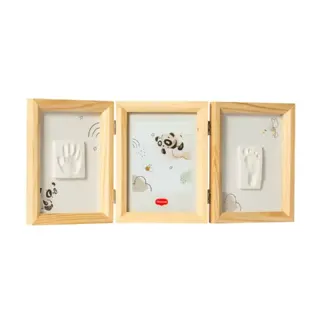 −9 %Tiny LoveTiny Creations wooden double photo and print frame – Tiny Love291 DH
instead of 320 DHView product −9 %Tiny LoveTiny Creations Double Frame baby print frame, white – Tiny Love291 DH
instead of 320 DHView product- The whole aisle · Baby keepsakes6 products online, delivered anywhere in Morocco.Open the aisle
Products sold by La Maison du Bébé, publisher of this magazine. Prices as of 12 October 2026; please check the product page.
Frequently asked questions
Which prophet is mentioned most often in the Quran?
Moussa (Moses), named 136 times according to counts of the text. He is followed by Ibrahim (Abraham), 69 times, and Nouh (Noah), 43 times. The name Mohamed appears four times (3:144, 33:40, 47:2 and 48:29) and Ahmed once (61:6). The Arabic forms of these names are listed in our table of prophets' names.
Can I register my son as Moulay Ahmed or Sidi Mohamed in Morocco?
Not at the civil registry. Article 34 of law 36-21 forbids adding a title such as Moulay, Sidi or Lalla to a first name, or following it with a number. Your son will be registered under the first name alone, Ahmed or Mohamed, possibly as a compound of no more than two names.
Is Adam an Arabic name?
Adam (آدم) is the name of the first man in the Old Testament as well as in the Quran, where he is mentioned 25 times. The name comes from Hebrew, which is exactly what makes it international: it sounds almost the same in Arabic, French, English or Spanish, and is spelled Adam in every language that uses the Latin alphabet.
Which Arabic boy names are easy to pronounce in English or French?
Those without ح, ع, خ or غ, four sounds that English and French do not have. Adam, Rami, Fares, Nour, Bassam, Jamal, Majid, Moussa or Daoud sound almost identical in Rabat, London or Paris. Khalil, Ghassan or Hakim, on the other hand, lose part of their sound when spoken by someone who does not speak Arabic.
Sources
- Liste de prénoms arabesWikipédia en français · International
- Arabic Names (pages 1 to 4)Behind the Name, etymological database of first names · International
- Arabic Names (page 3)Behind the Name · International
- Appendix:Arabic given namesWiktionary · International
- List of characters and names mentioned in the QuranEnglish Wikipedia · International
- Maryam - Ontology of Quranic ConceptsQuranic Arabic Corpus (University of Leeds) · United Kingdom
- Dahir n° 1-21-81 du 14 juillet 2021 portant promulgation de la loi n° 36-21 relative à l'état civil (BO n° 7006 du 22 juillet 2021)Adala legal portal, Ministry of Justice · Morocco
- État civil : les officiers n'ont désormais plus le droit de refuser l'inscription de prénomsTelQuel (14 July 2023) · Morocco