










Article contents
Key points
- Before 5, wet nights are part of learning, not a problem.
- It is a question of maturation and sleep, often runs in families, and is never a whim.
- Punishing makes it worse: reassure, protect the mattress, value progress.
- An alarm and some medicines exist, on medical advice, from 5-6 years.
- A child dry for 6 months who starts again should see a doctor.
In the morning, the wet sheets, the child looking down, and the question that keeps coming back: “He is 6, isn't that abnormal now?” Bedwetting, which doctors call nocturnal enuresis, is far more common than people think. It is rarely talked about, out of embarrassment, yet thousands of families live the same thing.
The good news: it almost always passes with time. And there are simple steps, then treatments, to help your child get back to dry nights without shame.
Up to what age is bedwetting normal?
Up to 5 years, wet nights are part of learning to be clean. Bladder control is generally acquired between 3 and 5 years, and night-time dryness often comes several months, even years, after daytime dryness. Our article on potty training explains these stages.
From 5 years, we speak of enuresis in the medical sense. Even then, the figures are reassuring. According to the Canadian Paediatric Society:
| Age | Children who still wet the bed |
|---|---|
| 5 years | about 15% |
| 10 years | about 5% |
| 15 years | about 2% (without treatment) |
Boys are affected more often than girls, notes Vaud Famille.

Why does my child wet the bed?
It is not laziness, a whim or a sign of poor parenting. The causes are mostly physical:
- very deep sleep: a full bladder does not wake the child;
- too much urine produced at night, because the hormone that reduces it during sleep does not yet act strongly enough;
- a small bladder capacity;
- heredity: the risk rises clearly if one or both parents wet the bed as children, according to the Canadian Paediatric Society;
- constipation, which presses on the bladder (see our article on constipation).
Stress (a move, the birth of a baby brother or sister, starting school) can play a part, especially when a child who was already dry starts again. More rarely, an illness is behind it: urinary infection, diabetes. That is why a medical opinion is useful after 5-6 years.
What really helps at home
French, British and Canadian health authorities agree on a few simple measures. According to data relayed by Pourquoi Docteur, they are enough to settle about a third of isolated cases of enuresis.
- Drink mostly by day. Hydrate your child well in the morning and at midday, then cut back on drinks from late afternoon. In the heat of the Moroccan summer, do not deprive them of water: simply shift the intake towards the daytime.
- Avoid certain drinks in the evening: sodas, sugary drinks, tea (including the mint tea at snack time), cola, anything containing caffeine.
- Go to the toilet regularly, 4 to 7 times a day according to the NHS, and always just before sleep.
- Make the toilet easy to reach at night: a lit corridor, a night light, a potty in the bedroom for a small child.
- Do not wake your child to take them to the toilet, or carry them asleep: it does not teach them to wake up on their own.
- Keep a calendar of dry and wet nights for two weeks: useful for tracking progress and for the doctor.
From the shop
For calmer nights
Nothing cures bedwetting, but a night light that shows the way to the toilet and a step stool to reach the sink make your child more independent at night.
 −35 %Safety 1stArctic automatic night light – Safety 1st150 DH
instead of 230 DHView product −9 %BadabulleAutomatic wall night light, pink Drops – Badabulle200 DH
instead of 220 DHView product BabymoovWall night light – Babymoov150 DHView product
  −61 %BadabulleLily the Sheep portable night light lamp, pink – Badabulle215 DH
instead of 550 DHView product BadabulleNon-slip children’s step stool – Badabulle200 DHView product
 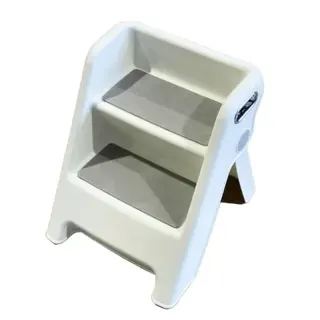 −28 %China Divers BrandNon-slip step stool208 DH
instead of 290 DHView product- The whole aisle · Fitted sheets and mattress protectors6 products online, delivered anywhere in Morocco.Open the aisle
Products sold by La Maison du Bébé, publisher of this magazine. Prices as of 12 October 2026; please check the product page.
What not to do
Never punish, scold or mock. Your child does not control what happens during sleep. The NHS reminds us that punishment can even make enuresis worse.
In large families, with cousins sleeping in the same room in summer or visits to the grandparents, shame comes quickly. Protect your child from remarks, including seemingly kind ones (“at your age...”). If a night at grandma's worries them, discreetly pack a mattress protector and a change of clothes in their bag.
Conversely, value efforts rather than results: a sticker for going to the toilet before sleep, for example, as the NHS suggests. A dry night does not depend on willpower; the toilet visit does.
Treatments: the alarm and medicine
When simple measures are not enough and the bedwetting weighs on your child, the doctor may suggest a treatment, generally from 5 to 6 years.
- The bedwetting alarm: a sensor placed in the underwear or on the mattress sounds at the first drops. Your child gradually learns to wake up when the bladder is full. It is used every night, for 6 weeks to 3 months according to the Canadian Paediatric Society. It takes motivation, from the child and from the parents.
- A medicine that reduces urine production at night: it works on the evenings it is taken, useful for a night at friends' or a trip, for example, but does not always solve the problem on its own. It comes with strict rules about drinks around the time it is taken. The choice of treatment and the dose are set by the doctor, never by self-medication.
The chances of recovery are good. The key is choosing the right moment, when your child themselves wants things to change.
And when a dry child starts again?
This is called secondary enuresis. The NHS advises seeing a doctor if your child starts wetting the bed again after more than 6 months of dry nights. A cause must be sought:
- a urinary infection, especially if it hurts or burns when they pee;
- established constipation;
- diabetes, if your child is very thirsty, passes a lot of urine and loses weight;
- an emotional shock or a source of stress (school, separation, a new birth), which you need to talk about with them.
If your child is about to start primary school, our article on the 5-year-old also covers the changes of this period.
Frequently asked questions
My 6-year-old still wets the bed: is it serious?
No, it is common and it is not their fault. According to the Canadian Paediatric Society, about 15% of children still wet the bed at 5 and 5% at 10; most become dry at night without treatment. At 6, though, a check-up is useful to rule out a medical cause and to discuss solutions if it weighs on your child.
Should I wake my child at night to take them to the toilet?
No. The NHS and the Canadian Paediatric Society advise against waking your child or carrying them to the toilet while asleep: it does not help in the long run, because they do not learn to wake up on their own when the bladder is full. A toilet visit just before sleep and a lit path if they get up work better.
Does the bedwetting alarm work?
It is one of the treatments offered from 5 to 6 years. A small sensor sounds at the first drops and gradually teaches your child to wake up. It must be used every night for 6 weeks to 3 months according to the Canadian Paediatric Society, with the motivation of your child and the whole family. Talk to the doctor before starting.
Is putting diapers back on at night a good idea?
For a 4 or 5-year-old who is still often wet, night-time pants can spare repeated changes, if your child accepts them. You can then move gradually to a waterproof cover on the mattress, when your child feels ready. The key is to discuss it with them, without making it a punishment or a humiliating step back.
Sources
- L'incontinence nocturneCanadian Paediatric Society, Caring for Kids · Canada
- Bedwetting in childrenNHS · United Kingdom
- Pipi au lit : l'énurésie nocturne est à prendre au sérieux à partir de 5 ans (traitement)Pourquoi Docteur · France
- Pipi au lit – Énurésie nocturneVaud Famille · Switzerland